Are Gothenburg and Göteborg the Same Place? Sweden's Two-Name City Explained
Yes, Gothenburg and Göteborg are the same city in Sweden. Here is why the city has two names, which one to use when you travel, and where each name appears on tickets, signs and stations.
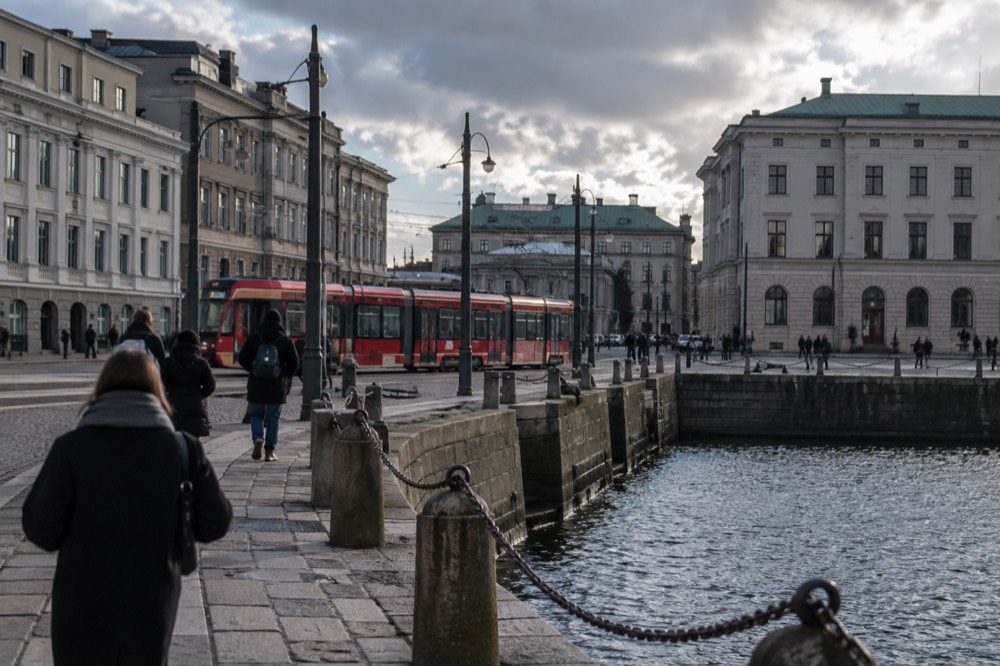
Gothenburg and Göteborg are the same place. One city, two names, and the confusion is entirely reasonable: the airport code is GOT, the railway station says Göteborg Centralstation, the art museum is Göteborgs konstmuseum, and the tourism board that welcomes you publishes in English under the name Gothenburg. Sweden's second city, home to 613,274 people at the end of 2025 according to Göteborgs Stad's own population report, answers to both names every single day, and a visitor switching between an English guidebook and a Swedish tram ticket will meet both within an hour of landing.
The short version: Göteborg is the city's real, official, legal name in Swedish. Gothenburg is the established English name for the same city, used for centuries and still used by the BBC, most English-language publishers and this website's own headings. Neither name is wrong. But the two names are not interchangeable in every context, and knowing which one appears where will save you real confusion at ticket machines, on platform signs and when you search for museums. This page from Gothenburg Travel Guide untangles where each name comes from, where each one appears, and which one to use when.
Are Gothenburg and Göteborg the Same Place?
Yes, Gothenburg and Göteborg are exactly the same city in Sweden. Göteborg is the city's official Swedish name, used by the municipality (Göteborgs Stad), the transport authority and every street sign. Gothenburg is the standard English name for that same city, used in English-language publishing, maps and tourism material. There is one city, one airport, one tram network and one archipelago, and both names point at all of them.
The reason both names coexist is linguistic, not geographic. Swedish spells the city Göteborg, pronounced roughly "YUR-teh-bor-ee" with a soft g that English speakers almost never attempt on the first try. English has used its own name for the city for so long that Gothenburg became the settled English exonym, the same way English speakers say Munich for a city the locals call München, or Rome for Roma. Nobody thinks Munich and München are different cities. The Gothenburg/Göteborg pair works the same way, it just trips people up more often because the two names look more similar than Munich and München do, close enough that a reader can half-recognise both without realising they are one and the same.
The city sits on Sweden's west coast at the mouth of the Göta älv, the river that gives the city its name: Göteborg means, in effect, the fortified town on the Göta river. It is Sweden's second-largest city and, by Swedavia's figures, its airport Göteborg Landvetter is Sweden's second-largest airport, handling 5,435,850 passengers in 2025. Every official institution in the city uses the Swedish name: Göteborgs Stad for the municipality, Göteborgs Spårvägar for the tram operator, Göteborgs konstmuseum for the art museum. Every English-language institution writing about the city from outside uses Gothenburg. You are reading an English-language site, so the headings here say Gothenburg, while the proper nouns inside them keep their real Swedish spellings.
One warning worth planting early, because it poisons search results and the occasional booking: there is also a Gothenburg, Nebraska, a small town in the United States that shares the English name and nothing else. When a search result or a map pin looks wrong, check the country. This site is about Gothenburg, Sweden, on the Göta älv, and every fact on this page belongs to the Swedish city.
Why Does One Swedish City Have Two Names?
Cities do not name themselves in other languages, and Göteborg never chose to be Gothenburg in English. English speakers adopted their own form of the city's name centuries ago, in the same era that produced English names like Copenhagen for København and Warsaw for Warszawa. The Swedish state has never used the English name officially: to Göteborgs Stad, the municipality, the city is Göteborg and always has been. Both names are therefore correct, each in its own language, and neither is a nickname for the other.
The pattern is called an exonym: a name that outsiders use for a place, formed in the outsider's own language. English is full of them. Germans say Kalifornien for California, Italians say Londra for London, and English says Gothenburg for Göteborg. What makes this particular pair slightly unusual is how close the two forms remain. Most English exonyms are heavily reshaped, but Gothenburg keeps the shape of the Swedish name, just respelled to fit English pronunciation habits: the Swedish g-sound at the start of Göteborg is soft, closer to a y, so English speakers writing the name down centuries ago reached for "th" and a hard g, producing a form English mouths can say without practice.
The Swedish name itself comes from geography. The city stands where the Göta älv, the great river draining Lake Vänern, reaches the Kattegat. "Borg" in Swedish is a fortified place, and the city was founded as a fortified trading town on the river, laid out inside a moat by Dutch engineers whose influence still shows in the canals of the old town. So Göteborg is literally "the stronghold on the Göta", a name that describes exactly where the city is. The English name Gothenburg is a translation of the same idea into English sounds, which is why it carries the same "burg" ending that English borrowed long ago from Germanic languages for fortified towns.
Which name you encounter depends on who produced the text in front of you. Here is a quick map of where each name lives:
| Where | Name you will see | Why |
|---|---|---|
| Street signs, municipal buildings, official mail | Göteborg | Göteborgs Stad uses the city's legal Swedish name |
| Tram stops and Västtrafik tickets | Göteborg | The transport authority operates entirely in Swedish |
| Göteborg Centralstation platform signs | Göteborg | The railway station's official name is Swedish |
| English guidebooks, news sites, this site's headings | Gothenburg | Established English exonym |
| Airport signage at Göteborg Landvetter | Both | Swedavia signs in Swedish with English translations |
| Museum entrances: Göteborgs konstmuseum, Göteborgs Stadsmuseum | Göteborg | Proper nouns keep their real names |
The rule of thumb that falls out of this table: institutions keep their Swedish names, general references go either way. You would never rename Göteborgs konstmuseum into "the Gothenburg Art Museum" on a ticket or a sign, because that is the museum's legal name. But an English sentence describing where the museum is can say Gothenburg freely, and this site's own headings do, per our naming convention. If you are searching for a specific place, search its Swedish proper noun. If you are reading about the city in general, either name will find it.
A related question people ask alongside this one is whether the city is worth the trip at all; our Is Gothenburg in Sweden worth visiting page covers that separately, and the short answer is that a city with a car-free archipelago inside its own transit zone has a strong case.
Sightseeing is one of the areas where the two names genuinely collide, because tour listings are written in English for an international audience while the things they describe are signed in Swedish. The amphibious bus tour is a good example: the listing is in English, the vehicle drives past signs that say Göteborg, and the harbour it splashes into is the same water either way.
How Do You Pronounce Göteborg in Swedish?
Göteborg is pronounced roughly "YUR-tuh-boor-ee" in Swedish, with a soft g at the start that sounds like an English y, an ö that has no English equivalent, and a final g that Swedes soften into a sound close to an English r or y. The stress falls on the first syllable. English speakers who say "GOTH-en-berg" with a hard g are understood perfectly well in Sweden, because Swedes hear the English name for their city all the time and recognise it instantly.
The letters that cause trouble are the two Swedish ones. The ö is a front rounded vowel, made by saying "eh" with your lips rounded as if saying "oo"; it is the same sound as the ö in smörgåsbord, a word English has already borrowed. The initial G before an ö or e in Swedish is soft, closer to the y in "yes" than to a hard g. Put together, the city's name in a Swedish mouth comes out as something like "YUR-teh-bor-ee", with the last syllable light and quick. Swedes do not expect visitors to nail this. The hard-g English pronunciation of Gothenburg is completely accepted, and staff at hotels, museums and ticket counters deal with English speakers constantly.
The same principle governs other names around the city, and getting them right is a small courtesy that locals notice. The river is the Göta älv, the tram operator is Göteborgs Spårvägar, and the fish market hall that reopened in 2024 as a food hall is Feskekôrka, where the ô is another borrowed letter from French, a legacy of the city's founders. These are proper nouns, and the Swedish letters in them are not decoration: å, ä and ö are ordinary letters of the Swedish alphabet with their own places at the end of it, after z. Dropping the dots changes the word, the same way dropping a letter from an English word changes it.
Pronunciation questions come up a lot on this site, and Swedish is full of small traps for English speakers. We have a whole page on how to pronounce fika in Swedish, the coffee-break word you will hear a dozen times a day here, and a broader one on what language is spoken in Gothenburg, where the short answer is Swedish, with English spoken widely and willingly in tourism, retail and anywhere under about the age of fifty.
One pronunciation note that doubles as a navigation tip: the station. Göteborg Centralstation is the city's main railway terminus, and its name is announced and signed in Swedish. If you arrive by train from Stockholm or Oslo, the destination board says Göteborg C, and the C is Centralstation. English-language rail booking sites often render the same station as "Gothenburg" in their dropdowns. Same station, same platforms, two names depending on whose software you are looking at. The Västlänken rail tunnel project, whose first section at Centralen is scheduled to open in December 2026 per Västtrafik's project pages, will add underground tracks at the same hub, so the station's importance, and its bilingual identity, is only growing.
Which Name Should You Use When You Travel?
Use Gothenburg when speaking English and Göteborg when reading, searching or typing anything in Swedish. In practice that means: say Gothenburg out loud to anyone, search the Swedish proper nouns for specific places (Göteborgs konstmuseum, Göteborg Centralstation), and expect every sign, ticket and timetable inside Sweden to say Göteborg. Booking platforms usually accept either name for the city, but specific venues, stations and museums should be searched under their exact Swedish names.
The practical failure mode is not saying the wrong name, it is searching the wrong name. If you search "Gothenburg art museum" you will find English-language articles about the museum, which is fine. If you need the museum's own site for current hours and the 75 kr day ticket price, the site you want is under its real name, Göteborgs konstmuseum, and searching that exact string gets you there faster. The same goes for Göteborgs Stadsmuseum, the city museum, and for the tram operator Göteborgs Spårvägar. English names describe these places; Swedish names find them.
Transport is where the distinction matters most in daily use, because Västtrafik, the regional transport authority, operates in Swedish. Its app, its ticket machines and its stop displays all say Göteborg, and the zone system that covers the city, the trams and the southern archipelago ferries is Zone A, a zone whose official description on vasttrafik.se includes Göteborg, Mölndal, Partille and Öckerö. A single adult ticket in one zone costs 38 kr and a 24-hour Zone A ticket costs 125 kr, per Västtrafik's published fare pages, and that same 125 kr ticket covers the tram to Saltholmen and the archipelago ferry beyond it, because the islands are inside the city's own zone. We cover the fare details and the free-ferry question in is the ferry in Gothenburg free, and the honest answer is that it is not free, it is included in a ticket you would probably buy anyway.
Should you be weighing the two names while planning, it may help to see the whole decision at a glance:
| Situation | Name to use | Notes |
|---|---|---|
| Talking to hotel staff, guides, waiters | Gothenburg | English name is universally understood |
| Searching a museum's official site | Göteborgs konstmuseum etc. | Swedish proper nouns find official pages |
| Buying tram or ferry tickets | Göteborg (in the Västtrafik app) | The app is in Swedish; zone names are Swedish |
| Booking a train to the city | Either, but the station is Göteborg C | Bilingual dropdowns are common |
| Writing to a hotel or tour operator in English | Gothenburg | Standard English usage |
| Addressing mail | Göteborg | Swedish postal addresses use the legal name |
Is Gothenburg Also Göteborg in Other Languages?
No, other languages have their own names for the city, and several of them look nothing like either Swedish or English. German uses Göteborg, the Swedish form. Danish and Norwegian use Göteborg or Gothenburg depending on context. French and Spanish generally use Göteborg or a respelling of it. English is the main language that adopted a genuinely different form, Gothenburg, which is why the two-name confusion is mostly an English-language problem.
The pattern across languages is telling. Most European languages simply took the Swedish name and adjusted its spelling to their own alphabets, which is the normal treatment for a city whose name is already pronounceable in most European languages. English is the outlier because it went further and reshaped the name into an English word with an English structure, ending in -burg, a suffix English knows well from Pittsburgh, Hamburg and Edinburgh. That reshaping happened long enough ago that Gothenburg is now a fully naturalised English word, and no amount of official Swedish usage will shift it, the same way the Italian government has never managed to make English speakers say Firenze instead of Florence.
For an English-speaking traveller this is good news rather than a problem. It means you have a name for the city that locals recognise instantly, in a language you already speak, while the Swedish name remains available for exactly the jobs it is better at: finding official pages, reading signs and typing into Swedish apps. The two names even divide the labour sensibly. Gothenburg is the name you think in; Göteborg is the name you navigate by.
The city's own tourism ecosystem has settled into the same bilingual rhythm. Göteborgs Stad, the municipality, publishes in Swedish. The English-language tourism material that reaches international visitors, including everything on this site, uses Gothenburg for general references and preserves Swedish for proper nouns, which is exactly the convention this page follows. When you read that the archipelago islands of Brännö, Vrångö and Styrsö are reached by tram and ferry on an ordinary Västtrafik ticket, the island names and the operator are Swedish because they are real names, while the sentence carrying them is English because you are.
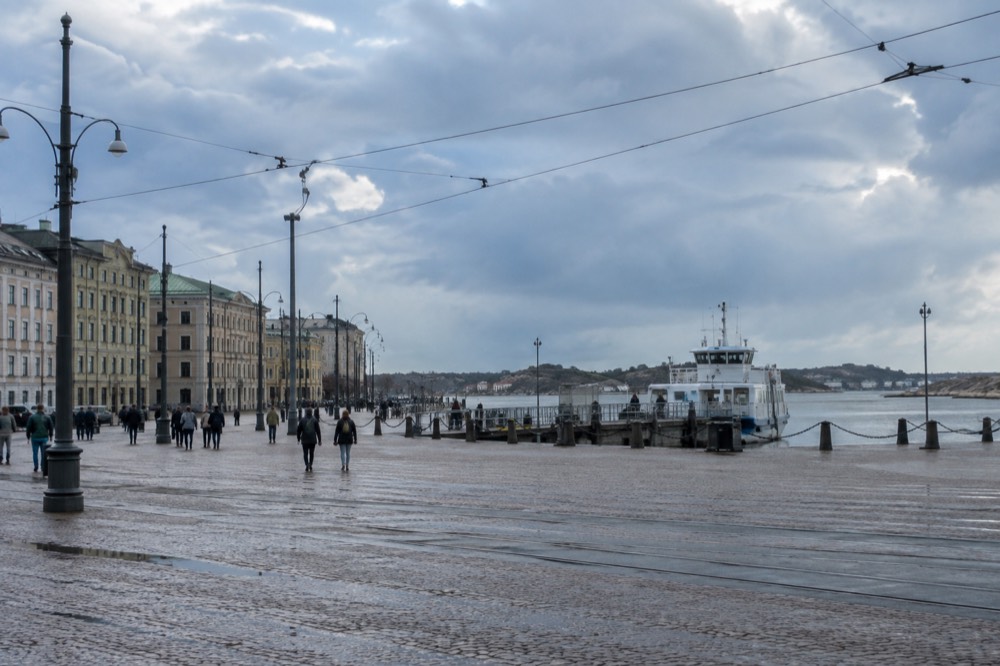
The archipelago is actually the best place to watch the two-name system work, because it is the point where the city's Swedish administrative reality meets an international audience. The islands are legally areas of the city of Göteborg, they sit inside Västtrafik Zone A, and the ferries that reach them are ordinary public transit with line numbers, not tourist cruises. Yet most of the people riding those ferries in July are visitors who arrived through materials written in English about Gothenburg. Both names, one boat.
If the archipelago is on your list, and it should be, our page on whether the Gothenburg archipelago is worth visiting works through the question in detail, and the guided cruise below is the version of the trip that comes with commentary instead of a timetable.
A second, quieter version of the same bilingual pattern shows up in the city's own self-image. Ask what the place is known for and the answer runs through Swedish names, Feskekôrka, Liseberg, Haga, the Göta älv, delivered to an audience that arrived under an English flag. Our what is Gothenburg known for page collects the whole list, and every entry on it has a Swedish name and an English description, which is the two-name city in miniature.
Common Questions About Gothenburg and Göteborg
Are Gothenburg and Göteborg the same place?
Yes. Göteborg is the city's official Swedish name and Gothenburg is the standard English name for the same city on Sweden's west coast. One municipality, Göteborgs Stad, one tram network, one airport, one archipelago. The two names are the Swedish and English forms of a single place, like Munich and München.
Is Gothenburg in Sweden or Nebraska?
Both exist, but they are completely different places. Gothenburg, Sweden is the country's second city, population 613,274 at the end of 2025, on the west coast at the mouth of the Göta älv. Gothenburg, Nebraska is a small town in the United States that shares only the English name. Check the country before you book anything.
Why do English speakers say Gothenburg instead of Göteborg?
English adopted its own name for the city centuries ago, reshaping the Swedish name into an English word with the familiar -burg ending. This is a normal exonym, the same process that gave English Copenhagen for København. The Swedish state has never used the English name officially; to the municipality, Göteborgs Stad, the city is simply Göteborg.
Which name should I use for booking trains and hotels?
Say or type Gothenburg when using English-language booking sites; they accept it and usually list the city that way. For specific places, use the exact Swedish proper nouns: Göteborg Centralstation for the main station, Göteborgs konstmuseum for the art museum. Inside Sweden, on Västtrafik tickets and street signs, everything reads Göteborg.
How do you pronounce Göteborg?
Roughly "YUR-tuh-boor-ee", with a soft g like an English y, an ö like the vowel in smörgåsbord, and stress on the first syllable. Swedes recognise the English pronunciation "GOTH-en-berg" instantly, so do not worry about perfecting it. Locals hear the English name for their city constantly.
Do Swedish people mind if I say Gothenburg?
No. Swedes are used to hearing the English name for their city and use English themselves at a very high level. Using the Swedish proper nouns for specific places, Göteborgs konstmuseum, Feskekôrka, Göteborg Centralstation, is a small courtesy, but the English city name is completely accepted in conversation.
So: same city, two names, and now you know exactly which one to reach for. Göteborg is the name on the signs, Gothenburg is the name in the sentence, and the city at the mouth of the Göta älv answers to both without a moment's hesitation. For what to actually do once the naming is settled, our what not to miss in Gothenburg rundown is the natural next stop.