Slottsskogen Park and Its Free Zoo: Gothenburg's Biggest Free Day Out
Slottsskogen is Gothenburg's biggest park, and the animals in it, from Nordic moose to a children's petting zoo, cost nothing to see. Here is what the park actually contains, how the tram gets you there, and how to plan the day.
Short answer
**Yes, Slottsskogen and its zoo are free to enter.** The park sits on the Linné end of Gothenburg, reachable by tram, and its animal enclosures, playgrounds and open lawns charge no admission at any time of year. Bring cash for nothing except coffee: the park's own kiosks and the nearby Linné and Haga café strips are the only places the day costs money.
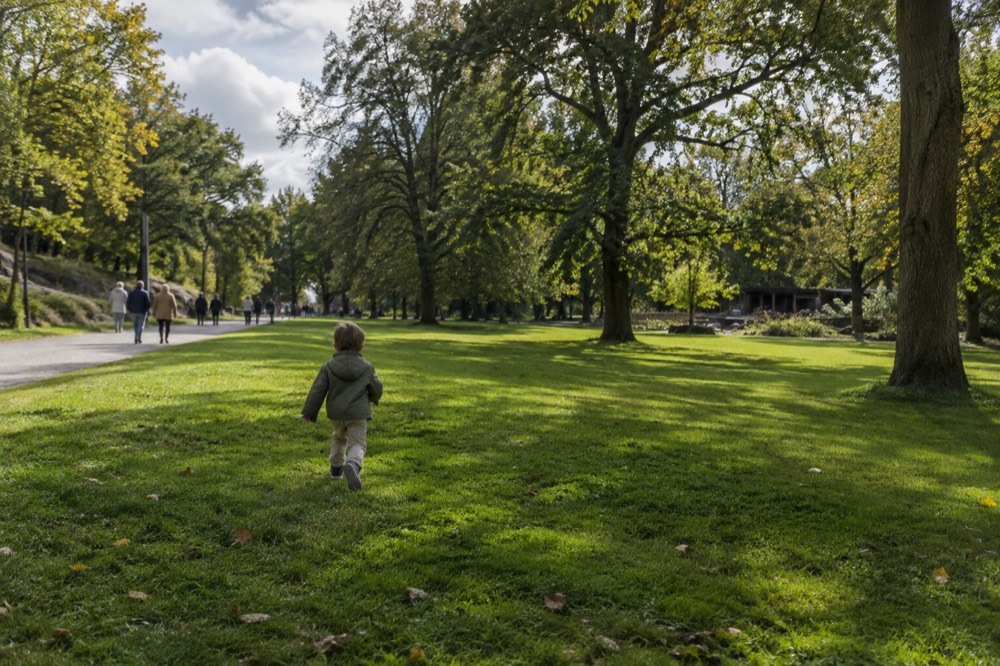
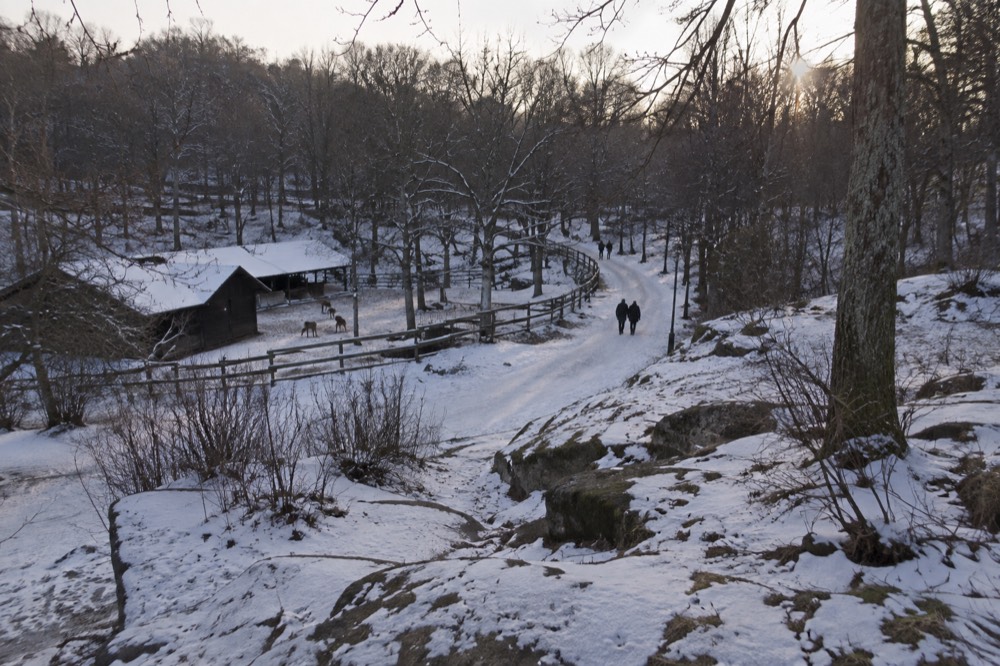
Slottsskogen is the park Gothenburg keeps in its back pocket: lawns, forested hills and free animal enclosures on the ridge between the Linné district and the harbour. The zoo inside it, spread through the park rather than fenced off behind a gate, charges nothing. You walk in off the street, you watch the seals and the moose, and you leave without having paid a krona. Göteborgs Stad runs the park, and its own framing is simple: the animals are there for everyone, which is why school groups, families and hungover students all end up on the same lawn on a Sunday.
The park sits at the western edge of the inner city, a few tram stops from Avenyn and downhill from the Linné and Haga districts. This page covers what is actually inside, what the free zoo includes, when to go, how the tram system gets you there, and how Slottsskogen fits into a Gothenburg day that costs almost nothing. For the wider free-things picture, see our free things to do in Gothenburg rundown, and for the city around the park, start with Gothenburg Travel Guide.
Is Slottsskogen Really Free to Enter in Gothenburg?
Yes, Slottsskogen and its zoo are genuinely free, with no ticket, no gate, no booking and no seasonal charge of any kind. The park is municipal land run by Göteborgs Stad, open around the clock all year, and the animal enclosures, the petting zoo, the playgrounds and the viewpoints cost nothing to walk through at any hour. The only money a visit involves is optional: kiosk coffee, ice cream in summer, and whatever you spend in the Linné and Haga café strips on the walk home.
That free status is unusual for a European city zoo, and it shapes how the park works. There is no main entrance to queue at, no map desk, no turnstile. The animal areas are distributed through the park's northern half, so a visit is a walk rather than a circuit. Göteborgs Stad's park pages list the enclosures as part of the park's ordinary offering, the same category as the lawns and the ponds, and the city's own park information is the source to check for current feeding times: Göteborgs Stad's park pages.
The honest comparison is with the city's paid attractions. Liseberg's entry ticket starts at 95 kr online and includes zero rides, as Liseberg rides, tickets and when to go explains in detail. Universeum prices dynamically and never publishes a fixed adult rate, per Universeum Science Centre. Slottsskogen asks for none of that. A family of four can spend a full afternoon here for the price of two tram tickets each way.
What Animals Does the Free Slottsskogen Zoo Actually Have?
The park's free animal collection centres on Nordic species, moose, seals, reindeer, Gotland ponies and Gute sheep, plus a children's petting zoo with farm animals and a penguinarium with published daily feeding times. The enclosures sit in the northern and western parts of the park, all reachable on footpaths, and the seal and penguin feedings are the two events locals time their visits around. None of it carries a charge, none of it needs booking, and the whole circuit takes about an hour at a stroll.
The Nordic focus is the point. This is not a zoo collecting lions and elephants; it is a park showing the animals of the Swedish landscape, which suits a city whose archipelago and forests begin at the tram terminus. The moose enclosure is the one visitors photograph most, and the seals have a large pool on the park's western slope. The petting zoo, aimed at small children, has goats and other farm stock.
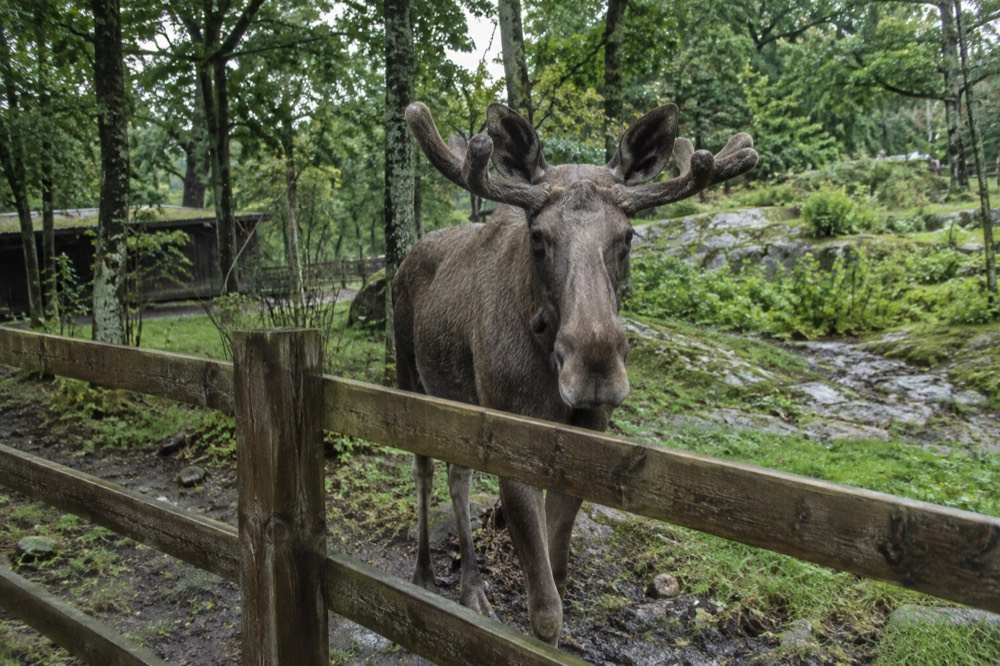
Göteborgs Stad publishes feeding times for the seals and penguins on its park pages, and these are the moments the enclosures get crowded. If you want the animals at their most active, plan around the published feeding schedule rather than arriving at random; the rest of the day the seals in particular spend a lot of time hauled out and still. The park's own information, not third-party listings, is the place to confirm times before you set out.
A practical note on expectations: because the zoo is free and open, the enclosures are generous rather than tightly curated. This is a park that happens to contain animals, not a ticketed zoo with shows and restaurants. Bring your own fika, which is exactly what locals do; our fika in Gothenburg guide covers the habit, and the where to eat in Gothenburg page covers the neighbourhoods around the park for afterwards.
When Is the Best Time to Visit Slottsskogen?
April and May are the best months: April is Gothenburg's driest month of the year at 51.3 mm of rain across only 8.2 wet days, the park's trees are in leaf, and the animals are active in cool weather. Summer works too, but SMHI's 1991-2020 normals show October is the wettest month at 102.9 mm, and winter visits run short on daylight, with just 6 hours 32 minutes of it on 21 December against 18 hours 6 minutes on 21 June.
The rainfall numbers surprise people who expect the rain to be a summer problem. SMHI's station Göteborg A records 912 mm a year across 127 days, roughly one day in three, but the dry window is spring, not high summer. A late-April or May visit gets the best odds of dry grass and the park at its greenest. The full dataset sits on SMHI's 1991-2020 normals page.
Winter is not a write-off. The park stays open, the enclosures stay open, and February's sea temperature record low of -1.2 C at the Vinga station tells you how cold the west coast gets. But the daylight budget is brutal: the US Naval Observatory data give Gothenburg 6 h 32 m of daylight at the winter solstice, with civil twilight barely stretching that to eight hours of usable grey. If you visit in December or January, make it a midday visit. Our daylight and darkness in Gothenburg page has the full month-by-month table.
| Month | Rain, mm | Wet days (≥1 mm) | Verdict for a park visit |
|---|---|---|---|
| April | 51.3 | 8.2 | Best: driest month of the year |
| May | 54.3 | 8.8 | Excellent, long evenings begin |
| June | 73.7 | 10.0 | Good, 18 h 06 m daylight on the solstice |
| July | 81.3 | 9.8 | Warm, air peaks at 18.3 C |
| August | 92.8 | 11.9 | Fine, but the wettest summer month |
| October | 102.9 | 12.6 | Wettest month of the year, bring a shell |
Source for every figure: SMHI 1991-2020 normals, station Göteborg A (71420).
How Do You Get to Slottsskogen by Tram?
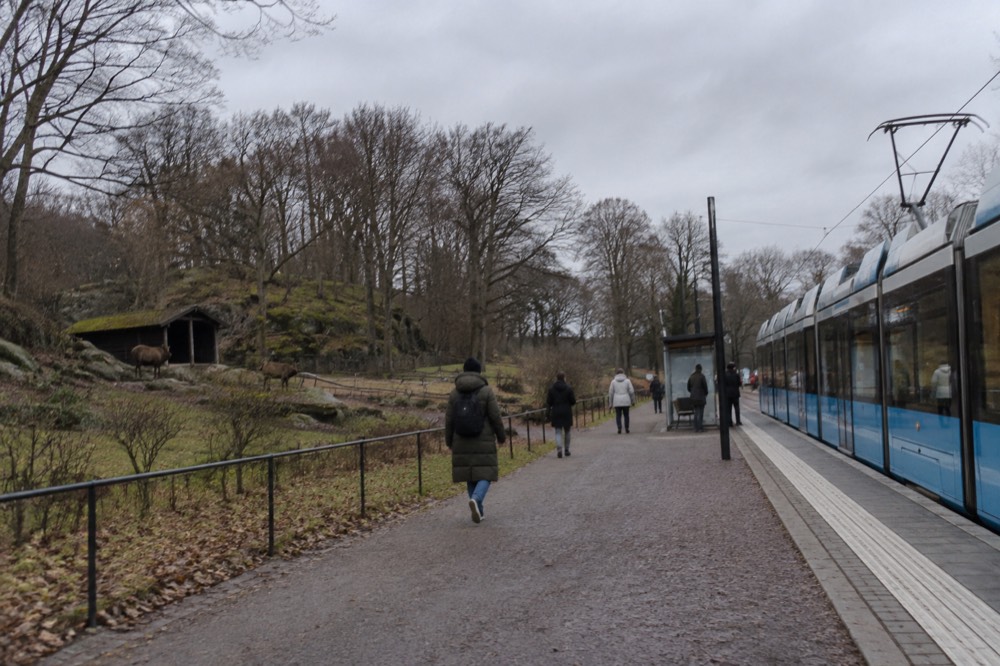
Slottsskogen is served by several tram lines stopping at Linnéplatsen and adjacent stops on the park's northern edge, and a single Västtrafik Zone A ticket, 38 kr for a single or 125 kr for 24 hours, covers the trip. The park has no car park to speak of and no reason for one: the tram network's 12 lines and 134 stops put Linnéplatsen within about ten minutes of the city centre, and the walk from the stop to the main lawns takes two minutes.
The tram is the backbone of the city, and Slottsskogen sits on it. Göteborgs Spårvägar's own annual report describes a network of twelve lines running from Mölndal in the south to Angered in the north, Saltholmen in the west to Kålltorp in the east, and Linnéplatsen is one of the stops on the western branch. The full fare detail, including the 24-hour ticket and the zones, is in our getting around Gothenburg guide, and the live fares are published at Västtrafik's own ticket pages.
One nuance worth repeating because the whole internet gets it wrong: Västtrafik's 30-day tickets are currently halved by a temporary state subsidy, but that cut does not apply to the 24-hour and 72-hour tickets visitors actually buy. A 24-hour Zone A ticket is 125 kr, full stop. Do not plan a Slottsskogen day around a discount that does not exist for you.
| From | Tram stops to Linnéplatsen | Ticket needed |
|---|---|---|
| Göteborg Centralstation | ~10 minutes, direct western lines | Zone A single, 38 kr |
| Avenyn / Götaplatsen | ~7 minutes | Zone A single, 38 kr |
| Haga | walkable, ~10 minutes on foot | none |
| Liseberg / Korsvägen | ~15 minutes with a change | Zone A single, 38 kr |
| Saltholmen (archipelago ferries) | ~20 minutes along the western line | Zone A single or 24-hour, 125 kr |
The Haga route deserves a note. The walk from Haga up through the Linné streets to the park's eastern gate is one of the better free walks in the city, past the wooden landshövdingehus houses the district is known for; our Haga, Gothenburg's wooden old quarter page covers that neighbourhood in full.
What Else Is Inside Slottsskogen Besides the Zoo?
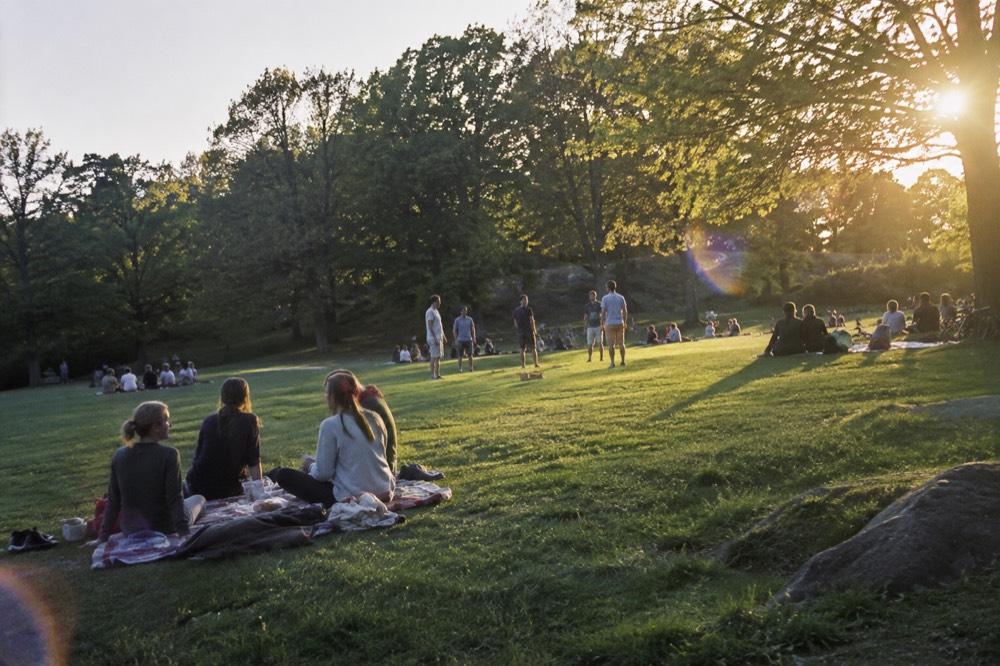
The park holds large open lawns for games and picnics, a hilltop viewpoint over the city and harbour, ponds, and one of the city's biggest playgrounds, Plikta, all free and all open year round. The southern and eastern thirds of the park are where Gothenburg actually lives on summer evenings: barbecues on the lawns, students from the nearby halls, and the long light that lasts past 22:00 in June, when sunset falls at 22:17 on the solstice.
There is no charge for any of it, and no time limit on any of it.
The viewpoint near the park's high ground looks north over the rooftops toward the Göta älv and the harbour cranes. It is not the highest vantage in the city, that belongs to the hilltop forts covered in Skansen Kronan and Gothenburg's hilltop forts, but it is the one you can reach with a picnic.
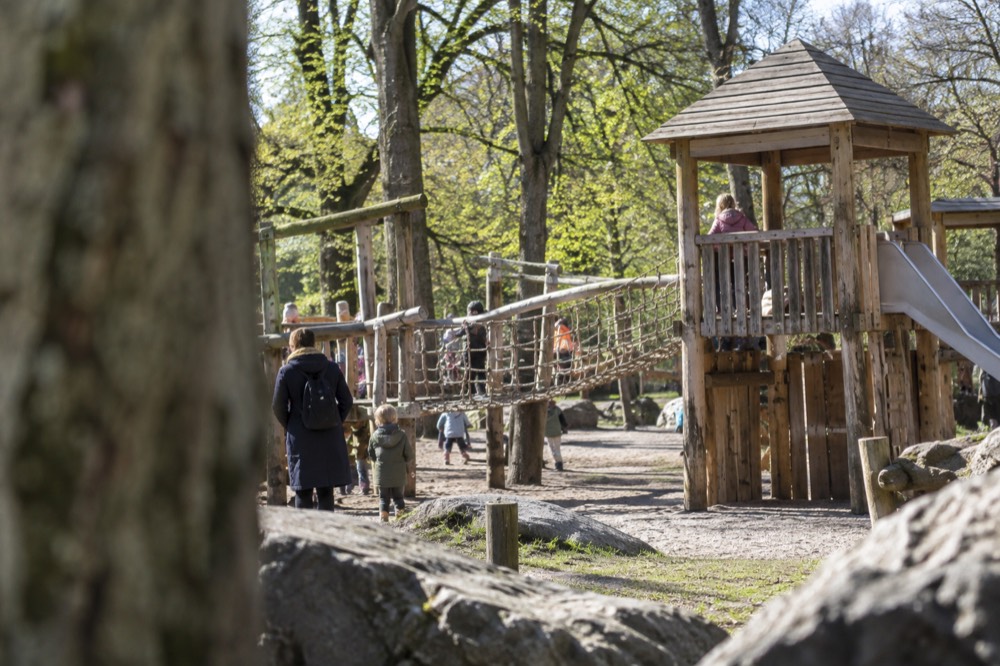
Plikta, the playground, is a genuinely large one, with climbing structures and water play in summer, and it is the reason so many local families treat the park as a weekend default rather than a tourist stop. There is no charge and no time limit. In June the practical closing time is your own bedtime: civil twilight on 21 June runs from 02:58 to 23:30 local summer time, leaving only about three and a half hours of true night.
The park also connects to the city's walking geography. Downhill to the west is Majorna, the shipyard district that has become the city's second-hand and café quarter, and that is where the free GuruWalk picks up. The Majorna, Gothenburg's second-hand quarter page covers what to expect there, and the walk down from the park's western gate into the district takes about fifteen minutes.
The Majorna free walk is run on GuruWalk by a local guru, it is free and tip based, and it is not one of this site's tours, which is exactly why we name the platform and the operator honestly. The listing describes a ninety-minute walk through the district's history, people and culture, rated 4.77 from 234 reviews on the listing. It pairs naturally with a Slottsskogen afternoon because the park and the district share a hillside.
How Does Slottsskogen Fit Into a Free Gothenburg Day?
Pair Slottsskogen with Haga in the morning, the Linné café strip at fika time, and the waterfront walk along the Göta älv in the afternoon, and the entire day costs nothing but tram fare and coffee. Walking Haga, Klippan and the Göta älv waterfront is free, Slottsskogen is free, and the Botanical Garden, a short tram ride south, asks a voluntary entry contribution rather than a fixed ticket, so bring coins if you want to support it rather than calling it either free or paid.
The geography makes this easy. Haga sits between the city centre and Slottsskogen, so the natural line is: Haga's wooden houses and café terraces first, then the walk up to the park, then the lawns and the animals, then either back through Linné for dinner or downhill into Majorna for the evening. Our two days in Gothenburg itinerary uses exactly this spine.
| Time | Activity | Cost |
|---|---|---|
| Morning | Haga wooden quarter and Skansen Kronan hill | Free |
| Late morning | Walk to Slottsskogen, enclosures and viewpoints | Free |
| Midday | Picnic or kiosk lunch on the lawns | 60-120 kr per person, optional |
| Afternoon | Petting zoo and Plikta playground, or the Botanical Garden | Free, or voluntary contribution |
| Evening | Linné or Majorna cafés and bars | Pay as you go |
One caveat for museum-planners: Göteborgs konstmuseum closes in 2028 and reopens in 2032 for a rebuild, with intermittent blasting on the site right now, so do not build an art-museum afternoon into a future trip without checking its current status. The details are in our Gothenburg Museum of Art page, and the museum's own rebuild notice is at goteborgskonstmuseum.se.
Can You Combine Slottsskogen with the Gothenburg Archipelago?
Yes, and the same Zone A ticket does both: the tram to Linnéplatsen for Slottsskogen and the tram to Saltholmen for the archipelago ferries sit on the same western corridor, and a 125 kr 24-hour ticket covers tram, ferry and every island. The southern islands, Styrsö, Brännö, Donsö, Vrångö, Asperö and Köpstadsö, are areas of Gothenburg rather than day trips, and they are car-free, so the park-and-islands combination is the city's best-value full day on a single ticket.
The sequencing matters. The archipelago ferries run on timetables that thin out outside the summer season, so check the sailing times before committing to a day that includes both. Our how to get to the Gothenburg archipelago page has the logistics, and the southern archipelago covers the islands themselves.
If the sea rather than the park is the priority, the guided archipelago cruise is the paid alternative to the public ferry, and it is one of the most-reviewed products in the city, with 1,488 reviews on the listing at the time of writing. It runs 2.5 hours with a guide on board, from $44 per person, and unlike the public ferry it is a loop rather than transport.
Common Questions About Slottsskogen Park in Gothenburg
Is Slottsskogen free?
Yes. The park and its zoo are free to enter at any time of year, with no ticket, no gate and no charge for the enclosures, the playground or the viewpoints. Only kiosks and nearby cafés cost money, and they are optional.
What animals are at Slottsskogen?
Nordic species dominate: moose, seals, reindeer, Gotland ponies and Gute sheep, plus a children's petting zoo with farm animals and a penguinarium. The seal and penguin feedings, with times published by Göteborgs Stad, are the busiest moments in the park.
How do I get to Slottsskogen by tram?
Take any western-line tram to Linnéplatsen, about ten minutes from Göteborg Centralstation. A Zone A single costs 38 kr and a 24-hour Zone A ticket 125 kr. The park entrance is a two-minute walk from the stop.
When is Slottsskogen open?
The park is open around the clock, year round. Daylight is the real constraint in winter: Gothenburg gets 6 hours 32 minutes of it on 21 December, so a midday visit is the practical choice from November to February.
Is Slottsskogen good for kids?
Yes, and it is one of the reasons local families use it weekly. The petting zoo, the Plikta playground with its climbing structures and summer water play, and the open lawns are all free and all aimed at children.
Can you swim near Slottsskogen?
Not in the park itself, but the archipelago beaches are on the same tram corridor. Sea temperature peaks in August at 18.6 C, not July, and September water at 16.7 C is warmer than June water at 16.2 C, per SMHI's Vinga station data, so late-season swims beat early ones.
Slottsskogen is the anchor of a cheap Gothenburg day: free animals, free lawns, a tram that costs less than a coffee, and the archipelago waiting on the same ticket. Pair it with Haga in the morning and Majorna in the evening and you have seen the western half of the city without paying a single entrance fee.