Universeum Science Centre in Gothenburg: Tickets, Halls and What to Expect
Universeum is Gothenburg's science centre, a seven-storey building beside Korsvägen where a rainforest canopy grows under a glass roof and sharks circle in the basement aquarium. Its pricing model is unusual: there is no fixed adult ticket, admission is dynamic and every visitor books a timed slot. This guide sets out how the ticket system actually works, what is inside each hall, and how to plan a visit that fits the city's tram network.
Short answer
Universeum is open every day of the year from 10:00 to 18:00. Admission is dynamically priced with a booked entry time, so there is no fixed adult price; buying online is 30 kr cheaper than on-site, children under 3 enter free but still need a ticket, and Wisdome dome shows are sold separately.
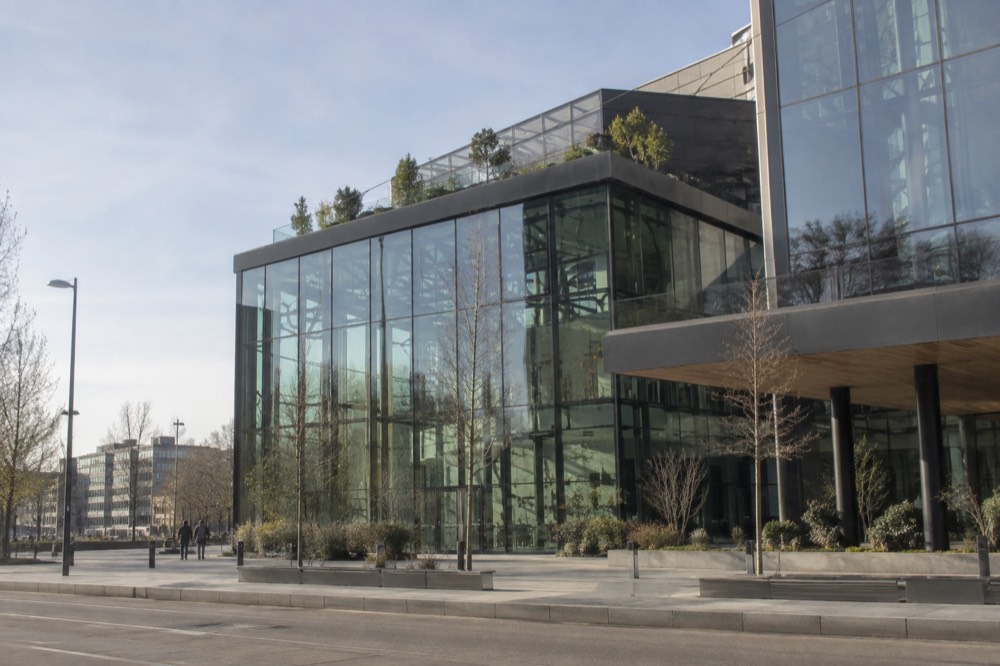
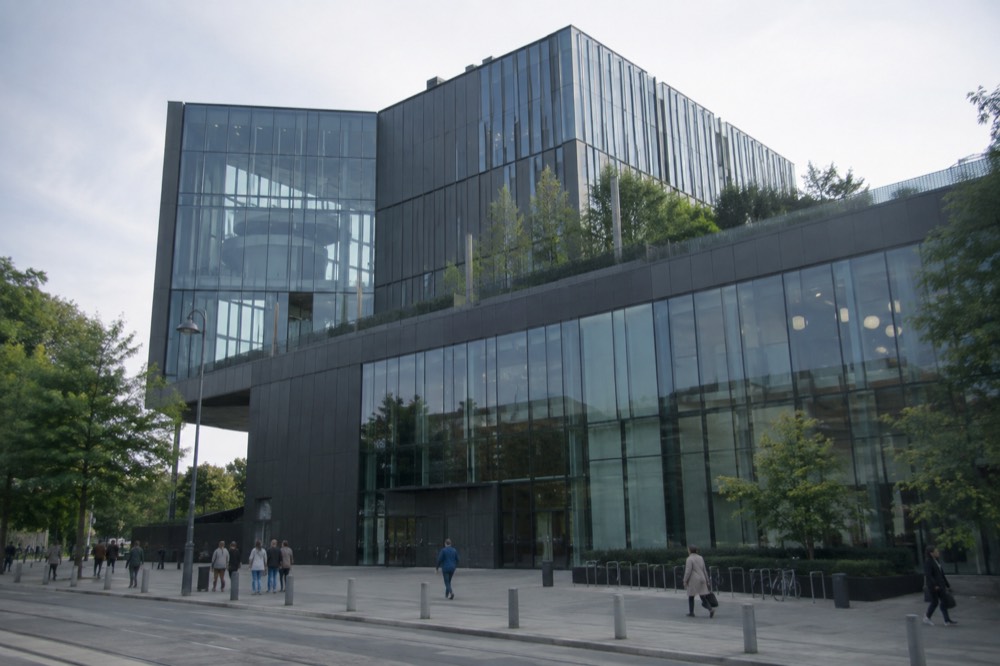
Universeum sits at Korsvägen, the transport crossroads south of central Gothenburg, in a building that looks like a stack of glass boxes leaning over a canal. Inside, the seven floors run from a Baltic aquarium in the basement to a West African rainforest under the roof, with a reptile house, a space exhibition and hands-on science labs packed in between. The venue states it is open every day of the year, 10:00 to 18:00, which makes it one of the few Gothenburg attractions with no closed day at all, a useful fallback when the Swedish weather turns.
The single most important thing to know before arriving is the ticket model. Universeum does not publish a fixed adult price. Admission is dynamically priced, like an airline seat: the cost of a timed entry slot varies with demand, and the venue states plainly that buying on-site costs the online price plus 30 kr. Busy days and popular time slots sell out, the venue warns, so a visitor who turns up at the door in the school holidays may find the remaining slots both expensive and late in the day. Every claim in this guide comes from Universeum's own visit and ticket pages, Västtrafik's fare tables, and the other primary sources listed on this site.
How Do Universeum Tickets Actually Work?
Universeum admission is dynamically priced with a booked entry time, so there is no fixed adult price to quote. The venue's own ticket page states that on-site admission costs the online price plus 30 kr, that children under 3 enter free but still need their own free ticket, and that free cancellation is possible up to 60 minutes before the booked slot. All exhibitions, activities, shows and guided tours are included in admission, but Wisdome dome shows are a separate ticket.
That is the whole system in one paragraph, and it explains most of the confusion visitors report. Dynamic pricing means the price you see one Tuesday morning is not the price a family sees on a wet Saturday in July. The venue does not hide this; it simply prices by time slot, and the cheapest slots are almost always weekday mornings outside school holidays. The venue is also fully cashless, card only, so anyone planning to pay at the desk needs a card that works in Sweden.
Two practical consequences follow. First, book online, always: the 30 kr on-site premium is pure loss. Second, book early for peak periods, because the venue states that whole days can sell out. The cancellation policy is generous, free up to 60 minutes before the slot, so there is little risk in booking ahead and adjusting later.
An annual pass exists, discounted at the time of booking: 395 kr for a child and 545 kr for an adult, per the venue's ticket page. For a family staying in Gothenburg for a week or more, or locals who expect repeat visits, the pass pays for itself after roughly two or three visits depending on the dynamic price paid each time. For a two-day visitor it rarely makes sense.
The entry ticket sold through this site's tour partner mirrors the venue's own timed admission: it is priced from $25 per person and carries a 4.2 rating from 611 reviews on the listing. That price moves with the same dynamic system, so treat it as a floor rather than a fixed figure and check the live listing for your date.
What Is Inside Universeum, Hall by Hall?
Universeum's own hall list runs to eleven named zones: Akvariehallen, Regnskogen, Reptilariet, Rymdresan, Vildmarken, Humans, Mathrix, Vislab, Kemilabbet, Miniverseum and Wisdome. All are included in the admission price except Wisdome, whose dome shows are a separate ticket. The two headline zones are Regnskogen, a multi-storey rainforest with free-roaming birds and monkeys, and Akvariehallen, the basement aquarium with a shark tunnel.
The building is organised vertically, and the route most visitors take descends rather than climbs. You start at the top, in Regnskogen, and work down through the Swedish and Nordic landscapes of Vildmarken to the marine halls at the bottom. The venue states that all exhibitions, activities, shows and guided tours are included in admission, which means the daily programme of talks and animal feedings costs nothing extra once you are through the door.
Regnskogen deserves its headline status. The rainforest is planted across several floors with a raised walkway through the canopy, and the venue's animal list for the zone includes sloths, monkeys, birds and tropical fish in the streams that thread through it. It is warm and humid by design, so a coat is a liability inside even in a Gothenburg February. Photography is unrestricted, and the light under the glass roof is good enough that a phone camera copes.
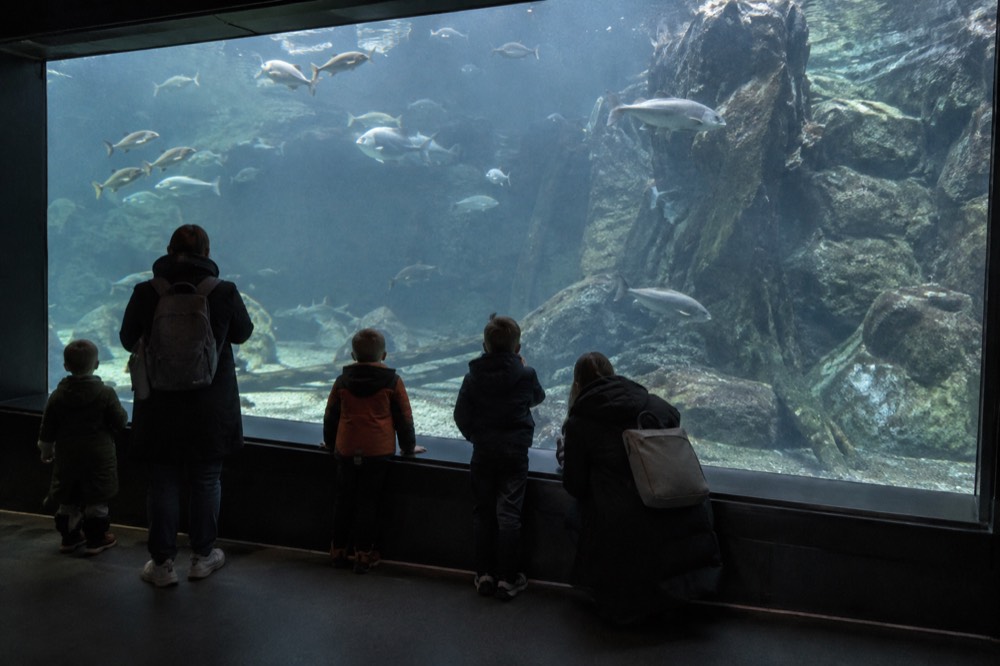
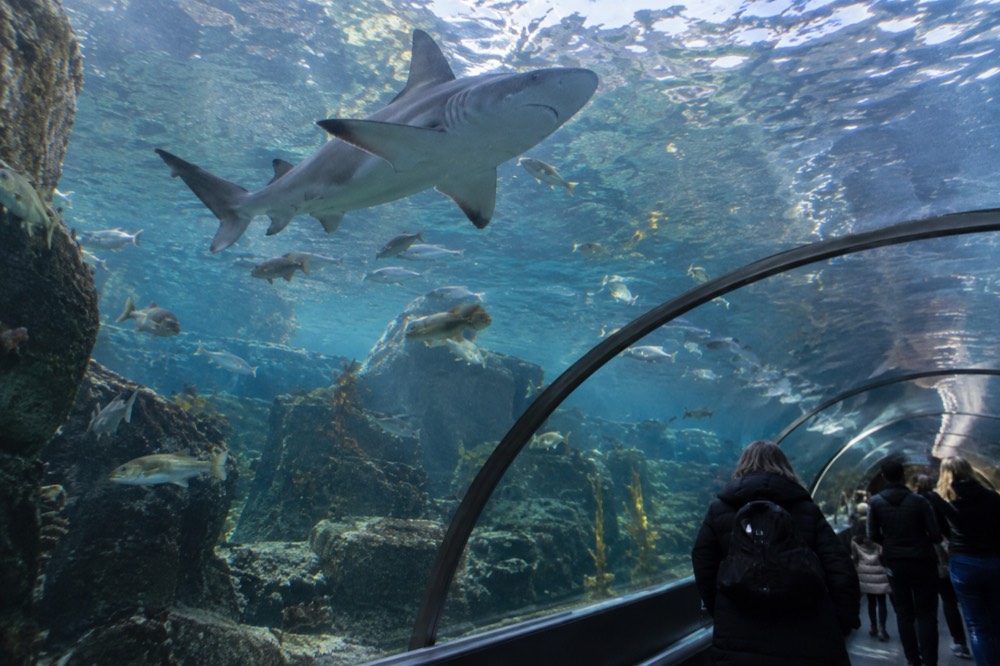
Akvariehallen, the aquarium hall, covers Swedish and tropical waters, with the shark tunnel as its centrepiece. The venue's marine programme includes species from the Kattegat and North Sea, which ties the building to the city it sits in: Gothenburg is a port at the mouth of the Göta älv, and the aquarium's Baltic and North Sea tanks are essentially a local field guide. Feedings and talks run through the day and are included in entry.
| Hall | What it is | Included in entry? |
|---|---|---|
| Regnskogen | Multi-storey rainforest with canopy walkway, sloths and monkeys | Yes |
| Akvariehallen | Basement aquarium with shark tunnel, Swedish and tropical waters | Yes |
| Reptilariet | Reptile and amphibian house | Yes |
| Vildmarken | Nordic and Swedish wildlife zone | Yes |
| Rymdresan | Space and astronomy exhibition | Yes |
| Humans | Human body and biology exhibition | Yes |
| Mathrix | Mathematics and pattern exhibits | Yes |
| Vislab | Emerging technology and visualisation | Yes |
| Kemilabbet | Chemistry lab with hands-on sessions | Yes |
| Miniverseum | Play zone for the youngest visitors | Yes |
| Wisdome | Dome cinema with immersive shows | No, separate ticket |
The Wisdome caveat matters for families budgeting a day. The dome shows are sold as a separate ticket, and the venue notes a minimum age that effectively bars children under 4. If a Wisdome show is on your list, book it with the entry slot rather than hoping to add it on the day, because show capacity is a fraction of building capacity.

For visitors who prefer to see the full hall descriptions, opening calendar and booking terms in the venue's own words, Universeum's official site publishes all of it, in English as well as Swedish. This guide's figures are drawn from those pages, so anything that changes, a new hall, a revised cancellation window, will appear there first.
Is Universeum Good for Kids, and What Age Fits Best?
Universeum is built primarily for children and families, and the venue's own design reflects that: Miniverseum exists as a dedicated zone for the youngest visitors, children under 3 enter free with their own ticket, and the hands-on labs and animal zones are pitched at roughly ages 4 to 12. Adults visiting without children still get the rainforest, the shark tunnel and the space exhibition, but the building's centre of gravity is firmly family.
The under-3 rule trips people up in a small way: free entry still requires a ticket, booked like any other, because the venue counts heads for fire and capacity purposes. Book the free infant ticket in the same order as the rest.
For ages, the practical bands look like this, based on the venue's zone descriptions rather than any marketing copy: toddlers gravitate to Miniverseum and the aquarium; primary-age children, roughly 6 to 11, are the target audience for Kemilabbet, Vildmarken and the daily programme; teenagers tend to engage with Rymdresan, Vislab and the Wisdome shows. A family with a spread of ages can split up inside without much friction, because the building is one continuous loop and there are no separate ticketed wings apart from Wisdome.
Visitors combining a science-centre morning with an afternoon elsewhere should read Liseberg rides, tickets and when to go, because the amusement park sits a few hundred metres from Universeum's front door and the two share the Korsvägen tram stop. That proximity is the reason a Liseberg-plus-Universeum day is the default wet-weather plan for visiting families, though it should be noted that Liseberg closes entirely between late December and mid-April while Universeum never closes.
How Do You Get to Universeum, and What Does the Tram Cost?
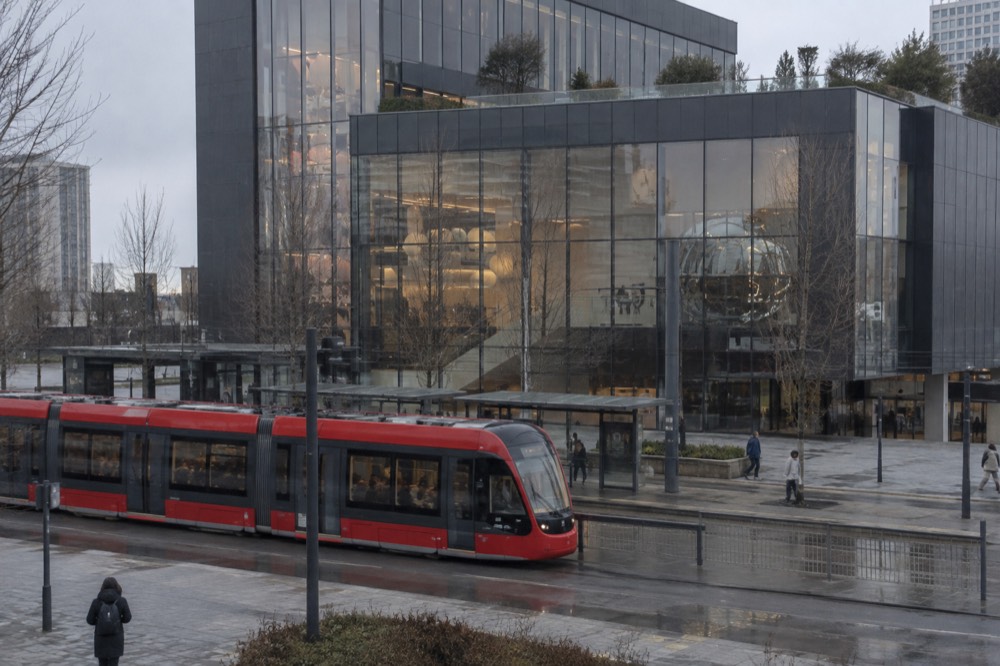
Universeum is at Korsvägen, one of Gothenburg's busiest tram interchanges, served by several tram lines and a short walk from Liseberg and the Museum of World Culture. Västtrafik's fare table shows a single adult Zone A ticket at 38 kr and a 24-hour Zone A ticket at 125 kr, and both cover the tram ride to Korsvägen. There is no parking advantage to driving; the tram is the standard way in.
Korsvägen is also a stop on the airport coach route: Swedavia states that the Vy flygbussarna coach runs Landvetter Airport, Korsvägen, Göteborg C, so a visitor landing at Landvetter can step off the coach almost at Universeum's door in a stated 20-minute journey. The full transfer picture, including the absence of any rail link to the airport, is covered in Gothenburg Landvetter Airport to the city centre.
On fares, use Västtrafik's published figures and nothing else. A single Zone A adult ticket is 38 kr, youth 29 kr, and the 24-hour Zone A ticket is 125 kr, the same price in the app or at a shop, all listed on Västtrafik's own ticket pages. One caution that this site flags everywhere: a temporary state subsidy currently halves 30-day period tickets, but it does not apply to the 24-hour and 72-hour tickets visitors actually buy. Do not plan around a discount that does not exist for your ticket type. The wider network, zones and ticket machines are explained in Getting around Gothenburg: trams, tickets and zones.
| Ticket | Adult price | Notes |
|---|---|---|
| Single, 1 zone | 38 kr | Covers one tram ride to Korsvägen |
| Single, 2 zones | 76 kr | Only needed if travelling from outside Zone A |
| 24-hour, Zone A | 125 kr | Unlimited trams, buses and archipelago ferries for 24 hours |
| 30-day, Zone A | 445 kr | Halved by a temporary state subsidy through year end |
That last row deserves its own sentence: the 125 kr 24-hour ticket also covers the ferries to the southern archipelago islands, because Västtrafik's own zone map includes the boats in Zone A. A visitor who buys a day ticket for the tram to Universeum can, on the same ticket, ride to Saltholmen and out to Styrsö or Brännö in the afternoon. The details are in The Gothenburg archipelago.
How Long Should a Visit Take, and When Is It Quietest?
Plan on three to four hours for a full visit with children, or about two hours for adults moving quickly through the rainforest, aquarium and one or two other halls. The venue is open 10:00 to 18:00 every day of the year, and the quietest slots are weekday mornings outside Swedish school holidays; the venue itself warns that busy days and time slots sell out, which is the clearest signal that weekends and holidays are the crowded periods.
Swedish school holidays are the whole story for crowd planning. Term-time weekdays are calm. The weeks around Swedish sportlov in February, Easter, and above all the long summer break from mid-June to mid-August are the peak, and the dynamic pricing follows the crowds. October's half-term week is busy too, and that month has a meteorological wrinkle worth knowing: SMHI's 1991-2020 normals for the Göteborg A station show October as the wettest month of the year in Gothenburg at 102.9 mm, so half-term visitors are disproportionately indoors, and Universeum is where they go. The underlying data is published by SMHI, the Swedish Meteorological and Hydrological Institute.
Seasonal advice for the city as a whole, including the April dry window that SMHI's data identifies, is collected in Best time to visit Gothenburg. For a same-day rain plan, Gothenburg on a rainy day ranks the indoor options, and Universeum sits near the top of that list for families precisely because it never closes.
What Else Is Within Walking Distance of Universeum?
Korsvägen is the densest attraction cluster in Gothenburg: Liseberg is directly across the road, the Museum of World Culture is a few minutes uphill, the Museum of Art and its Götaplatsen neighbours are one tram stop or a 15-minute walk north, and Slottsskogen park is a short tram ride west. A visitor can spend two full days inside a one-kilometre radius of Universeum's door without repeating anything.
The obvious pairing is Liseberg, the amusement park directly across Korsvägen. The two venues share a tram stop and a customer base, and the practical split families use is Universeum in the morning, when the animal feedings and lab sessions run, followed by Liseberg after lunch. Remember the Liseberg entry-ride split: a 95 kr entry ticket buys zero rides, per Liseberg's own price page, so budget for the combined entry-plus-ride pass if the afternoon moves to the park.
The Museum of World Culture sits closest after Liseberg, a few minutes' walk uphill, and its anthropological collections make a natural contrast with Universeum's natural science. The Röhsska Museum of Design and Craft and the Gothenburg Museum of Art are both reachable on foot or one tram stop, though note the art museum's own published plan to close in 2028 and reopen in 2032 for a rebuild, a fact this site reports because most guides do not. The Museum of World Culture rounds out the cluster.
| Attraction | Distance from Universeum | Notes |
|---|---|---|
| Liseberg | Across Korsvägen | Closed late Dec to mid-Apr; entry ticket excludes rides |
| Museum of World Culture | A few minutes uphill | Anthropology and world cultures |
| Gothenburg Museum of Art | One tram stop or 15 min walk | Closes 2028, reopens 2032, per the museum's own page |
| Röhsska Museum of Design and Craft | Short tram ride north | Design and craft collections |
| Slottsskogen park and free zoo | Short tram ride west | Free, open year-round |
| Universeum itself | At Korsvägen | Open every day, 10:00 to 18:00 |
Families stretching the day further will find more ideas in Gothenburg with kids, and a first-time visitor fitting Universeum into a bigger plan should start from Two days in Gothenburg, which places the Korsvägen cluster on day one. For the Volvo story, The Volvo Museum and World of Volvo explains why the old Arendal museum no longer exists and what replaced it.
Is the Universeum Entry Ticket Worth Booking in Advance?
Yes, booking ahead is the default advice for Universeum, for three reasons the venue itself states: on-site admission costs 30 kr more than the online price, busy days and time slots sell out, and free cancellation runs until 60 minutes before the slot. Since the pricing is dynamic, the only way to know your day's price is to check the live listing, and the only way to lose money is to buy at the desk.
The booking sold through this site's partner, listed from $25 per person with a 4.2 rating from 611 reviews, is the same timed admission the venue sells, so the choice between channels comes down to convenience and price on the day. Whichever route you take, the decisions that actually shape the visit are the time slot, since morning slots align with the feeding and talk programme, and whether to add a Wisdome show, which is the one thing inside that needs its own ticket.
One final planning note for cruise passengers and short-stay visitors: Universeum's location at Korsvägen makes it the most reachable major attraction in the city from almost any direction, whether by tram from the centre, by the airport coach from Landvetter, or on foot from hotels along Avenyn. The neighbourhood context, including where to sleep within reach of it, is covered in Where to stay in Gothenburg.
Common Questions About Universeum in Gothenburg
Is Universeum open every day?
Yes. The venue states it is open every day of the year, 10:00 to 18:00, with no closed day at all. That makes it unusual among Gothenburg attractions, most of which close at least one weekday.
How much does Universeum cost?
There is no fixed adult price. Admission is dynamically priced with a booked entry time, so the cost varies by day and slot. The venue states that buying on-site costs the online price plus 30 kr, so book online. Children under 3 enter free but need their own free ticket.
Is the Wisdome show included in the ticket?
No. Universeum's ticket page states that all exhibitions, activities, shows and guided tours are included in admission, but Wisdome dome shows are a separate ticket with a minimum age that effectively excludes children under 4.
How long does a visit take?
Roughly three to four hours with children, or about two hours for adults moving quickly. The building has eleven halls, and the rainforest and aquarium alone justify the longer estimate.
Can I cancel my Universeum ticket?
Yes, free cancellation is available up to 60 minutes before the booked entry time, per the venue's own ticket page. That makes booking early low-risk.
How do I get to Universeum by tram?
Ride any tram serving Korsvägen. A single adult Zone A ticket costs 38 kr and a 24-hour Zone A ticket 125 kr, per Västtrafik's fare table. The airport [coach from](https://busbud.tpk.ro/pZ1aQZGA) Landvetter also stops at Korsvägen.
For everything else in the neighbourhood, start with Gothenburg Travel Guide and its coverage of the Korsvägen attractions, or see Slottsskogen park and its free zoo for the free outdoor counterpart to a Universeum morning.