Best Restaurants in Gothenburg, Sweden: Where to Eat and What to Order
Gothenburg eats from the Kattegat. The city's restaurant identity is built on shrimp, langoustine, salmon and mussels landed a short sail from the harbour, sold in two market halls and cooked in a dining scene that runs from fish counters to fine dining. This guide explains where the food comes from, which halls and neighbourhoods to build a trip around, and how to plan a day of eating without guessing.
Short answer
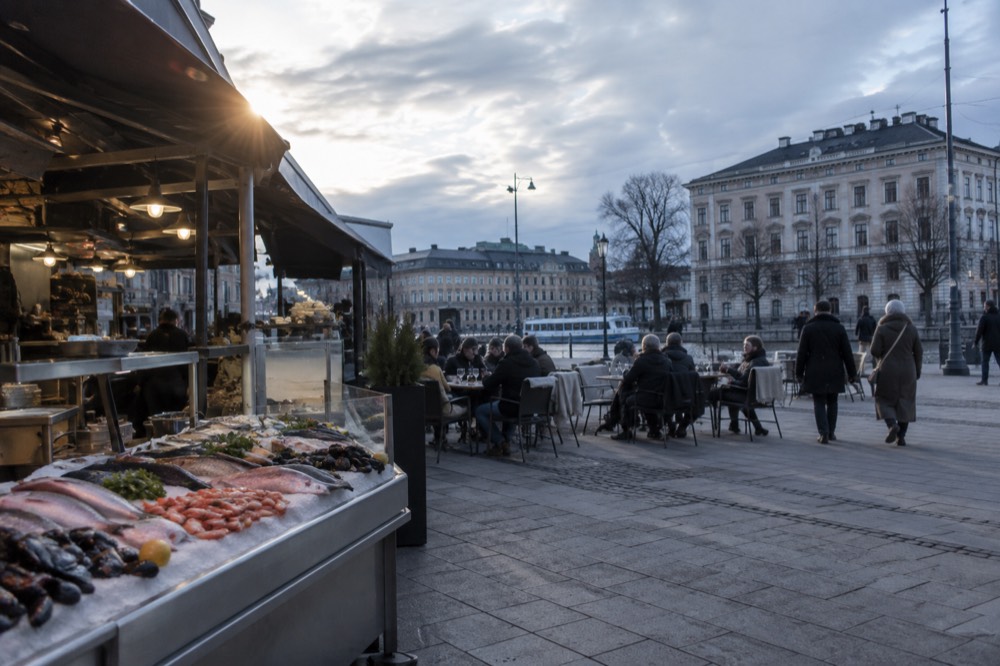
Build your eating around two market halls, Feskekôrka and Stora Saluhallen, plus the seafood of the west coast: shrimp, langoustine, salmon and mussels. Feskekôrka reopened in 2024 as a food hall with five restaurants, not just fish counters. Pair a hall visit with fika in the afternoon and a sit-down dinner in Haga, Linné or Majorna. A guided food walk or a shrimp-and-salmon cruise is the fastest way to taste the range.
Gothenburg, Sweden's second city, sits at the mouth of the Göta älv where the river meets the Kattegat, and the whole dining scene flows from that geography. The shrimp, langoustine, salmon and mussels on the city's menus are west-coast catch, landed close enough that the harbour is part of the supply chain rather than a postcard. Göteborgs Stad counts 613,274 residents at the end of 2025, and the city's own tourism body reported over six million commercial guest nights in 2025, a record year, so the restaurant floor keeps widening to meet both locals and visitors.
One warning before anything else: a lot of what is written online about eating in this city is stale. The most repeated error concerns Feskekôrka, the fish church on Rosenlundsgatan. Guides written between 2020 and 2023 describe it as closed for renovation. It is not. It reopened in 2024, the same year the 1874 building turned 150, and it came back as something different from what closed: a food hall. If your plan was built on an older article, this page is the correction. For the wider picture of the city's food culture, start with where to eat in Gothenburg and the deeper dive into Feskekôrka, the fish church.
What Food Is Gothenburg, Sweden Known For?
Gothenburg is a west-coast seafood city first: shrimp, langoustine, salmon and mussels from the Kattegat, sold fresh in two market halls and served everywhere from counters to fine dining. Around that core sit fika, the Swedish coffee-and-cake break, and a food-hall culture centred on Feskekôrka and Stora Saluhallen on Kungstorget. The city's dining identity is maritime and market-driven, not a single signature dish.
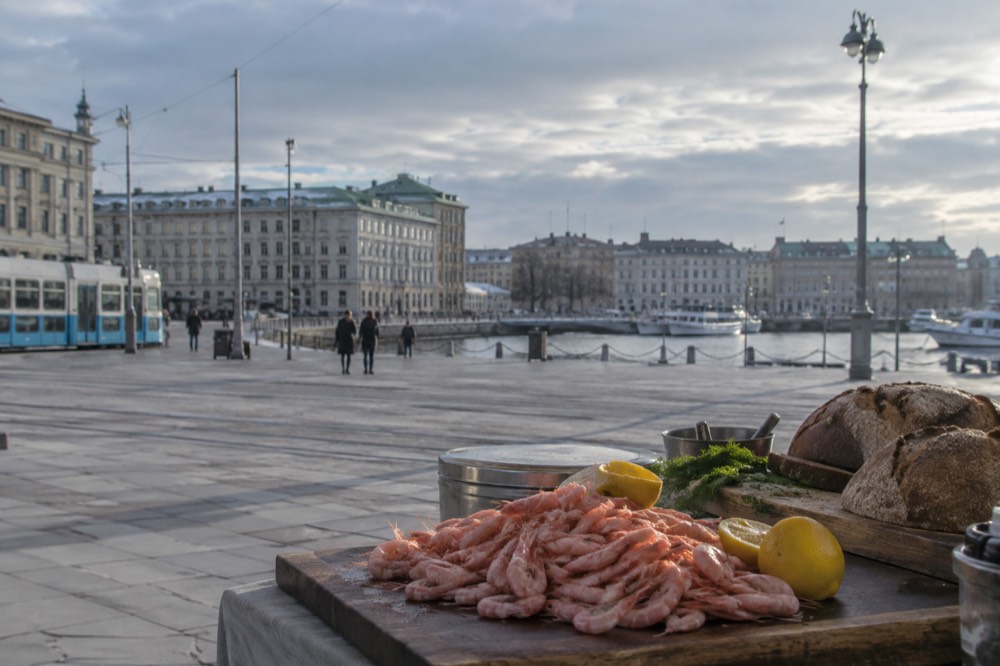
The seafood answer deserves precision. The west coast here means the Kattegat, the shallow sea between Sweden and Denmark, and the catch that defines the region's tables is specific: shrimp (often served cold, peeled, on bread or by the heap), langoustine, salmon and mussels. Does Sweden have good seafood? Yes, and the west coast is where the reputation is earned, which is why so many Gothenburg menus read like a tide table.
The second pillar is fika, the Swedish coffee break that is closer to a social institution than a snack. It has its own vocabulary, its own pastries and its own daily rhythm, and visitors who skip it miss half the food culture. The practical guide is fika in Gothenburg: how it works and where to do it, and the short version of what the word means is covered in what does fika mean in Sweden.
The third pillar is the market hall. Gothenburg has two that matter. Feskekôrka is the specialist: fish and shellfish, plus the restaurants that now cook them on site. Stora Saluhallen on Kungstorget is the generalist, the older and broader market hall where the city shops for everything else. Between them they give a visitor the full edible inventory of the region in two stops.
What Is Inside Feskekôrka Now, After the 2024 Reopening?
Feskekôrka reopened in 2024 as a food hall with five restaurants and two fish counters, no longer the fish-counter-only market it was before the renovation. The municipal property owner Higab confirms the reopening year and the 150th anniversary of the 1874 building. Inside today are the fish counters Ebbes Fångst and Flåtens Fiskhandel, and the restaurants Haldis Kök, Pråmenaden, Victor von G, Lilla Åstol and Ekmans, according to the hall's own site.
That list is the practical answer to "what to eat at Feskekôrka": it is now a place where you can both buy the raw catch and sit down with it cooked, in one building shaped like a wooden church. Lilla Åstol is seasonal, its own copy says it reopens in spring, so a winter visitor will find four restaurants rather than five. That is the kind of detail that separates a plan from a surprise.
The building itself is part of the draw. Opened in 1874, designed to look like a church, it has spent a century and a half as the city's fish market, and the 2024 reopening is the biggest change in its history. Older guides that call it closed are describing the renovation period, which ended. Guides older still describe fish counters only, which is describing a building that no longer exists in that form. The reopening and the anniversary are documented by Higab, the municipal property owner, on its own project pages.
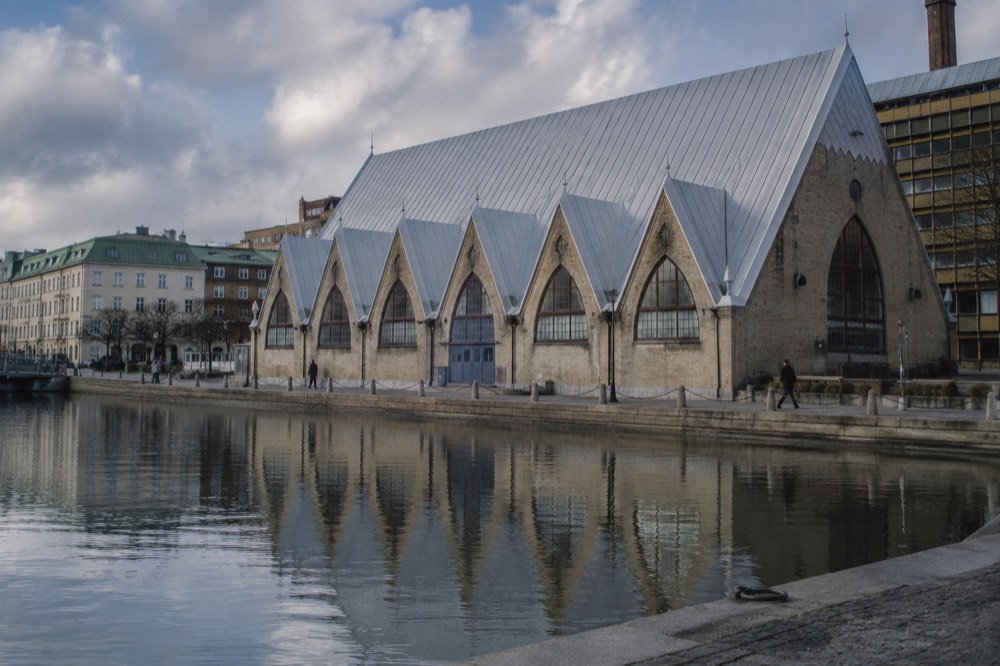
For the full history, the renovation story and what each counter sells, read the dedicated page on Feskekôrka, the fish church. If you are planning a route, the hall sits on Rosenlundsgatan in the centre, close to the canal, which makes it an easy pairing with a Paddan boat departure or a walk along the river. The where to eat in Gothenburg guide places it in the wider context of the city's dining districts.
A food-focused visit can also be walked with a guide. Two options from the current roster stand out for this itinerary: a West Coast food walking tour, from $144 per person, rated 4.8 from 17 reviews, three hours, and a walking tour with Swedish fika, from $93 per person, rated 4.4 from 71 reviews, two hours. The fika tour covers the pastry half of the culture; the West Coast walk covers the savoury half. Check availability
Which Gothenburg Neighbourhoods Should You Eat In?
The four eating districts that reward a visitor are the central market-hall zone around Rosenlundsgatan and Kungstorget, Haga with its wooden old quarter and café culture, the Linné streets with their dense strip of restaurants and bars, and Majorna, the second-hand quarter with a slower, more local dining scene. Each has a distinct character, and a good trip samples at least three of them rather than eating in one place every night.
Haga is the most distinctive setting: painted wooden houses, cobblestones and a café tradition built for long fika afternoons. The neighbourhood has its own guide at Haga: Gothenburg's wooden old quarter, and the question of what to do there beyond eating is answered in what to do in Haga. Linné, running out from Linnégatan toward Slottsskogen, is where the bar-and-restaurant density peaks, and it connects naturally to the Linné and the Långgatorna strip page. Majorna, west of the centre toward the river mouth, is the second-hand quarter, and its character is covered in Majorna: Gothenburg's second-hand quarter.
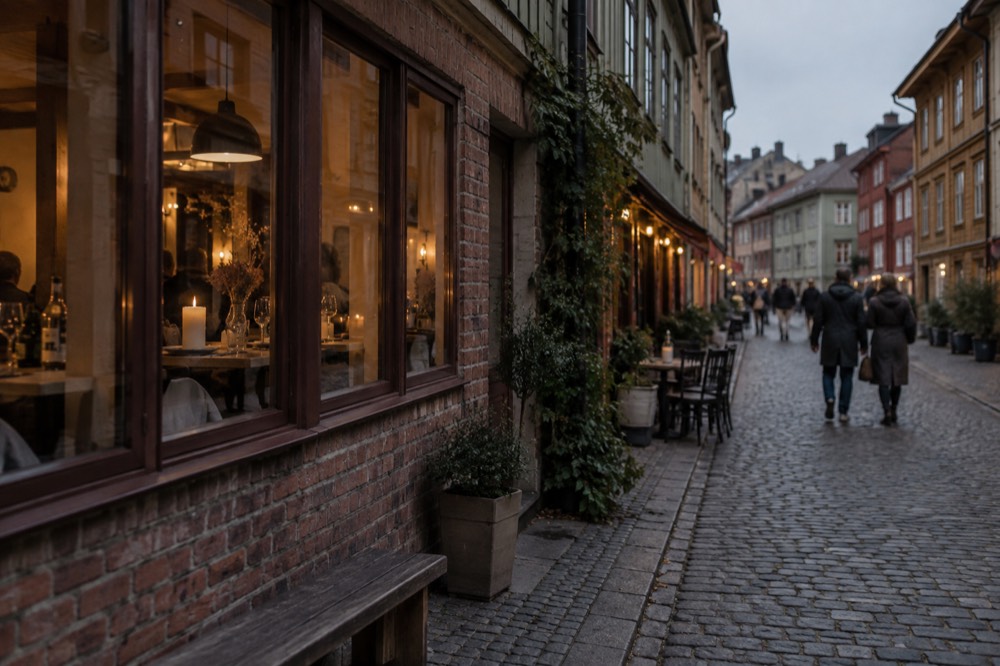
The districts divide the work sensibly. The centre holds the two market halls and the biggest concentration of dinner destinations. Haga holds the daytime café culture. Linné holds the evening energy. Majorna holds the neighbourhood kitchens. Vasastan, the stone-street student quarter, adds café density of its own, as described in Vasastan: stone streets and student cafés.
Here is how the districts compare for a visitor planning meals:
| District | Best for | Character | Pair it with |
|---|---|---|---|
| Central (Rosenlundsgatan, Kungstorget) | Market halls, seafood counters, sit-down fish restaurants | Maritime, busiest at lunch | Canal boats, Nordstan shopping |
| Haga | Fika, cafés, old-quarter atmosphere | Wooden houses, cobblestones, daytime pace | Skansen Kronan viewpoint walk |
| Linné / Långgatorna | Dinner, bars, restaurant density | Evening energy, young crowd | Slottsskogen park and its free zoo |
| Majorna | Neighbourhood kitchens, slower pace | Local, second-hand shops, industrial past | Riverside walks toward the bridge |
How Do You Turn a Meal Into a Full Food Day in Gothenburg?
A full food day in Gothenburg runs fika in the morning, a market-hall lunch built around Feskekôrka or Stora Saluhallen, an afternoon snack or archipelago shrimp cruise, and dinner in Linné or Majorna. The city's compact centre makes this walkable, and the tram network covers the longer legs, so the plan needs no car and no reservations for the first three stops.
The morning belongs to fika. Sweden treats the coffee break as a scheduled part of the day rather than a grab-and-go, and Gothenburg's café stock is deep enough that the hardest choice is the pastry. The mechanics, the etiquette and the best stops are laid out in fika in Gothenburg: how it works and where to do it.
Lunch should be one of the two halls. Feskekôrka for fish and shellfish, Stora Saluhallen for the broader market spread. Both are central, both let you assemble a meal from counters rather than commit to one menu, and both put you inside working food institutions rather than tourist simulations.
The afternoon is where the options widen. A shrimp-and-salmon cruise with live music, from $95 per person, rated 4.7 from 14 reviews over three hours, puts the region's signature catch on the water, and the listing can be checked through the operator's live listing. The alternative is to ride the tram to Saltholmen and take the ferry into the southern archipelago, where the islands are car-free and inside the city's own transit zone; the details are in how to get to the Gothenburg archipelago and the southern archipelago: Styrsö, Brännö, Vrångö and Donsö.
Dinner closes the day in Linné or Majorna. This is also where a craft-beer walk fits, if the evening is going to run long: the craft beer walking tour with tastings runs from $112 per person and has no reviews yet, which is real information about a new listing rather than a warning.
What Should You Know About Drinking in Gothenburg?
Gothenburg drinking runs through one statutory rule: beer above 3.5% ABV, all wine and all spirits are sold only by Systembolaget, the state monopoly, while supermarkets stock beer at or below 3.5%. Restaurants and bars serve the full range, but retail purchase of anything stronger than folköl happens at the monopoly. Craft beer culture is strong, and the city's distillery scene now supports both tours and gin-making workshops.
The 3.5% threshold is statute, not custom. The Swedish alcohol act defines beer over 2.25% but not over 3.5% as folköl, supermarket-legal, and everything stronger as starköl, monopoly-only. One practical consequence visitors notice: the supermarket version of a familiar brand is often a weaker reformulation of the same beer. The rule is explained in full, with the statute reference, in craft beer and bars in Gothenburg.
Beyond beer, the roster includes a distillery tour with guided tasting, from $56 per person, rated 5 from 3 reviews over 90 minutes, and a craft distillery tour with a gin-making workshop, from $112 per person, no reviews yet, two hours. For the evening's second half, the city's bar and nightlife geography is mapped in Gothenburg nightlife.
Is Eating Out in Gothenburg Expensive?
Eating out in Gothenburg costs more than most of Europe and less than Stockholm, with the usual Nordic pattern: counter lunches and market-hall eating are the affordable tier, neighbourhood dinners sit in the middle, and fine dining is priced with any Scandinavian capital. The market halls are the cheapest way to eat the region's best seafood, because you are buying it a step closer to the boat.
The honest answer to cost is structural rather than a list of prices, and the full budget breakdown, with the numbers that can be verified, lives in is Gothenburg expensive: what a trip really costs. What a food-focused visitor can control is the tier mix: fika is cheap by design, market-hall lunches undercut restaurant dinners for the same catch, and the archipelago ferry ride that delivers you to an island lunch costs the same as a tram ticket.
The pass question also touches food planning, indirectly. The [Go City](https://gocity.tpk.ro/HQKyKKW4) All-Inclusive Pass covers more than 20 attractions and is sold from $56 per person, rated 3.8 from 238 reviews, but it is an attraction pass, not a dining pass, and it replaced the old municipal city card, which no longer exists. Whether it earns its price is analysed in the Gothenburg city card: is it worth it.
Which Food Tours in Gothenburg Are Actually Worth Booking?
The food tours worth booking in Gothenburg split by appetite: the West Coast food walking tour for the broadest savoury tasting, the guided walking and fika tour for pastry and coffee culture, the shrimp-and-salmon cruise for seafood on the water, and the distillery tasting for the drinks half of the scene. All four are current live listings; two carry strong ratings and two are new with thin or no review history, which is worth knowing before you book.
Here is the full comparison from the current roster:
| Tour | From | Rating | Duration | Best for |
|---|---|---|---|---|
| Swedish Westcoast Food Walking Tour | $144 per person | 4.8 (17 reviews) | 3 hours | Broad savoury tasting on foot |
| Guided Walking and Swedish Fika Tour | $93 per person | 4.4 (71 reviews) | 2 hours | Fika culture and pastries |
| Shrimp & Salmon Cruise with Live Music | $95 per person | 4.7 (14 reviews) | 3 hours | Seafood on the water |
| Distillery Tour and Guided Tasting | $56 per person | 5 (3 reviews) | 1h 30m | Spirits and local distilling |
| Craft Beer Walking Tour with Tastings | $112 per person | no reviews yet | 3 hours | Beer-focused evening |
The distillery gin-making workshop, from $112 per person, also has no reviews yet, so treat it as a new listing rather than an established one. For visitors who want food and sightseeing in one ticket, the amphibious land-and-water bus tour, from $36 per person and rated 4.7 from 4,326 reviews over one hour, is the city's most-reviewed sightseeing product and pairs well with a market-hall lunch because it departs and returns centrally.
When Is the Best Time of Year to Eat in Gothenburg?
The best eating seasons in Gothenburg are spring and early autumn: April is the driest month of the year at 51.3 mm of rain over just 8.2 wet days per the SMHI 1991-2020 normals, and September combines warm sea water, 16.7 C on average at the Vinga station, with the harvest and the start of the shellfish season. October is the wettest month at 102.9 mm, so plan indoor food-hall days then.
The climate data gives food planners something most guides do not: a reason to prefer April over July. The SMHI 1991-2020 normals for station Göteborg A show the driest, least rainy month of the year is April, and the wettest is October, after the tourists have gone. The sea adds its own curve: water temperature peaks in August at 18.6 C and September's water, at 16.7 C, is warmer than June's at 16.2 C, which matters if your food day ends with a swim off an archipelago island.
The seasonal guide to the whole city, including the festival calendar, is best time to visit Gothenburg, and the December food-and-market scene gets its own treatment in Gothenburg Christmas market. For a trip built around eating, the shape of the year looks like this:
| Period | Food reason | Caveat |
|---|---|---|
| April to May | Driest month of the year (51.3 mm), light menus, thin crowds | Sea still cold, no swimming |
| June to August | Peak terrace season, warmest water in August (18.6 C) | Busiest tables, book ahead |
| September | Sea warmer than June, harvest, quieter restaurants | Weather turns by the month's end |
| October | Full autumn menus, mushroom and game season | Wettest month, 102.9 mm |
| November to December | Christmas market food, glögg season | Lilla Åstol inside Feskekôrka closed until spring |
Common Questions About Eating in Gothenburg
What food is Gothenburg famous for?
West-coast Kattegat seafood, above all shrimp, langoustine, salmon and mussels, plus the fika coffee-and-pastry tradition and the market-hall culture centred on Feskekôrka and Stora Saluhallen.
What to eat at Feskekôrka?
Since the 2024 reopening, Feskekôrka houses two fish counters, Ebbes Fångst and Flåtens Fiskhandel, and five restaurants: Haldis Kök, Pråmenaden, Victor von G, Lilla Åstol and Ekmans. Lilla Åstol is seasonal and reopens in spring. You can buy raw catch at the counters or eat it cooked on site.
Is Feskekôrka open?
Yes. It reopened in 2024 after renovation, in the year the 1874 building turned 150, and it now operates as a food hall rather than a fish-counter-only market.
Is Gothenburg good for foodies?
Yes. The city combines two working market halls, a deep fika café culture, west-coast seafood landed nearby, a strong craft beer and distillery scene, and food tours covering everything from pastry walks to shrimp cruises.
Where should I stay to be near the best restaurants?
The centre puts you between both market halls; Haga and Linné put you in the café and dinner districts respectively. The full neighbourhood breakdown is in the where to stay in Gothenburg guide.
Can I buy beer in Gothenburg supermarkets?
Only beer at or below 3.5% ABV, defined as folköl under the Swedish alcohol act. Anything stronger, plus all wine and spirits, is sold only by Systembolaget, the state monopoly. Bars and restaurants serve the full range.
The last practical note is about where to base yourself, because a food trip punishes a bad location. Staying central keeps both market halls and the canal within a short walk; staying in Linné or Vasastan puts the dinner strip at your door. The trade-offs, prices and neighbourhood-by-neighbourhood verdicts are in where to stay in Gothenburg, and the logistics of arriving, from Landvetter airport into the centre, are covered in Gothenburg Landvetter airport to the city centre. Between meals, the rest of the planning sits with Gothenburg Travel Guide: how many days to give the city, how the trams and zones work, and which archipelago island to aim the ferry at. Eat the shrimp first.