Gothenburg or Malmö: Which Swedish City Should You Visit?
Two of Sweden's three biggest cities, two very different trips. Gothenburg is a west-coast harbour town with a car-free archipelago inside its own tram zone; Malmö is a compact Öresund city glued to Copenhagen. Here is how the choice actually breaks down.
Short answer
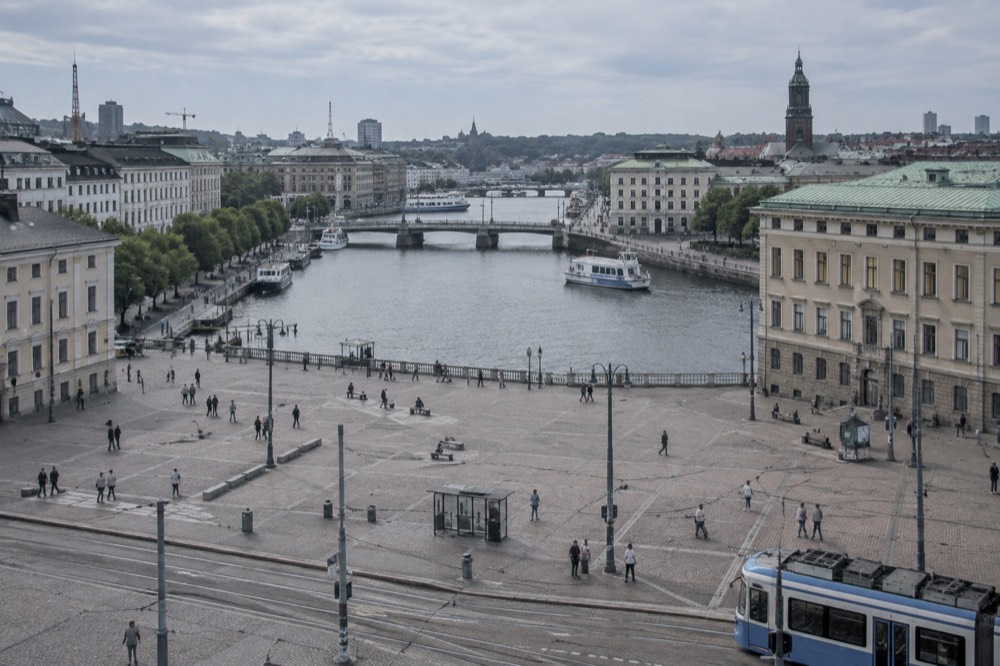
Choose Gothenburg for the archipelago, the trams, Liseberg and a big-city food scene on its own island of culture. Choose Malmö for a short, flat, bikeable city break combined with Copenhagen, which sits 30 minutes away by train across the Öresund bridge. Gothenburg needs three to four days; Malmö works as a one or two-day add-on.
Gothenburg sits at the mouth of the Göta älv where the river meets the Kattegat, a city of 613,274 people (end of 2025, per Göteborgs Stad) laid out by Dutch engineers inside a moat, with a tram network that runs from Mölndal in the south to Angered in the north and out to Saltholmen in the west, where the boats leave for a car-free archipelago that is legally part of the city. Malmö is the other proposition entirely: Sweden's third city, flat, compact, on the Öresund, with Copenhagen across the water and a rail journey measured in minutes rather than hours. Travellers doing Sweden often ask which one deserves the days. The honest answer is that they are not really competing for the same trip.
This comparison comes from the desk of Gothenburg Travel Guide, and it is written with a declared interest: this site covers Gothenburg, Sweden, in depth, and every Gothenburg figure below is sourced from the city, the transport authority, SMHI or the venues themselves. Where Malmö is described in general terms, no numbers are invented, because the verified facts pack behind this page covers the west coast, not Skåne. That asymmetry is itself the first finding: Gothenburg rewards a dedicated trip, while Malmö is usually a chapter in a Copenhagen itinerary.
How Do Gothenburg and Malmö Compare on Size and Setting?
Gothenburg is roughly twice Malmö's size by population, with 613,274 residents at the end of 2025 against a smaller Skåne figure, and the two cities occupy opposite edges of the country: Gothenburg on the exposed Kattegat coast at 57.7 degrees north, Malmö on the sheltered Öresund in the far south, which is why Gothenburg reads as a maritime, granite-and-shipyard city and Malmö as a low, brick, continental one within sight of Denmark. The settings produce different weather, different light and different trips. Gothenburg's daylight runs from 6 hours 32 minutes on 21 December to 18 hours 06 minutes on 21 June, a swing of over 11 and a half hours, and its sea temperature peaks at 18.6 C in August at the Vinga lighthouse station, with September water (16.7 C) warmer than June water (16.2 C). Malmö, several degrees of latitude south, has milder winters and shorter summer evenings. Gothenburg's setting is the more dramatic one: an archipelago of car-free islands, a river harbour, and hilltop viewpoints such as Ramberget and Skansen Kronan that Malmö, famously flat, simply does not have.
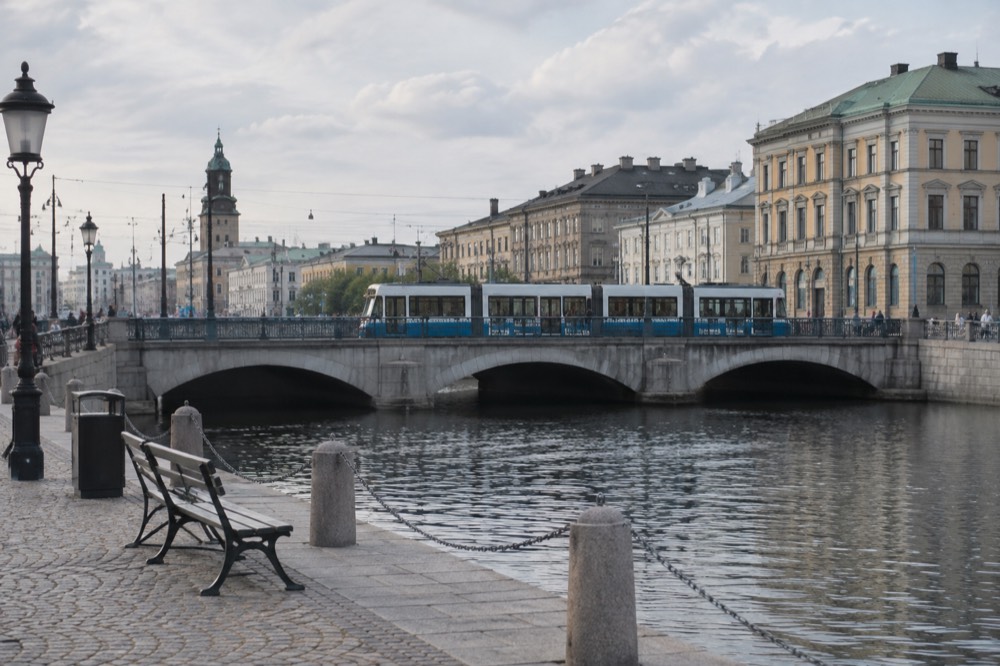
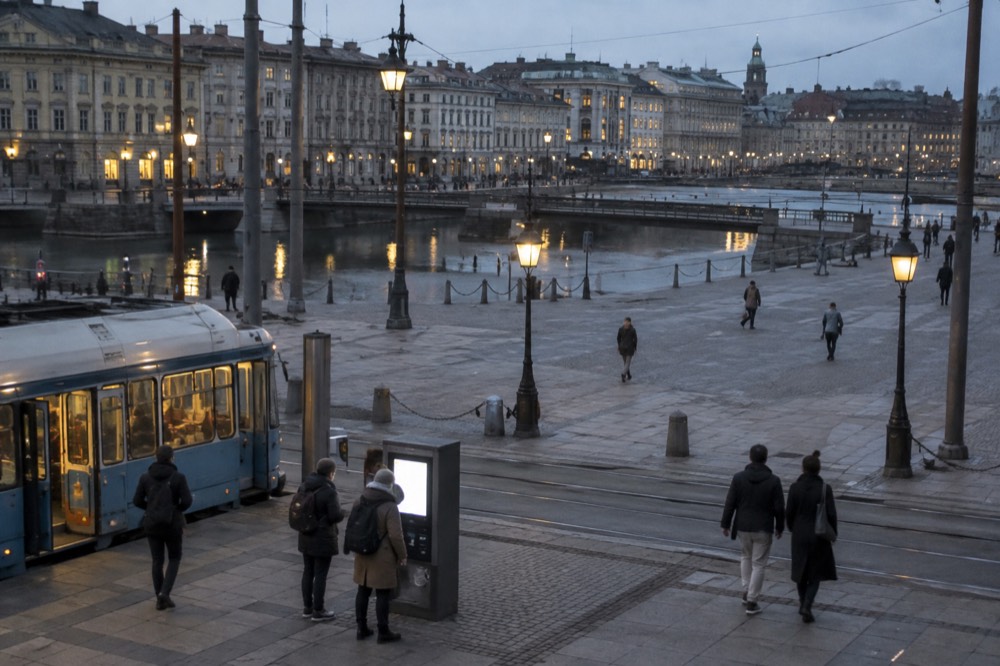
The scale difference matters for planning. Gothenburg's 12 tram lines, 134 stops and 188 km of single track (Göteborgs Spårvägar's own annual report figures, as of 2022) carry 126 million journeys a year, and the network is the backbone of a visit: you ride a tram to the ferry terminal at Saltholmen, a tram to Liseberg, a tram almost everywhere. Malmö's centre is small enough that most visitors walk or rent a bike and never touch a timetable. So the size question is really a pacing question. Gothenburg is a city you spread over days; Malmö is a city you can compress.
There is also the question of what sits next door. Malmö's trump card is Copenhagen, close enough across the Öresund bridge that many visitors sleep in one city and eat in the other. Gothenburg's neighbourhood, by contrast, is water and coast: the southern archipelago, the Bohuslän granite islands, and the lake country inland. One city is a gateway to Denmark; the other is a gateway to the Swedish west coast. If your mental image of the trip involves islands, boats and cold-water swims, that is Gothenburg. If it involves cycling between two countries in one afternoon, that is Malmö.
Which City Is Easier to Reach and Get Around?
Gothenburg is served by Landvetter Airport, Sweden's second-largest with 5,435,850 passengers in 2025, and the airport coach, now branded Vy flygbussarna, reaches the centre in a stated 20 minutes, with no rail link at all; within the city a 24-hour Zone A Västtrafik ticket costs 125 kr and covers trams, buses and the archipelago ferries, while Malmö is reached through Copenhagen Airport across the Öresund and is walked or cycled once you arrive. The two arrival experiences could hardly differ more. Landvetter's Swedavia pages list coach and bus only: the Vy flygbussarna route runs Landvetter, Korsvägen, Göteborg C, and Västtrafik bus 612 and a FlixBus line also serve the airport. Full detail is in our Landvetter airport to city centre guide.
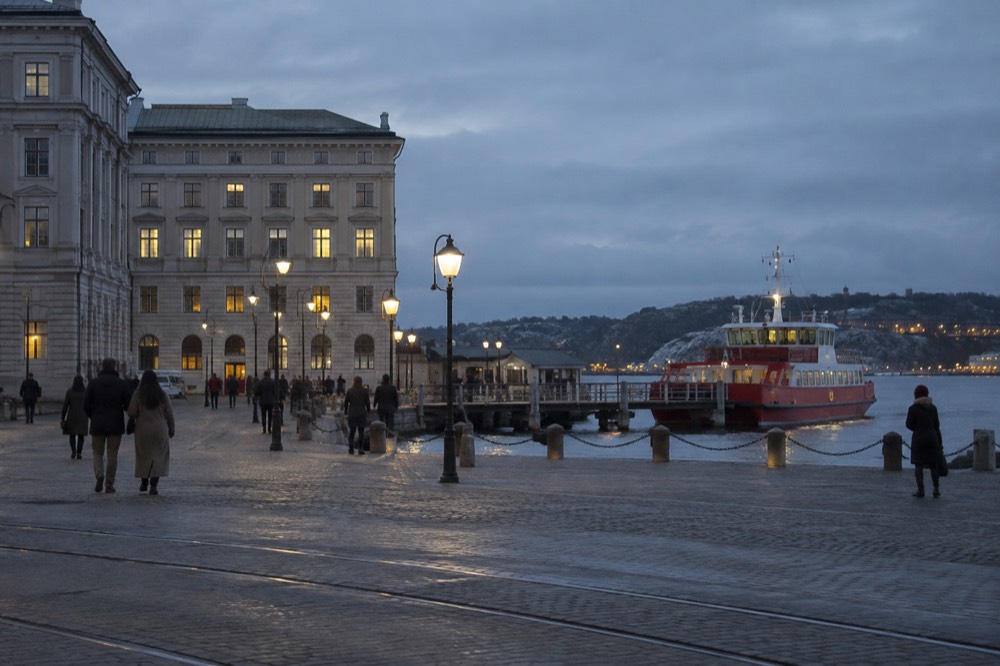
Inside Gothenburg, the fare structure is unusually generous for a visitor. Västtrafik's zones are A, B and C, and Zone A covers Göteborg, Partille, Mölndal and Öckerö, which includes every southern archipelago island. The ordinary ticket covers the boats: Västtrafik's zone map shows the ferry lines, and the islands are reached with a Zone A ticket. So one 125 kr day ticket buys trams all day and a ferry out to sea. Note one nuance that careless guides get wrong: a temporary state subsidy currently halves every 30-day period ticket (Zone A adult 890 to 445 kr), but it does not cover the 24-hour and 72-hour tickets visitors actually buy. Day tickets are full price. The tram system is covered in depth in getting around Gothenburg.
Malmö needs almost no local transport knowledge. Its centre is compact and flat, the rail link to Copenhagen is the point of the place, and most itineraries treat it as a walkable add-on. The practical consequence: Gothenburg rewards a little homework (zones, tickets, the tram map), and that homework pays back with an archipelago. Malmö rewards arriving with nothing planned.
If you do land in Gothenburg and want the geography explained fast, the amphibious bus tour drives the streets and then drives into the harbour, one hour, from $36 per person, rated 4.7 from 4,326 reviews on the operator's live listing. It is the single best orientation move in either city, because Malmö has nothing equivalent and does not need it.
Which City Has the Bigger Attractions: Gothenburg or Malmö?
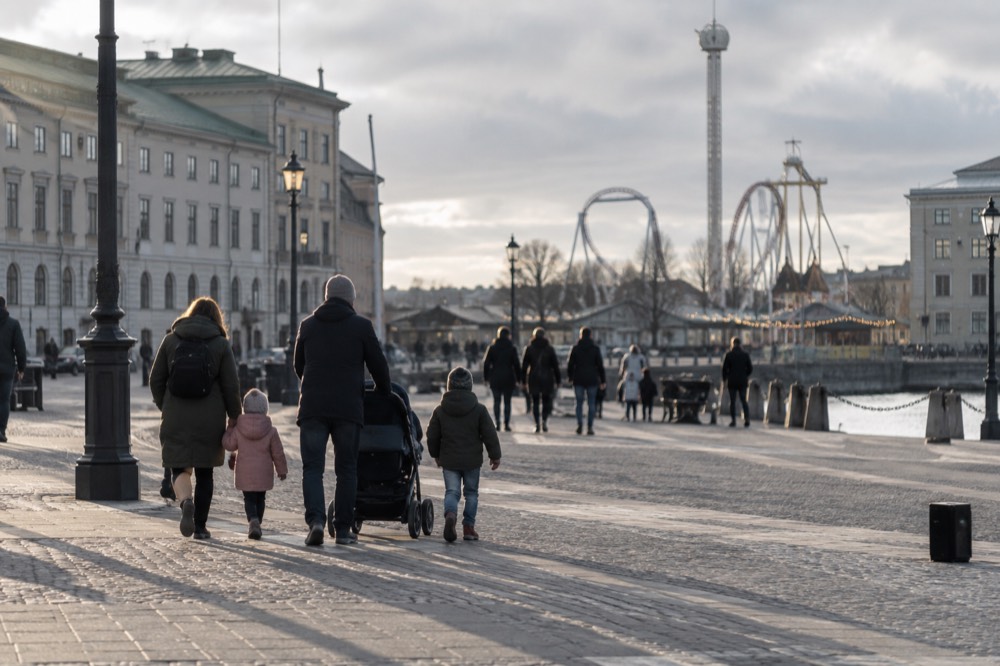
Gothenburg holds the heavyweight attractions of western Sweden, including Liseberg, the amusement park that drew roughly 2.5 million park guests in 2025, Universeum's rainforest and aquarium halls, the reopened Feskekôrka food hall and World of Volvo, while Malmö's attraction set is smaller-scaled and centred on its old town squares, its park and its modern waterfront, which means families and ride-lovers should point at Gothenburg and city-break strollers at Malmö. The headline item is Liseberg, and it comes with a calendar trap. Liseberg's 2026 seasons run summer 18 April to 20 September, Halloween 2 October to 1 November, and Christmas market 14 November to 23 December, per the park's own tickets and prices page; the park is closed from late December to mid-April and in the gaps between seasons. Entry is sold separately from rides: an Entré ticket from 95 kr buys the gate and zero rides, and an Entré + Åkpass from 365 kr is what a rider needs. Liseberg is not sold on any booking platform, so its tickets come from Liseberg itself. The seasons and the price split are covered fully in Liseberg rides, tickets and when to go.
Around Liseberg the rest stacks up quickly. Universeum is open every day of the year, 10:00 to 18:00, with dynamically priced, time-slotted admission and no fixed published adult price, so any guide quoting one is wrong by design. The old Volvo Museum at Arendal closed permanently in December 2023; World of Volvo, at Lyckholms Torg, is the successor, with exhibition tickets from 120 SEK online and a weekday Torslanda factory tour from 175 SEK. Feskekôrka, the 1874 "fish church", reopened in 2024 as a food hall with two fish counters and five restaurants, no longer just a fish market. Göteborgs konstmuseum holds around 70,000 works and is free for everyone under 20, though it closes for a rebuild in 2028 and reopens 2032. Malmö counters with charm rather than scale, and for a visitor choosing on attractions, the honest summary is that Gothenburg has a week of major sights and Malmö has a pleasant day.
For a fair side-by-side, here is how the attraction load breaks down:
| Category | Gothenburg | Malmö |
|---|---|---|
| Theme park | Liseberg, ~2.5 m park guests in 2025 | None comparable |
| Science centre | Universeum, open daily, dynamic pricing | Smaller-scale options |
| Museum flagship | Göteborgs konstmuseum, ~70,000 works, closes 2028 | City museums, smaller collections |
| Food landmark | Feskekôrka food hall, reopened 2024 | Market squares and cafés |
| Waterfront | Working harbour, archipelago ferries | Öresund promenade, beach park |
| Day-trip reach | Bohuslän coast, Marstrand, Lake Vänern | Copenhagen, 30 minutes by train |
Which Is Better for Food: Gothenburg or Malmö?
Gothenburg is one of Scandinavia's strongest food cities, built on west-coast fish and shellfish, with the Feskekôrka food hall, a Michelin-starred scene, and classic shrimp-sandwich culture on the harbour and in the archipelago, while Malmö's food reputation is real but smaller, anchored in bistro-style cooking and its closeness to Copenhagen's dining, so travellers eating their way through a trip should give Gothenburg the extra days. The west coast's raw material is the reason. SMHI's archive at the Vinga station shows sea temperatures peaking at 18.6 C in August, and the cold, brackish Kattegat is what makes the shrimp, langoustine and oyster haul what it is. Feskekôrka's own site currently lists fish counters Ebbes Fångst and Flåtens Fiskhandel plus five restaurants, among them Haldis Kök, Pråmenaden and Victor von G. The food side of the city is covered in where to eat in Gothenburg and in our Feskekôrka guide.
One Swedish rule shapes any food-and-drink evening in either city and is worth knowing before you plan: beer above 3.5% ABV, and all wine and spirits, are sold only through Systembolaget, the state monopoly, under Alkohollag (2010:1622). Supermarkets stock folköl up to 3.5%. Restaurants and bars are unaffected, but if your plan involves a picnic beer on an archipelago jetty, the strong version comes from the monopoly shop and those shops are not open late. Malmö operates under exactly the same national rule.
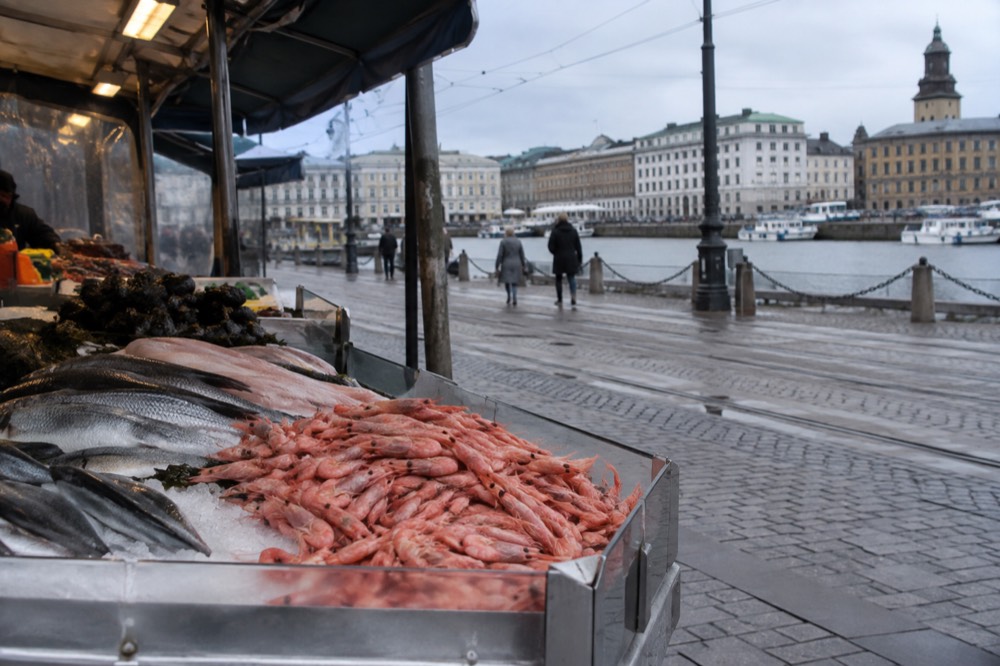
Fika, the Swedish coffee-and-cake pause, is common culture in both cities, and Gothenburg's version comes with its own institutions, from the cinnamon buns of Haga's wooden quarter to café culture along Vasagatan's student strip. The fika guide covers where the desk would send a reader. Malmö will serve you a perfectly good cardamom bun too. Food is the category where the difference is one of depth, not kind.
Which City Wins on Nature, Islands and Swimming?
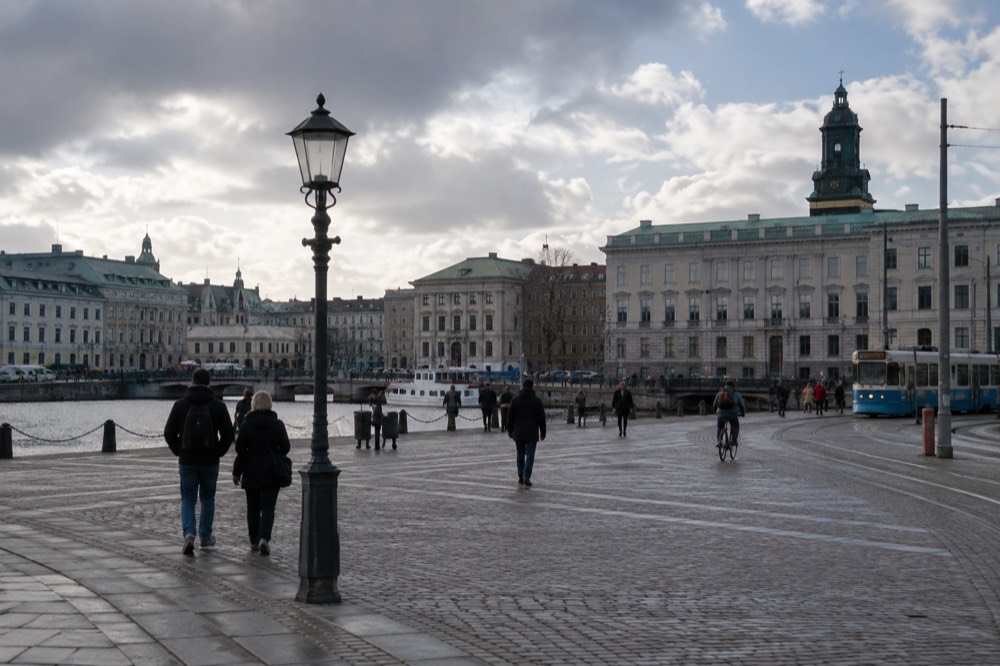
Gothenburg wins this category outright and almost by default, because its southern archipelago, the car-free islands of Styrsö, Brännö, Donsö, Vrångö, Asperö and Köpstadsö, is part of the city itself, reached by ordinary tram and ferry on a Zone A ticket, while Malmö's nature offer is a long sandy beach and parks inside a flat, landlocked-in-feeling city where the water is the Öresund rather than open sea. The archipelago fact is the best-value single item in Swedish travel. Västtrafik's zone map shows the ferry lines from Saltholmen inside Zone A, so the 125 kr 24-hour ticket covers the tram to the coast and the boat out to sea. The islands are legally protected from private car traffic, per a Göteborgs Stad study: only taxi, färdtjänst and emergency services use the roads. You swim off granite, eat shrimp sandwiches at harbour kiosks, and you are still, administratively, in Gothenburg. The full island-by-island picture is in the Gothenburg archipelago guide.
The water deserves a paragraph of its own because almost everyone plans it wrong. The sea peaks in August, not July: 18.6 C mean at Vinga, against 18.3 C in July. September water, 16.7 C, is warmer than June water, 16.2 C. February is the coldest month at 2.7 C, with a verified record low of -1.2 C, possible because brackish Kattegat water does not freeze at zero. So the archipelago swimming season is late July through September, and a September dip is warmer than a midsummer one. None of this exists in Malmö's offer, which is a beach park and a bridge view.
For a guided version of the islands, the archipelago cruise with guide runs 2.5 hours from $44 per person, rated 4.4 from 1,488 reviews on the listing, and there is a lunch-included variant at $68. For a longer commitment, the four-hour sail with a local skipper, from $138 per person, rated a perfect 5 from 9 reviews, puts you on an actual sailing boat rather than a tour boat.
How Do the Costs Compare Between Gothenburg and Malmö?
On the verified Gothenburg side, a visitor's core costs are the 125 kr 24-hour transport ticket, Liseberg entry from 95 kr with rides from 365 kr combined, Universeum's dynamically priced admission, and a Go City All-Inclusive pass from $56 covering 20-plus attractions, and while no comparable Malmö figures appear in this site's verified facts pack, the practical difference is that Gothenburg's big-ticket items are optional and its best asset, the archipelago, costs nothing beyond an ordinary tram ticket. That last point is worth underlining. The single most expensive-looking experience in Gothenburg, a day out among islands, is billed at the same rate as a bus ride to the mall. The Go City pass question, including the fact that the old Göteborg City Card no longer exists and the Go City product does not bundle transport, is worked through in is the Gothenburg city card worth it, and the broader budget picture in what a Gothenburg trip really costs.
Here is how the main paid items stack up on the Gothenburg side, all from verified sources:
| Item | Verified price | Basis |
|---|---|---|
| Västtrafik 24-hour Zone A ticket | 125 kr | Adult, app or shop, covers trams and archipelago ferries |
| Västtrafik single, 1 zone | 38 kr | Adult |
| Liseberg Entré | from 95 kr | Entry only, no rides; under 110 cm free |
| Liseberg Entré + Åkpass | from 365 kr | Entry plus unlimited rides |
| Universeum admission | dynamic, no fixed price | Booked time slot; on-site is online + 30 kr |
| World of Volvo exhibition | from 120 SEK online | 10% online discount |
| Göteborgs konstmuseum | 75 kr | Free under 20; free for students |
Malmö's cost profile, in general terms and without invented figures, is a Copenhagen-adjacent one: you pay Danish-adjacent prices in the nicest quarters and Swedish prices elsewhere, and the city's compactness keeps transport spending near zero. Gothenburg's costs are more front-loaded (tickets, attractions) but its free layer is thick: Slottsskogen's zoo, the viewpoints, the islands' beaches, and the free walking tours, which are covered in free things to do in Gothenburg.
For visitors planning to move between several paid attractions, the pass question is worth ten minutes of arithmetic. The [Go City](https://gocity.tpk.ro/HQKyKKW4) All-Inclusive pass, from $56 per person, rated 3.8 from 238 reviews, covers 20-plus attractions over one to five days; an Essentials variant from $47 covers three chosen attractions over 30 days. Neither includes public transport, which is the old city card's ghost, not the current product's promise.
How Many Days Does Each City Need?
Gothenburg needs three to four days to cover the centre, Liseberg, the archipelago and a food evening or two, while Malmö is comfortably done in one to two days and often functions as a half-day excursion from Copenhagen, so a week split between the two should give Gothenburg the larger share unless Copenhagen is doing the heavy lifting on your itinerary. The Gothenburg allocation is argued in detail in how many days you need in Gothenburg: one day for the centre and Haga, one for Liseberg or Universeum, one for the archipelago, and a fourth for the museums or a day trip toward Marstrand or the Bohuslän coast, which are covered in day trips from Gothenburg. Malmö compresses because its attractions cluster in a walkable core.
Timing within the year matters more in Gothenburg, because its calendar has hard edges. Liseberg is closed from late December to mid-April; the sea is at its warmest in August and September; October is the wettest month (102.9 mm) and April the driest (51.3 mm), per SMHI's 1991-2020 normals for station Göteborg A. And one myth to retire: Gothenburg is not, on SMHI's own data, Sweden's rainiest city; the national maxima sit in the western highlands and the mountains. It rains on about 127 days a year, roughly one day in three, and the wettest month is autumn, not summer. The full seasonal logic is in the best time to visit Gothenburg.
The seasonal numbers behind that timing, all read from SMHI's own normals spreadsheets, look like this:
| Month | Precipitation, mm | Wet days (≥1 mm) | Mean sea temp, °C |
|---|---|---|---|
| April | 51.3 (driest) | 8.2 | 7.1 |
| June | 73.7 | 10.0 | 16.2 |
| July | 81.3 | 9.8 | 18.3 |
| August | 92.8 | 11.9 | 18.6 (warmest sea) |
| September | 80.0 | 10.8 | 16.7 |
| October | 102.9 (wettest) | 12.6 | 12.8 |
| February | 61.0 | 9.7 | 2.7 (coldest sea) |
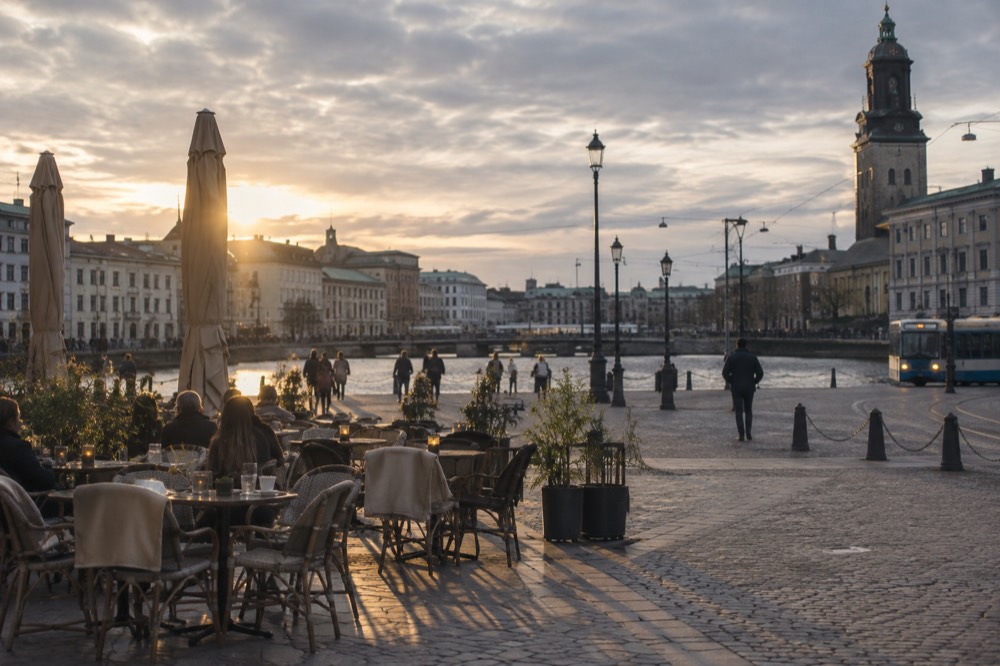
A reasonable combined plan, if Sweden is the theme: give Gothenburg the anchor booking, use it as the base for the archipelago and the coast, and treat Malmö as a stop on the way to or from Copenhagen. The reverse, basing in Malmö and day-tripping to Gothenburg, does not work, because the distance is real and Gothenburg's best content, the islands and the seasons, cannot be compressed into an afternoon.
So Which Should You Choose: Gothenburg or Malmö?
Choose Gothenburg if islands, boats, a major amusement park, a serious food scene, tram-based exploring and swimming off granite are what you want from Sweden, and choose Malmö if your trip is really a Copenhagen trip with a Swedish day attached, or if you want a short, flat, walkable city with continental cafés and no transport planning; on the evidence, Gothenburg is the destination and Malmö is the excursion. That verdict is not close to symmetrical, and the desk will not pretend otherwise. Gothenburg's verified assets are unusually deep for a city its size: a car-free archipelago inside the tram zone, an amusement park with around 2.5 million annual guests, a food hall landmark that reopened in 2024, and a museum quarter with a known future (Göteborgs konstmuseum closes in 2028, reopens 2032). Malmö's assets are real but lighter: proximity, compactness, and the Öresund bridge as a spectacle.
There are honest cases for Malmö. If you have one day in Sweden, Malmö from Copenhagen is the efficient choice. If amusement parks and boat trips hold no appeal, Gothenburg's extra days may feel padded. If you are visiting in deep winter, note that both cities are dark, but Gothenburg's December daylight lasts only 6 hours 32 minutes at the solstice, and its biggest attraction is shut; Malmö, further south, gets a bit more light. The winter picture for Gothenburg, including what stays open, is in Gothenburg in winter.
For most travellers asking the question, though, the answer is: Gothenburg is the trip, Malmö is the detour. And if the choice is between Gothenburg and the capital rather than Skåne, the desk has a separate head-to-head in Gothenburg or Stockholm: which to visit.
Common Questions About Gothenburg or Malmö
Is Gothenburg bigger than Malmö?
Yes. Gothenburg's city population was 613,274 at the end of 2025 per Göteborgs Stad, and the wider region is around 1.1 million. Malmö is Sweden's third-largest city and notably smaller, though this site's verified figures cover Gothenburg only, so no Malmö number is printed here.
Can you visit both Gothenburg and Malmö on one trip?
Yes, and the rail line along the west coast connects them. A sensible plan gives Gothenburg three to four days and Malmö one to two, usually paired with Copenhagen, which sits just across the Öresund from Malmö.
Which city is better for families, Gothenburg or Malmö?
Gothenburg, clearly. Liseberg's summer season runs 18 April to 20 September 2026, Universeum is open every day of the year, and Slottsskogen's zoo is free. Family ticket and ride-pass pricing is on liseberg.se, and Liseberg is not sold on any booking platform.
Is the Gothenburg archipelago really part of the city?
Yes. Styrsö, Brännö, Donsö, Vrångö and the other southern islands are areas of Gothenburg, reached by tram to Saltholmen and then ferry, all covered by an ordinary Zone A Västtrafik ticket. Private cars are banned on the islands.
Which city is cheaper to visit?
Both are Swedish-price cities. In Gothenburg, the verified core costs are a 125 kr 24-hour transport ticket and attraction tickets as listed above, while the archipelago costs only the ordinary ticket. This site's verified facts pack does not price Malmö, so no comparison figure is claimed.
When is the best time to visit Gothenburg rather than Malmö?
Per SMHI data, April is Gothenburg's driest month, the sea peaks at 18.6 C in August, and September water is warmer than June water. Liseberg runs 18 April to 20 September, so late April through September is the strong window; late December to mid-April closes the park.