Nordstan and Shopping in Gothenburg, Sweden: The Complete Guide
Nordstan sits between Göteborg Centralstation and the canal, and it anchors a shopping scene that spreads out into wooden old quarters, second-hand streets and a reopened fish-church food hall. Here is how the whole thing fits together, with the tram fares and the seasonal timing that decide whether a shopping day works.
Short answer
Nordstan is Gothenburg's central shopping centre, steps from Göteborg Centralstation and served by almost every tram and bus line in the city. A 24-hour Zone A ticket at 125 kr covers the trams, and the same ticket covers the archipelago ferries if a shopping day turns into an island afternoon.
Nordstan is the shopping anchor of central Gothenburg, Sweden: a covered mall of department stores, fashion chains, electronics and cafés sitting directly between Göteborg Centralstation and the Brunnsparken canal junction. Almost every tram line in the city passes within a short walk of its doors, which is why a shopping plan in Gothenburg usually starts here even when it does not end here. The mall is the loud, lit, weatherproof core of the scene, but the more interesting shopping in this city happens a few tram stops out, in Haga's wooden old quarter, along the Linné and Vasastan streets, in Majorna's second-hand shops, and inside Feskekôrka, the fish-church building that reopened in 2024 as a food hall with restaurants as well as fish counters.
This guide covers how the pieces fit together: what Nordstan is, how the tram system delivers you to it and to everywhere else, which neighbourhood does which kind of shopping, what the seasons do to a shopping day, and what things genuinely cost. The practical backbone is Gothenburg Travel Guide's transport and cost reporting, and the seasonal facts come from SMHI's own normals and Liseberg's published calendar.
What Is Nordstan in Gothenburg?
Nordstan is Gothenburg's central covered shopping centre, a connected cluster of retail blocks immediately east of Göteborg Centralstation, holding the city's densest concentration of chain stores, department stores, electronics shops and cafés under one roof. It is the default bad-weather shopping venue, the last stop before a train, and the place where the airport coach from Landvetter drops you, since the Vy flygbussarna route terminates at the Nils Ericson Terminalen right next door. Swedavia's own airport pages state the coach journey takes 20 minutes, so a landing shopper can be inside a shop within half an hour of the aircraft door opening.
The mall's role in the city is partly geographic. It sits on the inland edge of the old moat-and-canal core, so everything else in central Gothenburg fans out from it: the Inom Vallgraven quarter and the cathedral to the south, the canal boats at Kungsportsplatsen to the east, and Haga uphill to the southwest. If you are staying anywhere central, where to stay in Gothenburg matters less for shopping access than you might think, because the tram network collapses the distances anyway. The mall also functions as a covered shortcut in its own right: on a wet afternoon you can cross a substantial slice of the city centre without going outside, which is a genuinely useful property in a place where it rains on about one day in three.
What Nordstan is not is the whole story. Swedish chain retail is uniform by design: the same fashion brands, the same electronics, the same home stores appear in every Swedish city of size. Nobody crosses a border for them. The things worth travelling for in Gothenburg are the ones that cannot be replicated, and those live in the neighbourhoods and the food halls, which is where the rest of this guide goes.
How Do You Get to Nordstan and the Shopping Streets?
Nordstan is served directly by Göteborg Centralstation and the Nils Ericson Terminalen, plus the Brunnsparken and Nordstan tram and bus stops, so a single Västtrafik ticket covers the trip from anywhere in Zone A, which includes the whole city plus Mölndal, Partille and Öckerö. A single adult one-zone ticket costs 38 kr, and the 24-hour Zone A ticket costs 125 kr whether you buy it in the app or at a shop, per Västtrafik's own fare pages. The 24-hour ticket is the shopping-day ticket: it covers every tram hop between malls, quarters and viewpoints, and it also covers the archipelago ferries from Saltholmen, because the islands are inside Zone A.
| Ticket | Adult price | What it covers |
|---|---|---|
| Single, 1 zone | 38 kr | One tram, bus or boat journey |
| Single, 2 zones | 76 kr | Crossing into the next zone |
| 24-hour, Zone A | 125 kr | All trams, buses and archipelago ferries for 24 hours |
| 30-day, Zone A | 445 kr during the state subsidy | Commuter ticket, halved temporarily through year end |
Two cautions on that table. The 30-day halving is a temporary state subsidy on period tickets only: Västtrafik states it applies "för resor året ut", through the end of the year, and it does not touch the 24-hour and 72-hour day tickets a visitor actually buys. And the network itself is bigger than most visitors expect: Göteborgs Spårvägar's annual report describes 12 lines, 134 stops and 188 km of single track, running from Mölndal in the south to Angered in the north, with Saltholmen, the archipelago ferry terminal, as the western terminus. You ride a tram to the boat.
If the shopping day is your first full day in the city and you want the geography explained while you sit down, the sightseeing options cluster around the same junction. The amphibious bus is the one that connects the two halves of a Gothenburg day, the streets and the harbour:
For the deeper transport mechanics, ticket types and the zone map, getting around Gothenburg breaks the system down stop by stop.
Which Gothenburg Neighbourhood Should You Shop In?
Haga is the wooden old quarter for antiques, cafés and small Swedish design shops; Linné and Vasastan hold the vintage and independent retail; Majorna is the second-hand district; Feskekôrka is the food hall for edible shopping; and Nordstan is the efficient all-weather core for chains and department stores. Each has a distinct register, and the tram fare between any two of them is the same 38 kr single. The practical move is to pair one indoor and one outdoor area per day, because Gothenburg's weather rewards a covered fallback.
| Area | What it is best for | Register |
|---|---|---|
| Nordstan | Chains, department stores, electronics | Covered, weatherproof, efficient |
| Haga | Antiques, design, fika cafés | Wooden houses, cobbles, slower pace |
| Linné and Vasastan | Vintage, independents, book and record shops | Student-heavy, uneven, interesting |
| Majorna | Second-hand, reuse, small galleries | Working-class roots, cheapest |
| Feskekôrka | Fish counters, seafood restaurants | Food hall, reopened 2024 |
| Saluhallen | Traditional market hall | Food, deli, lunch |
Feskekôrka deserves its own sentence because the guidebooks lag reality. The fish-church building reopened in 2024, the year it turned 150, and it is no longer only fish counters: its own site now lists two fish counters, Ebbes Fångst and Flåtens Fiskhandel, and five restaurants, Haldis Kök, Pråmenaden, Victor von G, Lilla Åstol and Ekmans. Lilla Åstol is seasonal and reopens in spring. The full story, including what to eat there, is in Feskekôrka the fish church.
Haga works as the counterweight to Nordstan: a 52 kr guided walking tour of the old quarter runs 90 minutes and carries a 4.6 rating from 248 reviews, and the neighbourhood is compact enough that the shops and the famous cafés sit on the same few streets. The Haga old quarter guide covers the streets in detail, and fika in Gothenburg explains the coffee-and-bun institution that turns every shopping street into a rest stop.
If you want a short, cheap orientation before walking the quarters yourself, the 40-minute old town sightseeing tour is 16 kr per person and rated 4.6 from 200 reviews:
Between the walking tour and the amphibious option, the choice is really about time and water. The old town tour is a quick, dry primer on the cobbled core. The amphibious bus, rated 4.7 from 4,326 reviews at 36 kr per person for a one-hour trip, adds the harbour half of the city, and it departs from the same central junction where the shopping streets meet. Either way you end up back within walking distance of Nordstan's doors.
When Is the Best Time of Year to Shop in Gothenburg?
April is the statistically driest and best-timed month for outdoor shopping, with 51.3 mm of rain on 8.2 wet days, while October is the wettest month at 102.9 mm, which is exactly when the indoor malls and covered market halls earn their keep. Those figures are SMHI's 1991-2020 normals for station Göteborg A, and they overturn the usual assumption: the rain arrives after the tourists leave, and the dry window is spring, not summer. It rains on about 127 days a year in Gothenburg, roughly one day in three, so a covered plan B is always worth having.
| Month | Rainfall | Wet days | What it means for shopping |
|---|---|---|---|
| April | 51.3 mm | 8.2 | Driest month, best for Haga and Majorna on foot |
| July | 81.3 mm | 9.8 | Peak summer, crowded, mild |
| August | 92.8 mm | 11.9 | Warm sea, wetter streets |
| October | 102.9 mm | 12.6 | Wettest month, Nordstan season begins |
| December | 93.0 mm | 13.3 | Christmas market window, short days |
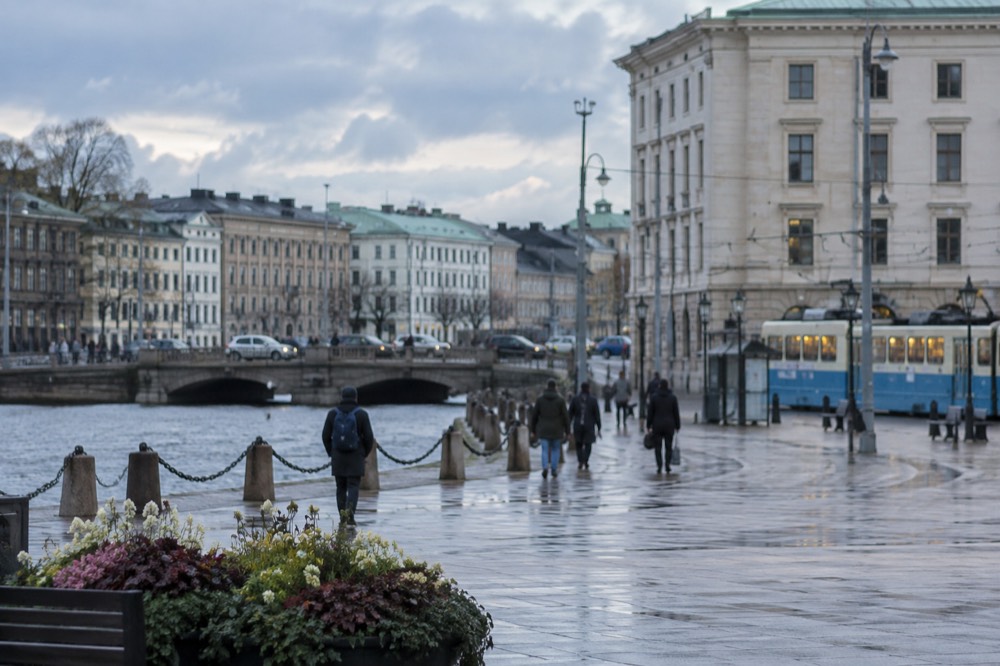
The Christmas shopping season has a hard calendar around it. Liseberg's Jul på Liseberg market runs 14 to 23 December 2026 per liseberg.se, and the wider Gothenburg Christmas market scene clusters in the same window. Daylight is the other constraint: the US Naval Observatory puts 21 December at 6 hours 32 minutes of daylight against 18 hours 06 minutes on 21 June, so a December shopping day that starts at noon is half over before it starts. June inverts the problem: civil twilight runs from 02:58 to 23:30, leaving roughly three and a half hours of true night, so evening shopping light lasts absurdly long. The month-by-month detail is in best time to visit Gothenburg.
What Should You Actually Buy in Gothenburg?
The things worth buying in Gothenburg are Swedish design and home goods, second-hand and vintage clothing, seafood and edible goods from the market halls, and Systembolaget's monopoly-range drinks, since beer above 3.5% ABV plus all wine and spirits can only be bought there. That last rule is statutory: Alkohollag (2010:1622) 1 kap. 8 § defines beer over 3.5% as starköl, and 5 kap. 1-2 § reserves retail of spirits, wine and starköl to the wholly state-owned monopoly. Supermarkets sell only folköl up to 3.5%, which is why the shelf version of a familiar beer brand often tastes weaker than its label suggests abroad: it is a 3.5% reformulation of the same beer.
For edible shopping, Feskekôrka and Saluhallen carry the seafood and deli weight, and the where to eat in Gothenburg guide connects the halls to the restaurants. For drinkable shopping, plan around Systembolaget rather than around supermarket hours, and check the specific store's own page for opening times before you build an evening around it. Sunday closing is the operative pattern to verify, since store hours vary by location and the monopoly's own general hours page is not reliably published.
For wearable and design shopping, the second-hand arc from Vasastan through Linné down into Majorna is where the city's character shows; the Majorna second-hand quarter is the cheapest end of it. Vasastan adds stone streets and student cafés between the vintage shops, and the whole arc is walkable end to end in an afternoon if the weather cooperates, or tram-hoppable in three short rides if it does not.
One honest note on "Swedish brands": most of the famous ones are cheaper at home or online than in a Swedish mall. What you are paying for in Gothenburg is the selection you cannot get elsewhere, the vintage stock, the market-hall food, and the monopoly's drink range. If the budget question is the main one, is Gothenburg expensive runs the full cost maths, and free things to do in Gothenburg covers the days when the wallet stays shut.
Do Any Passes or Tours Make Sense on a Shopping Trip?
A sightseeing pass makes sense only if your shopping days also include paid attractions, and the honest baseline is that the old Göteborg City Card no longer exists: the official tourism body sells no city card, and the current product is the Go City pass, which from its own site starts at SEK 449 for an Essentials version and SEK 499 for an All-Inclusive version. The Essentials option covers three chosen attractions over 30 days from activation; the All-Inclusive covers 20-plus attractions in one, two, three or five-day durations. Neither is a shopping discount, and unlike the old municipal card, no transport inclusion has been confirmed for it, so do not buy it expecting tram coverage.
The comparison between the pass types, and the verdict on who should skip them, is laid out in the Gothenburg city card guide. If you are weighing it against this site's listings, the All-Inclusive pass is sold from $56 per person and carries a 3.8 rating from 238 reviews:
The other pairing that earns its place on a shopping trip is the harbour. The archipelago cruise with guide runs 2.5 hours from $44 per person, rated 4.4 from 1,488 reviews, and it departs from the waterfront a short walk from the mall, so it slots into an afternoon without re-planning the day:
And if a shopping day stretches, remember the best-value fact in the city: the same 125 kr Zone A ticket that carried you between the quarters also covers the ferries from Saltholmen to the car-free southern islands, because Västtrafik's network treats the boats as ordinary lines and the islands as Zone A. The Gothenburg archipelago guide shows what is on the other end of that ride.
Common Questions About Shopping in Gothenburg
What is Nordstan?
Nordstan is Gothenburg's central covered shopping centre, sitting between Göteborg Centralstation and the Brunnsparken canal junction. It holds the city's densest concentration of chain stores, department stores and cafés, and it is the natural covered fallback when the weather turns, which around 127 days a year it does.
How do I get to Nordstan?
Take any tram or bus to Brunnsparken or the Nordstan stop, or arrive directly at Göteborg Centralstation, which sits beside the mall. The Vy flygbussarna airport [coach from](https://busbud.tpk.ro/pZ1aQZGA) Landvetter terminates at the adjacent Nils Ericson Terminalen, and Swedavia states the journey takes 20 minutes. A single one-zone Västtrafik ticket is 38 kr.
Where can I buy alcohol in Gothenburg?
Beer up to 3.5% ABV is sold in ordinary supermarkets, but anything stronger, plus all wine and spirits, is sold only by Systembolaget, the state monopoly. That is the statutory rule under Alkohollag (2010:1622), and it applies everywhere in Sweden, not just Gothenburg. Check the individual store's page for its opening hours before planning around a purchase.
Is Gothenburg good for second-hand shopping?
Yes, and it is one of the city's genuine strengths. Vasastan and the Linné streets hold the vintage and independent shops, and Majorna is the second-hand district with the cheapest stock and the most character. All of it is inside tram Zone A, so a crawl between the areas costs single fares or one 125 kr day ticket.
Does the 24-hour tram ticket cover the archipelago ferries?
Yes. The southern archipelago ferries from Saltholmen are part of the Västtrafik network and the islands are in Zone A, so a 125 kr 24-hour Zone A ticket covers trams and ferries together. The islands are car-free, so the boat is the only way in for a visitor.
When are the Gothenburg shops busiest?
Weekends and the Christmas window are the peak. Liseberg's Jul på Liseberg runs 14 to 23 December 2026, and the whole central shopping core gets dense in that period. April, the driest month at 51.3 mm of rain, is the calmest pleasant month for shopping on foot.
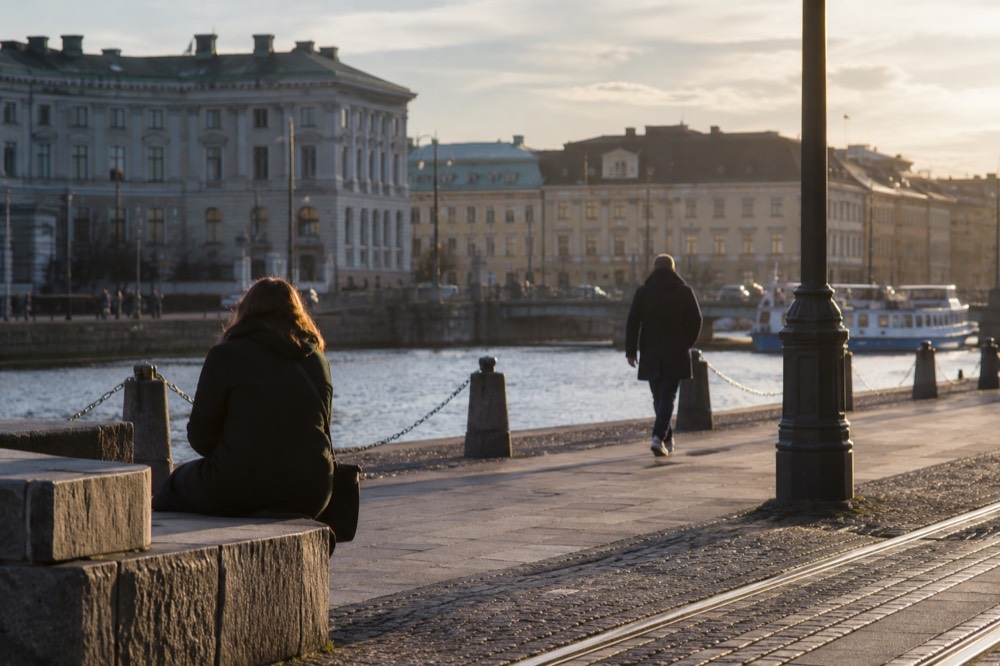
The short version of a Gothenburg shopping plan: use Nordstan as the weatherproof hub, spend the dry hours in Haga, Linné and Majorna, buy food at Feskekôrka and drink at Systembolaget, and let one 125 kr day ticket carry the whole thing, boats included.