Vegan and Vegetarian Gothenburg: A Plant-Based Guide to Sweden's West Coast City
Gothenburg's food identity is built on shrimp, salmon and langoustine, but the city's cafe culture, market halls and buffet tradition make it easier to eat plant-based here than the seafood reputation suggests.

Short answer
Gothenburg is a good vegetarian and vegan city: its cafe and fika culture is oat-milk native, its market halls sell produce alongside fish counters, and its buffet tradition means a hot vegetarian plate is rarely far away.
Gothenburg, Sweden, built its food reputation on the Kattegat: shrimp sandwiches, langoustine, west coast oysters, grilled salmon. That is the postcard version. The lived version of the city runs on cafes, market halls, buffet lunches and a coffee-break culture that has quietly made oat milk a default rather than a special request. For a vegan or vegetarian visitor, the seafood branding is misleading in a helpful direction: the infrastructure that supports it, daily produce markets, dense cafe coverage, cheap tram links between neighbourhoods, serves plant-based eating just as well.
This guide covers what to order, where to shop, how the two market halls work, what the alcohol rules mean for a vegan drinker, and what a plant-based day in the city costs. The city's own numbers explain why the food scene is under pressure to cater to everyone: Göteborg & Co reported over 6 million commercial guest nights in 2025, a record, with international guest nights up roughly 15% in the first ten months of the year. A city eating that many visitors feeds all of them, not just the fish eaters.
Is Gothenburg Good for Vegans and Vegetarians?
Yes, better than its seafood reputation suggests. The city's dense cafe culture means oat and soy milk alternatives are standard rather than exceptions, its long buffet-lunch tradition guarantees a vegetarian option at midday, and the two central market halls, Feskekôrka and Stora Saluhallen on Kungstorget, sell fresh produce and bread alongside the fish counters, so self-catering vegans are better served here than in most Swedish cities of comparable size.
The structural reasons matter more than any single restaurant. Lunch in Sweden is a set-menu affair, served roughly 11am to 2pm, and a workplace norm means nearly every kitchen puts out a daily vegetarian dish at a fixed price that includes salad, bread and a drink. A vegetarian visitor does not need to hunt for a specialist venue at lunchtime; the ordinary neighbourhood kitchen is the play. The where to eat in Gothenburg guide covers how this lunch economy works in more depth.
Vegans have a slightly harder run than vegetarians, as everywhere. Butter is the default fat in Swedish baking, cream shows up in sauces, and the classic west coast dishes are fish-forward. But the same national habit that made Sweden one of the world's biggest consumers of oat drinks works in your favour: the standard coffee order in a Gothenburg cafe can be made plant-based without negotiation, and most cafes carry at least one vegan pastry or a clearly labelled alternative.
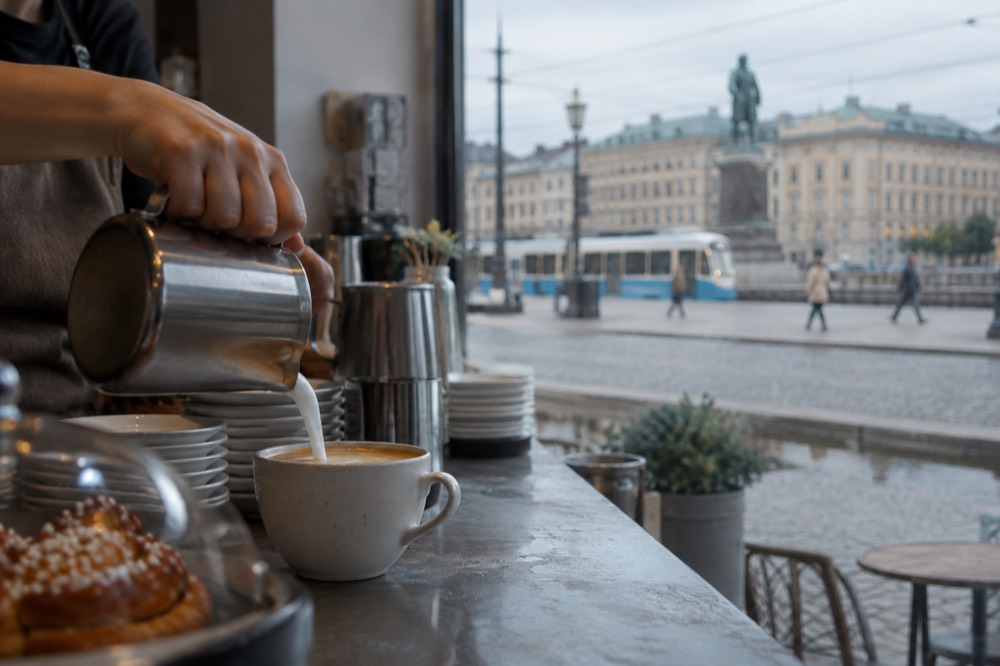
The neighbourhood geography helps too. Haga, Linné, Vasastan and Majorna are the cafe and restaurant districts, and all four sit on the tram network, which Göteborgs Spårvägar describes as twelve lines over 188 km of single track, from Mölndal in the south to Angered in the north. A vegan visitor is never more than a short tram ride from a district where the default menu has plant-based options printed on it rather than improvised.
What Should You Order in Gothenburg as a Vegetarian?
Order the daily lunch special, called dagens lunch, which almost always includes a vegetarian variant at a fixed price with salad, bread and coffee included, and look for the plant-based versions of Swedish classics: veggie meatballs with mashed potato and lingon, soups like yellow pea or root vegetable, and the kanelbulle cinnamon bun, which several bakeries make with plant fat. Buffet salad tables, included with lunch, are where the vegetables actually are.
The Swedish plate translates to plant-based eating more easily than it first looks. Kroppkakor and kroppkaka-style dumplings are pork-based in their traditional form, but the sides that define the cuisine, potatoes, lingonberries, pickled cucumber, crisp bread, are all vegan by nature. The table below maps the classics.
| Swedish classic | Traditional form | Vegetarian or vegan status |
|---|---|---|
| Köttbullar (meatballs) | Pork and beef | Widely offered in plant-based versions, often with the full mashed potato and lingon treatment |
| Kanelbulle (cinnamon bun) | Yeast dough, butter | Frequently vegan at cafes; ask, since butter is the default fat |
| Räkmacka (shrimp sandwich) | North sea shrimp, mayonnaise | Not adaptable; order a cheese or vegetable sandwich instead |
| Gravlax (cured salmon) | Salmon, dill | Vegetarian visitors eat it; vegans skip it |
| Ärtsoppa (yellow pea soup) | Dried peas, pork | The pea base is vegan; ask whether the pork is left out |
| Knäckebröd (crisp bread) | Rye | Usually vegan, check the label for milk |
| Palt (potato dumpling) | Potato, pork filling | Regional; some kitchens make meat-free versions |
| Sill (pickled herring) | Herring, sugar, spices | Vegetarian, not vegan |
Two Gothenburg-specific notes. First, the west coast seafood identity means the vegetarian version of the city's most famous dish, the shrimp sandwich, simply does not exist; do not let a menu description of "vegetarian shrimp" confuse you into expecting the real thing. Second, the buffet table that comes with lunch, salladsbord, is often more interesting than the main plate: roasted root vegetables, beetroot salads, lentils, pickled things, crisp bread. Fill up there.
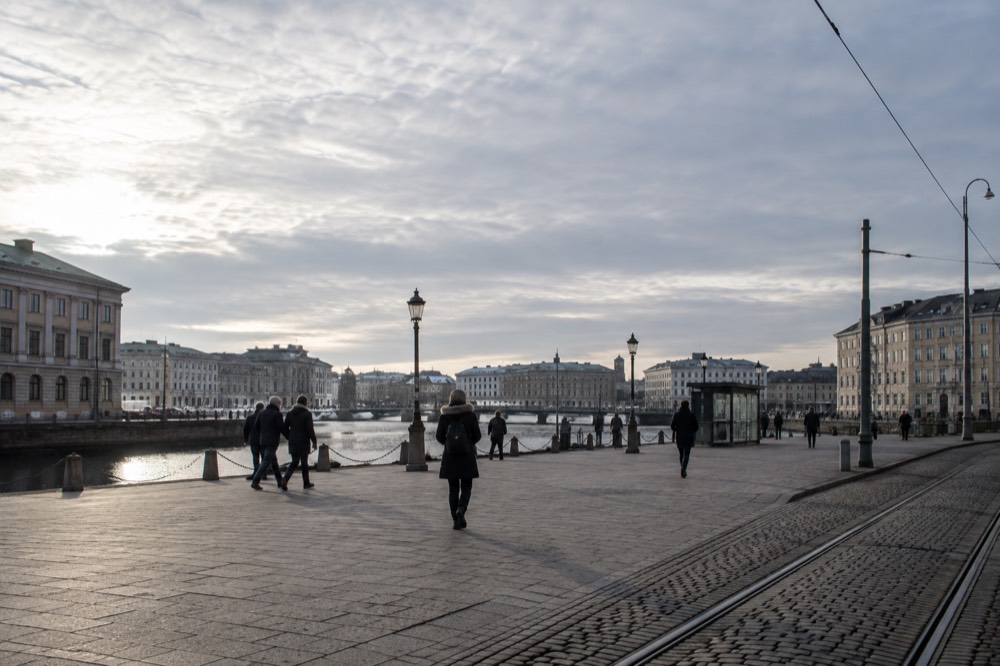
For a guided version of the food scene, the Swedish Westcoast Food Walking Tour runs three hours through the central food landscape, and the operator's listing notes tastings along the way; check with the operator directly about vegetarian and vegan substitutions before booking, since the west coast focus is seafood-heavy. The craft beer walking tour with tastings is a separate evening option, and the distillery tour and guided tasting covers the spirit side of the city.
Where Do You Shop for Plant-Based Food in Gothenburg?
Shop at Stora Saluhallen on Kungstorget, the city's main market hall for produce, cheese, bread and grocery stalls, and at ordinary supermarkets, which under Swedish law sell beer up to 3.5% ABV and a full range of plant-based staples; Feskekôrka on Rosenlundsgatan, reopened in 2024 as a food hall, has five restaurants and two fish counters, so vegans go for the bread and produce angle rather than the fish. The supermarket chains all carry own-brand vegan ranges at lower prices than specialist stores.
Stora Saluhallen is the practical anchor. It sits on Kungstorget, a two-minute walk from Kungsportsplatsen in the very centre, and its stalls cover the full grocery spectrum. A [self-catering](https://booking.tpk.ro/bOrKnnc1) vegan can build an entire picnic there: bread, vegetables, olives, fruit, coffee. The hall is at its busiest on Saturday mornings, which is also when the surrounding square fills with stalls in good weather.
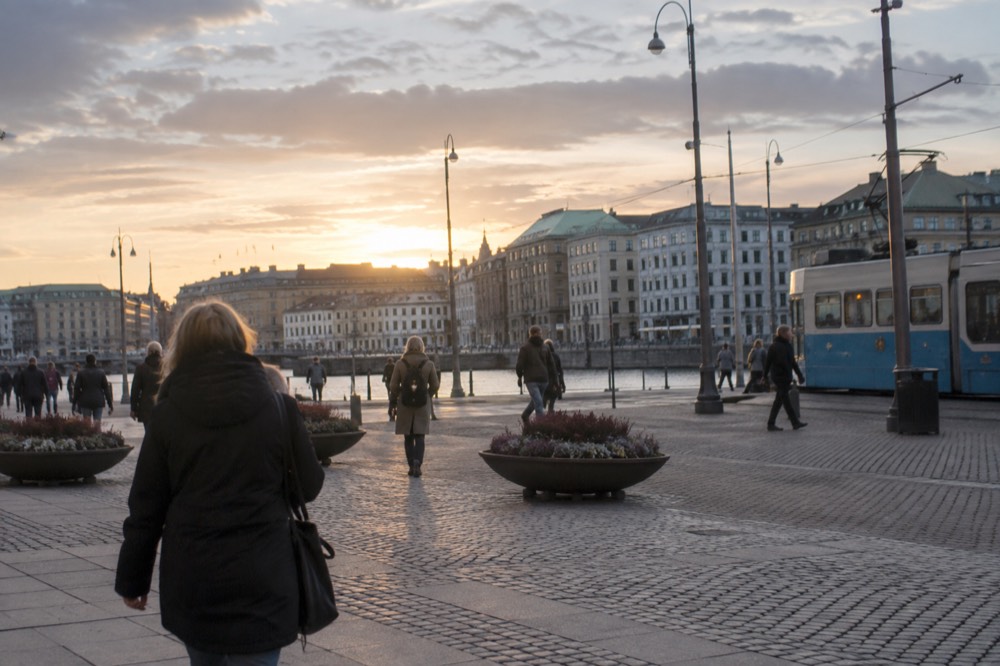
Feskekôrka, the fish church, is the emotionally complicated one for a plant-based visitor. The 1874 building, which turned 150 in the same year it reopened, is now a food hall rather than the pure fish market of older guidebooks: Higab, the municipal property owner, confirmed the 2024 reopening, and the current tenant list on the building's own site includes two fish counters, Ebbes Fångst and Flåtens Fiskhandel, and five restaurants, Haldis Kök, Pråmenaden, Victor von G, Lilla Åstol and Ekmans. Vegetarians who eat fish will find the west coast Kattegat produce, shrimp, langoustine, salmon, mussels, at its freshest. Vegans should treat it as architecture and a coffee stop; the Feskekôrka guide covers the building's full story.
Supermarkets are the quiet workhorse. Every ordinary Swedish supermarket carries a private-label vegan range covering milk alternatives, spreads, sausages, mince and ready meals, at prices well below imported brands. The one thing the supermarket cannot sell you is strong beer, wine or spirits; that rule is covered further down.
How Does Fika Work for Vegans in Gothenburg?
Fika, the Swedish coffee break, is naturally easy for vegans in Gothenburg because every cafe pours oat or soy milk as a standard alternative, and the city's bakery tradition includes vegan pastries at many counters; the ritual itself, coffee plus something baked plus a sit-down, requires no animal products, so the question is only which bun. Ask directly, since butter is the default fat in Swedish baking and appearance does not tell you.
The fika ritual is described in full in the fika guide, but the plant-based mechanics are simple. The drink is solved: Sweden is one of the world's heaviest per-capita coffee consumers, and the oat drink that conquered global coffee shops is a Swedish invention, so a cafe without a plant milk is the exception in Gothenburg, not the rule.
The bun is the negotiation. Kanelbullar, cinnamon buns, are traditionally enriched with butter and sometimes milk, but plant-based versions are common and several bakeries label them. The honest move is to ask at the counter; staff are used to the question. Cafes in Haga and the Linné streets, the two densest fika districts, tend to have the widest labelled ranges, and the Haga old quarter guide covers the neighbourhood where the giant cafe bun, the hagabullen, is served in its historic wooden surroundings.
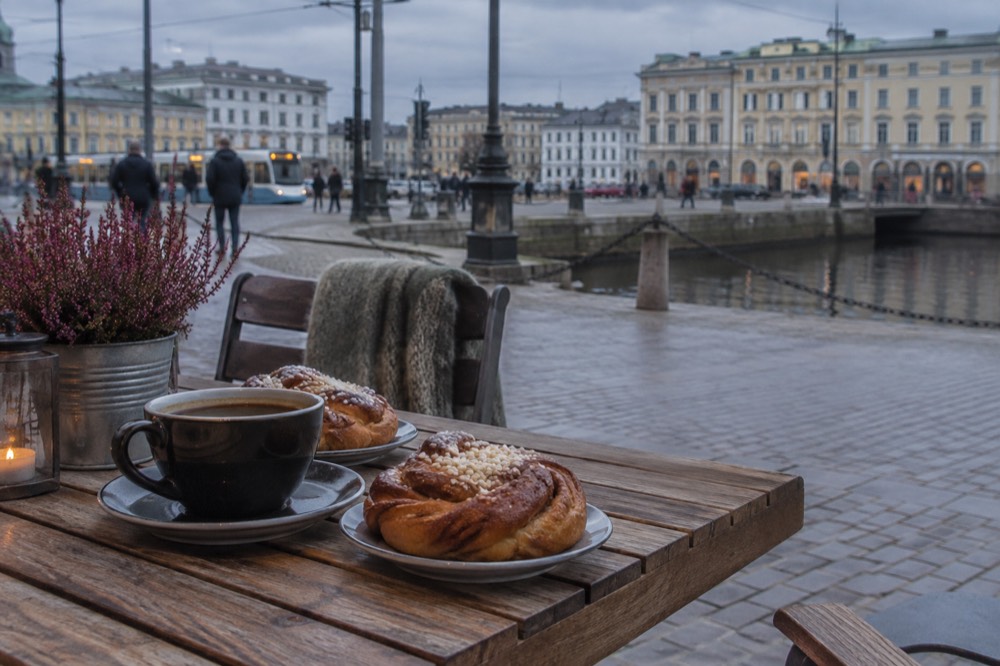
Timing matters. Fika happens mid-morning and mid-afternoon, and Gothenburg's daylight shapes the whole day: on 21 June the city gets 18 hours 6 minutes of daylight, against 6 hours 32 minutes on 21 December, per US Naval Observatory data. A December visitor fikaing at 3pm is doing it in the dark, which is arguably the point.
What Does Eating Plant-Based in Gothenburg Cost?
A vegetarian set lunch in Gothenburg typically costs less than the evening a la carte menu because the dagens lunch system prices a fixed midday plate with salad, bread and coffee included, supermarket vegan staples are cheap under Swedish own brands, and the tram fare to reach any food district is 38 kr for a single Zone A ticket or 125 kr for a 24-hour pass. Exact restaurant prices vary; treat any figure a kitchen quotes as the day's price, not a permanent one.
The is Gothenburg expensive guide covers the full budget picture; the food-specific structure is what matters here. Lunch is the value meal of the Swedish day, and the vegetarian dagens is usually the cheapest hot plate in any kitchen. Evening dining costs roughly double for the same food, which is why locals eat their main meal at noon.
| Budget item | What to expect | Notes |
|---|---|---|
| Vegetarian set lunch | Fixed midday price, salad, bread and coffee included | Served roughly 11am to 2pm weekdays |
| Supermarket vegan staples | Own-brand ranges, cheapest option | All major chains carry them |
| Fika | Coffee plus one pastry | Plant milk is standard, vegan buns are common but ask |
| Tram travel | 38 kr single, Zone A | 125 kr buys 24 hours of unlimited Zone A travel |
| Market hall picnic | Build-your-own from stalls | Stora Saluhallen, Kungstorget |
One transport nuance worth knowing: Västtrafik's current half-price deal applies only to 30-day period tickets, halved by a temporary state subsidy through the end of the year, and does not cover the 24-hour and 72-hour tickets a visitor buys. A visitor's 24-hour Zone A ticket is still 125 kr, per Västtrafik's fare page. The getting around guide has the full fare tables.
Can You Drink Vegan and Vegetarian in Gothenburg?
Beer up to and including 3.5% ABV is sold in ordinary supermarkets under Swedish law, while anything stronger, plus all wine and spirits, is sold only by Systembolaget, the state monopoly, so a vegan drinker shops the same two channels as everyone else; most Swedish cider and many standard lagers are vegan-friendly, but the monopoly's product details are the place to check fining agents, and the 3.5% supermarket threshold means the shelf version of a familiar beer brand is often a weaker reformulation.
The rule is statutory, not custom. Alkohollag (2010:1622), chapter 1, section 8, defines beer over 2.25% but not over 3.5% ABV as folköl, the supermarket version, and anything over 3.5% as starköl, monopoly-only. Chapter 5 of the same statute reserves all retail of spirits, wine and starköl to the wholly state-owned company; the full text is published by the Swedish parliament. The practical consequences for a visitor:
| Drink | Where it is sold | Vegan note |
|---|---|---|
| Beer up to 3.5% ABV | Supermarkets | Often a reformulated version of a stronger brand |
| Beer over 3.5% ABV | Systembolaget only | Product details list ingredients and fining agents |
| Wine and spirits | Systembolaget only | Vegan labelling is increasingly common on the shelves |
| Cider | Supermarkets under 3.5%, monopoly above | Swedish ciders are widely vegan |
| Restaurant drinks | Licensed restaurants and bars | Full strength, restaurant pricing |
For vegans the fining-agent question is real: some wines and ciders are clarified with milk protein or isinglass, and the monopoly's product pages carry the dietary detail. Sunday is the trap, since Systembolaget's stores close on Sundays, so a Sunday dinner party needs a Saturday bottle run. The craft beer scene is the more interesting corner for a plant-based drinker, since small Swedish breweries lean towards unfined and vegan-friendly processes, and the craft beer and bars guide maps the districts.
When Is the Best Season for Plant-Based Gothenburg?
Late spring through early autumn is the best window: April is the driest month of the year at 51.3 mm of rain on SMHI's 1991-2020 normals, against October's 102.9 mm, and the September sea temperature of 16.7 C is actually warmer than June's 16.2 C, so the outdoor cafe season stretches later into the year than visitors expect; October is the wettest month, and the rain arrives after most tourists have gone home.
The seasonal table below is drawn from SMHI's own normals for station Göteborg A and its oceanographic archive from Vinga, the archipelago lighthouse station.
| Month | Rainfall (mm) | Mean air temp (C) | Mean sea temp (C) | Outdoor fika verdict |
|---|---|---|---|---|
| March | 54.0 | 3.0 | 4.1 | Indoors, but brightening |
| April | 51.3 | 7.7 | 7.1 | Driest month, first outdoor tables |
| June | 73.7 | 15.7 | 16.2 | Peak season, book tables |
| July | 81.3 | 18.3 | 18.3 | Warmest air, busiest cafes |
| August | 92.8 | 17.7 | 18.6 | Warmest sea of the year |
| September | 80.0 | 14.0 | 16.7 | Sea warmer than June, quieter streets |
| October | 102.9 | 9.0 | 12.8 | Wettest month, indoor fika |
The best time to visit guide expands on this, and the Gothenburg archipelago guide covers the islands, where the same Västtrafik ticket that carries the tram covers the ferries from Saltholmen. A September archipelago picnic, market hall bread, cheese or vegan cheese, fruit, coffee, is arguably the city's best plant-based day out, and the water is warmer than in June.
How Do You Build a Full Plant-Based Day in Gothenburg?
Start with a bakery fika in Haga or the Linné streets, take the vegetarian dagens lunch anywhere in the centre at a fixed price, spend the afternoon on the tram and harbour, and eat dinner in a neighbourhood kitchen in Majorna or Vasastan; the whole day rides on a 125 kr 24-hour Zone A ticket, which covers the tram network and, if you extend to Saltholmen, the archipelago ferries too, making it the single most useful purchase a food-focused visitor can make.
A sample shape, assembled from the facts above. Morning: coffee and a labelled vegan bun in Haga, the wooden old quarter. Midday: the vegetarian set lunch, the cheapest reliable hot plate in the city. Afternoon: the harbour and the viewpoints, and this is where the land and water amphibious bus tour earns its place, an hour that drives through the centre and then drives into the water; the listing shows a rating of 4.7 from 4,326 reviews, the most-reviewed sightseeing product in the city's roster.
Evening: Majorna, the second-hand and worker-history quarter west of the centre, or Vasastan's student cafe streets. Both are ordinary neighbourhoods rather than tourist districts, which is exactly why the kitchens there price for locals. The Gothenburg on a budget guide and the free things to do guide cover the between-meal hours cheaply.

One planning note that saves trips: the old Göteborg City Card no longer exists, and the Go City product that replaced it is an attractions pass, not a transport pass, so do not budget it as your tram ticket. The city pass guide compares what the current passes actually include. This desk's own reporting is collected at Gothenburg Travel Guide, and the how many days guide helps if you are still deciding how long to stay.
Common Questions About Vegan and Vegetarian Food in Gothenburg
Is Gothenburg good for vegans?
Yes, with caveats. Oat and soy milk are standard in every cafe, the vegetarian set lunch is a national institution, and supermarkets carry cheap own-brand vegan ranges. The caveats: butter is the default fat in Swedish baking, so always ask about buns and pastries, and the city's most famous dishes are seafood-based, so the plant-based experience runs on the buffet table, the lunch special and the market halls rather than the shrimp sandwich.
What should a vegetarian order in Gothenburg?
Order the dagens lunch, the daily set special, which almost always has a vegetarian variant at a fixed price including salad, bread and coffee. Beyond that, look for plant-based meatballs with the full potato and lingon treatment, pea and root vegetable soups, and the buffet salad table, which often holds the most interesting vegetables on offer.
Can vegans do fika in Gothenburg?
Yes. The coffee is easy, since oat drink is a Swedish invention and standard in every cafe. The pastry requires a question: kanelbullar are traditionally made with butter, but many bakeries make and label vegan versions. Ask at the counter, since appearance does not tell you.
Is Feskekôrka suitable for vegetarians?
Partly. The 1874 building reopened in 2024 as a food hall with five restaurants and two fish counters, so pescatarians will find the west coast Kattegat seafood at its freshest. Strict vegetarians and vegans should treat it as a coffee and architecture stop; the building itself is one of the city's landmarks and the surrounding Rosenlund area has its own cafe life.
Where do you buy vegan food to cook in Gothenburg?
Ordinary supermarkets, which all carry own-brand vegan ranges covering milk alternatives, spreads, mince and ready meals, and Stora Saluhallen on Kungstorget for produce, bread and picnic supplies. The one thing supermarkets cannot sell is anything over 3.5% ABV; that is Systembolaget, the state monopoly, which closes on Sundays.
Is plant-based eating in Gothenburg expensive?
Less than you might expect, because the vegetarian dagens lunch is the cheapest hot meal in any kitchen and supermarket own brands keep self-catering costs down. Evening restaurant meals cost roughly double the lunch price for similar food, so the Swedish habit of eating the main meal at noon is also the budget strategy.