A Weekend in Gothenburg: A Two-Day Itinerary That Works
Two days is enough to see central Gothenburg, eat well, ride a tram to a car-free island and still have a spare evening, provided you accept one rule: the archipelago is part of the city, not a day trip.
Short answer
Spend Friday evening in the old town and along the canal, give Saturday to Haga, Slottsskogen and the waterfront, and use Sunday for the southern archipelago islands, which sit inside the ordinary Västtrafik Zone A ticket. Book Liseberg and Universeum time slots ahead, and check the season calendar before you plan around the amusement park.
Gothenburg recorded more than 6 million commercial guest nights in 2025, a record year with the strongest growth in Sweden, according to Göteborg & Co's January 2026 press release. A large share of those visitors came for exactly the trip this page is about: a short break, usually a Friday-to-Sunday stretch, built around a compact city centre, a tram network that reaches the sea, and an archipelago of car-free islands that sits inside the municipal boundary and inside the ordinary transport ticket. That last fact is the one most weekend itineraries get wrong, and it changes the whole shape of the plan.
This itinerary assumes you arrive Friday afternoon or evening and leave Sunday evening. It is written for Gothenburg, Sweden: the city of 613,274 people at the mouth of the Göta älv, not the small Nebraska town that shares the name and pollutes half the search results. Everything below is drawn from the city's own published figures, Västtrafik's fare pages, SMHI's climate normals and each venue's own site. Nobody at this desk has ridden these trams or eaten these meals; the reporting is sourced throughout, and where a price is dynamic or unpublished, it says so.
Is Two Days Enough for a Weekend in Gothenburg?
Two days is enough for central Gothenburg plus one archipelago island if you plan around the tram network and accept that you will not do every museum. The city centre is compact, the 12-line tram network covers almost everything a visitor needs, and the southern islands are reached on an ordinary Zone A ticket, so the classic weekend mistake is treating the archipelago as a separate excursion when it is a 30-minute tram-and-ferry ride from the centre.
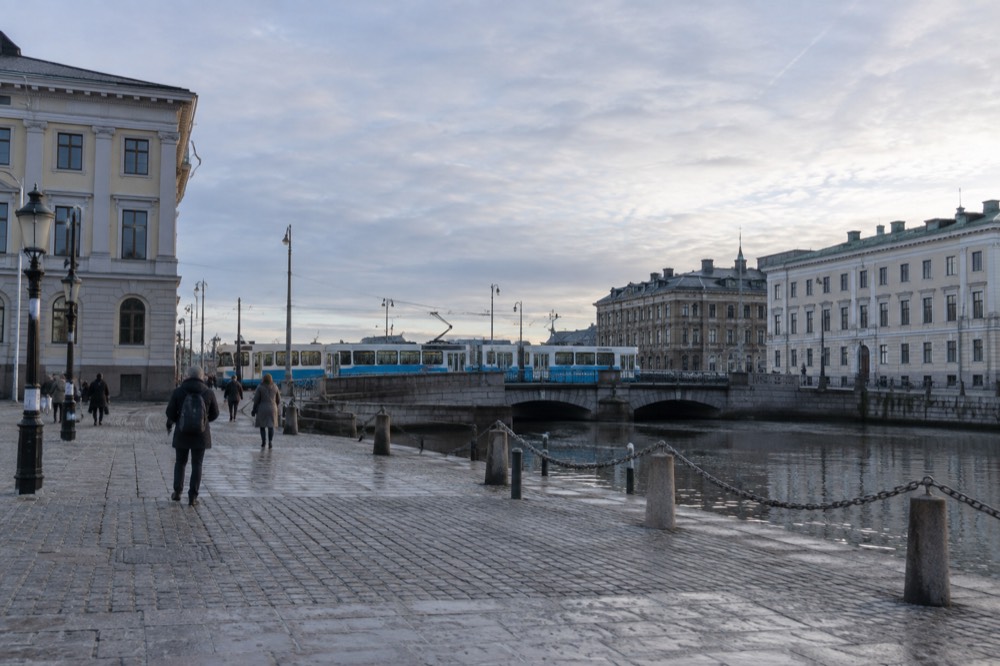
The honest answer depends on what you want. Göteborgs Spårvägar's own reporting counts 126 million journeys in 2025 on a network of 12 lines, 134 stops and 188 km of single track, running from Mölndal in the south to Angered in the north, with Saltholmen, the archipelago ferry terminal, as its western terminus. That reach is why a weekend works: the transport does the distance, not your feet. If your weekend falls between late April and late September, Liseberg is open and demands an evening. If it falls between Christmas and mid-April, the park is shut and the plan changes, which is covered below.
Budget the weekend around three fixed costs: transport, food and any booked attractions. A 24-hour Zone A ticket costs 125 kr, the same price in the app or at a shop, and it covers trams, buses and the archipelago ferries. Admission to Slottsskogen's zoo is free, and the city's viewpoints cost nothing. What adds up is food and drink, and the Systembolaget rule bites here: anything above 3.5% ABV is sold only through the state monopoly under Alkohollag (2010:1622), so supermarket beer is the 3.5% shelf version. More detail on costs is in our guide to what a Gothenburg trip really costs.
What Should You Do on Friday Evening in Gothenburg?
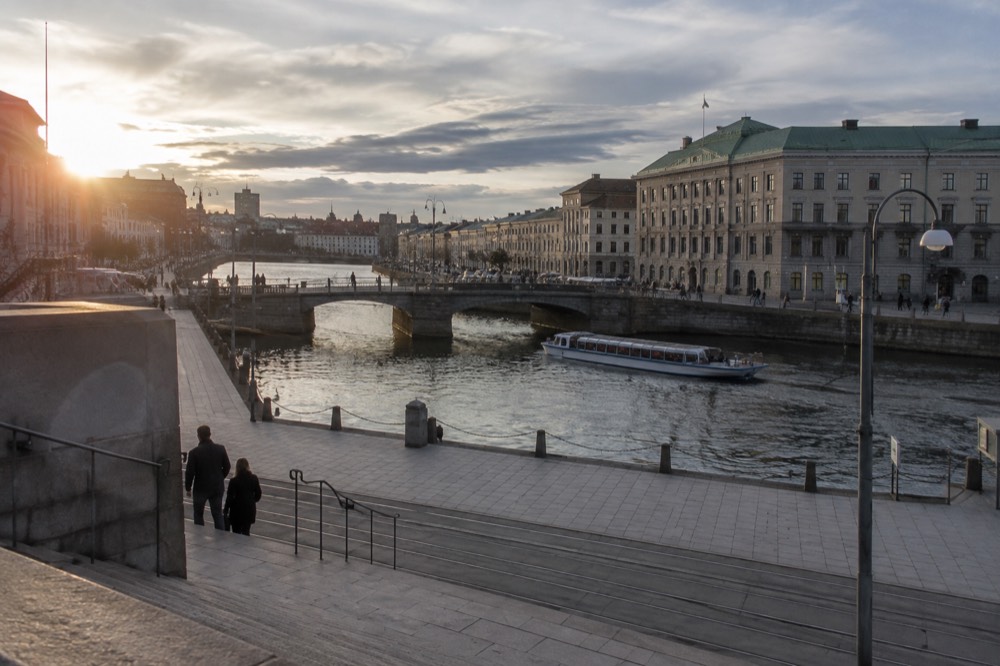
Start Friday with the canal, not a museum: the Paddan boats and the 50-minute sightseeing cruise run into the evening in summer, the old town inside the moat is walkable in under an hour, and dinner options cluster along the canal and in the Vasastan café quarter, so a late arrival still gets a full first evening without a single booked ticket.
The practical reason to begin at the water is orientation. The 17th-century core was laid out by Dutch engineers inside a moat, and the canal loop is still the clearest way to read the city. The amphibious bus tour, which the listing describes as a one-hour land-and-water sightseeing trip rated 4.7 from 4,326 reviews, is the fastest version of this, and the 50-minute canal cruise from 28 kr per person is the cheapest. If you land at Landvetter, the Vy flygbussarna coach runs to Göteborg C in 20 minutes, Swedavia's own page states the time, and there is no rail link, so the coach or bus 612 are the options. Our airport-to-centre guide covers the transfer in detail.
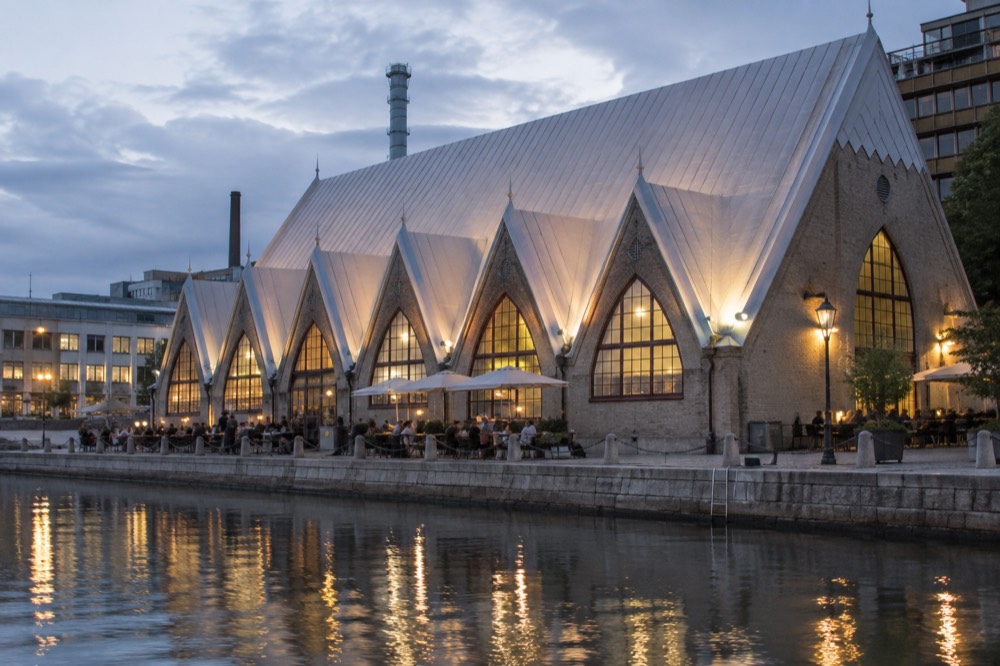
For dinner, the two anchors are Feskekôrka, the fish church on Rosenlundsgatan, and the food halls. Feskekôrka reopened in 2024 after renovation as a food hall with two fish counters and five restaurants, a change most older guides still have not caught up with, and the building turned 150 the same year it reopened. Saluhallen, the older market hall, is the other cluster. Where to eat across the whole city, including the Michelin-starred end, is covered in our where-to-eat guide.
One Friday-evening decision worth making in advance: fika, the Swedish coffee break, is not optional culture, it is the social operating system, and Saturday morning is when you will want it. Our fika guide explains the custom and the best rooms for it, and Haga, where Saturday starts, is the classic place to do it.
What Should You Do on Saturday in Gothenburg?
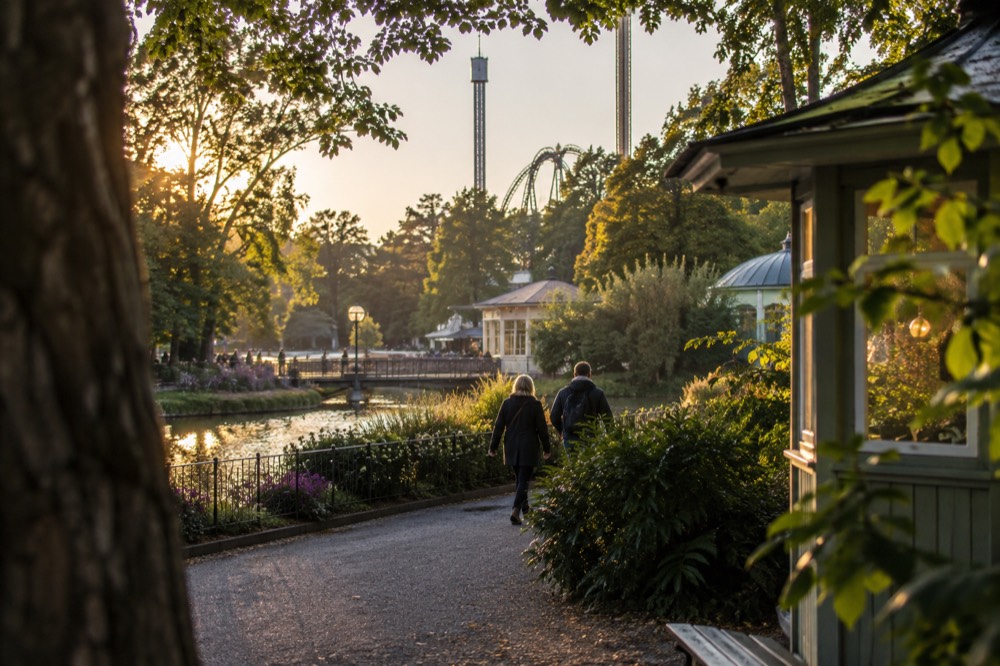
Give Saturday to the west side: fika and the wooden houses of Haga in the morning, Slottsskogen park and its free zoo around midday, the waterfront and Hisingen viewpoints in the afternoon, and Liseberg in the evening if, and only if, your weekend falls inside the park's summer season, which in 2026 runs 18 April to 20 September, with Halloween 2 October to 1 November and the Christmas market 14 November to 23 December.
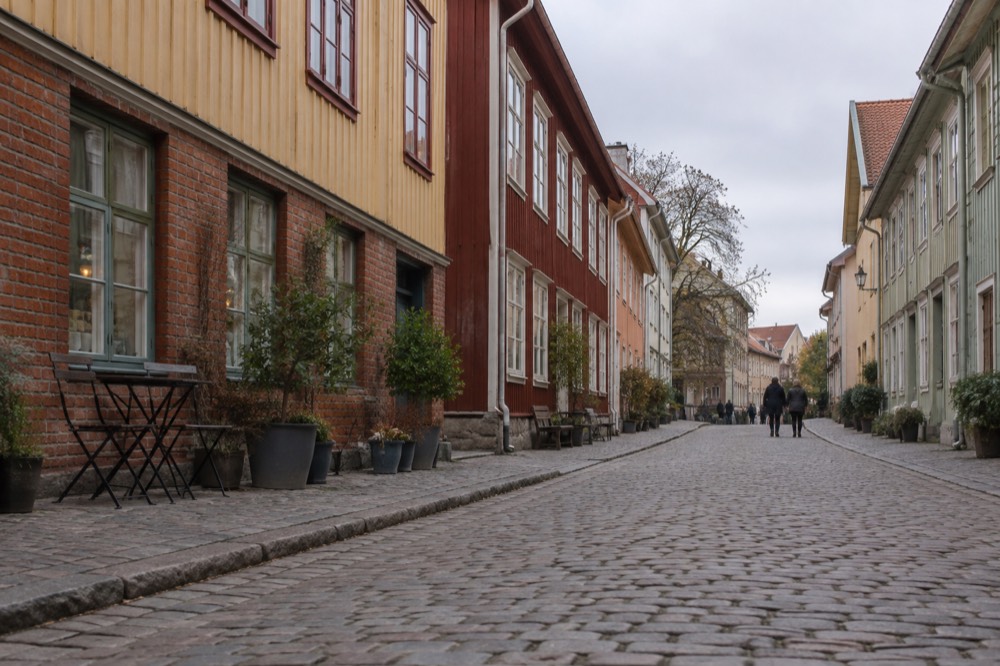
Haga is the city's 19th-century wooden-quarter neighbourhood, and one fika there is the single most-Gothenburg hour of the weekend. The classic pairing is a huge cinnamon bun at one of the stone-and-timber cafés, then the walk up to Skansen Kronan, one of the two hilltop forts, for the view. The quarter has its own full guide if you want to go deeper than the standard café stop.
Slottsskogen, south of Haga, is the city's great free park: elk, seals, penguins and Scandinavian animals in enclosures that cost nothing to visit, which makes it the default midday stop for families and anyone whose budget is already straining. From there, the 6 or 3 tram runs back toward the centre, and the afternoon splits naturally between the Museum of Art at Götaplatsen, the end of the Avenyn boulevard, and the harbour.
Two Saturday facts that catch visitors out. First, Göteborgs konstmuseum, which holds around 70,000 works and gets roughly a quarter of a million visitors a year, charges 75 kr for a day ticket, is free for anyone under 20, and is closed Mondays, but the museum's own rebuild page states it closes in 2028 and reopens in 2032, with intermittent blasting near the building right now, so check before you build a visit around it. Second, Liseberg's entry ticket from 95 kr buys zero rides: the park sells entry and ride passes separately, and a combined Entré + Åkpass starts at 365 kr online. Liseberg is not sold on any booking platform, so that is one attraction you book direct, and our Liseberg tickets guide has the full price breakdown.
If Liseberg is shut, the evening alternative is the stadium-and-nightlife strip around Avenyn and Linnégatan, or a harbour-side dinner. A useful Saturday purchase if you plan to hit several paid attractions is a pass: the Go City All-Inclusive pass covers 20+ attractions over one to five days from $56, rated 3.8 from 238 reviews, and the old Göteborg City Card it replaced no longer exists. Note that unlike the old municipal card, there is no confirmed transport inclusion, so keep your Västtrafik ticket separate. Our city pass guide runs the maths.
What Should You Do on Sunday in Gothenburg?
Take a tram to Saltholmen and a ferry to the car-free southern islands on Sunday morning: Styrsö, Brännö, Vrångö, Donsö, Asperö and Köpstadsö are all inside Zone A, an ordinary Västtrafik ticket covers the whole journey, and the 125 kr 24-hour ticket covers tram, ferry and every island for a day, which is the best-value single purchase in the city.
This is the fact that makes a Gothenburg weekend different from a Stockholm or Copenhagen one. Västtrafik's own zone material states you can ride the same ticket from the centre all the way out to sea, and the islands appear on Västtrafik's own tram, bus and boat network map. Private cars are banned on the southern islands under the city's protection order, with exceptions only for taxi and emergency services, so the islands you step onto are genuinely car-free. Allow half a day: the ferry crossing alone takes 20 to 30 minutes depending on the island, and walking trails, small harbours and swimming spots fill the rest. Everything else covered here is indexed on Gothenburg Travel Guide.
If you would rather have a guide than a timetable, the 2.5-hour guided archipelago cruise from $44 per person, rated 4.4 from 1,488 reviews, covers the same waters with commentary, and there are versions with lunch or Swedish fika included. But the ferry-and-tram version costs a single 125 kr ticket and runs on the ordinary timetable, which is why locals do it that way. The full island-by-island comparison, including which island suits which kind of visitor, is in our southern archipelago guide.
Swimming is a real Sunday option later in the year than most visitors expect. SMHI's quality-controlled sea-temperature archive from the Vinga lighthouse station shows the water peaks in August at 18.6 C, not July, and that September water, at 16.7 C, is warmer than June water at 16.2 C. February is the coldest sea month at 2.7 C. So a mid-September Sunday dip in the archipelago is measurably warmer than a June one, which is the opposite of what most people book.
How Much Does a Weekend in Gothenburg Cost?
A realistic two-day budget runs roughly 1,500 to 2,500 kr per person excluding accommodation and travel to the city: transport is fixed at 125 kr per 24 hours in Zone A, museum entries run 75 kr at the art museum with dynamic pricing at Universeum, and the swing factor is food, where a fika stop might cost 60 to 90 kr and a casual dinner 200 to 350 kr, with alcohol priced by the state monopoly rather than the market.
Those food figures are planning ranges, not operator promises: check the menu or the room. What is fixed and verifiable is the transport layer. A single Zone A adult ticket is 38 kr, the 24-hour Zone A ticket is 125 kr, and a 30-day period ticket is currently halved by a temporary state subsidy, Zone A adult 890 kr down to 445 kr, but that subsidy does not apply to the 24-hour and 72-hour tickets a visitor actually buys, so do not read "transport is half price" anywhere.
| Cost item | Planning range | Basis |
|---|---|---|
| 24-hour Zone A transport ticket | 125 kr | Västtrafik fare page, fixed price |
| Single tram ticket, 1 zone | 38 kr | Västtrafik fare page |
| Göteborgs konstmuseum day ticket | 75 kr | Museum's own visit page, free under 20 |
| Universeum admission | Dynamic, book a time slot | Universeum's own ticket page, no fixed price |
| Liseberg entry only | From 95 kr | liseberg.se, rides sold separately |
| Liseberg entry + rides | From 365 kr online | liseberg.se |
| Fika with coffee and bun | 60-90 kr | Planning range, check the café |
| Casual dinner, main course | 200-350 kr | Planning range, check the menu |
Accommodation is the biggest variable and is not covered by any city-wide figure here. Our where-to-stay guide breaks the city into the districts that suit a weekend: the old town inside the moat for walkability, Linnégatan for nightlife, and the waterfront around Liseberg if the park is your evening plan.
What If It Rains During Your Gothenburg Weekend?
Rain is likely but not constant: SMHI's 1991-2020 normals for station Göteborg A record 912 mm across 127 days a year, about one day in three, with October the wettest month at 102.9 mm and April the driest at 51.3 mm, so a weekend needs one indoor fallback, and the city has enough museums, food halls and covered attractions to absorb a wet afternoon without wrecking the plan.
One myth to kill first: Gothenburg is not Sweden's rainiest city, and SMHI's own climate pages never say it is. The national precipitation maxima are in the western highlands and the mountains; the city's 912 mm sits in the wet western band but is not a national record. What is true is that rain is spread evenly across the year, so packing for it matters more than timing around it.
| Month | Mean rain, mm | Wet days (1 mm or more) | Mean air temp, C |
|---|---|---|---|
| January | 83.0 | 11.5 | 0.8 |
| April | 51.3 | 8.2 | 7.7 |
| July | 81.3 | 9.8 | 18.3 |
| September | 80.0 | 10.8 | 14.0 |
| October | 102.9 | 12.6 | 9.0 |
| December | 93.0 | 13.3 | 2.1 |
Source: SMHI 1991-2020 normals, station Göteborg A (71420). The full 12-month picture and what it means for timing a trip is in our best time to visit guide.
The wet-afternoon shortlist: Universeum, the science centre, is open every day of the year 10:00 to 18:00 with dynamically priced timed entry, and its own page is explicit that busy days sell out, so book ahead. World of Volvo, which replaced the old Volvo Museum after that museum closed permanently in December 2023, sells exhibition tickets from 120 SEK online. The city's museum quarter around Vasagatan, the Maritiman floating ship museum and the design museum are all covered in our [museums coverage]. For a full wet-day plan, see Gothenburg on a rainy day.
How Does a Weekend Itinerary Change with the Seasons?
The same two-day skeleton works year-round with three substitutions: in winter, roughly 24 December to mid-April, Liseberg is closed and daylight shrinks to 6 hours 32 minutes on 21 December, so the plan shifts to museums, fika and the Christmas market if you land inside its 14 November to 23 December window, while in summer the park is open, daylight runs to 18 hours 6 minutes on 21 June, and the archipelago swimming season runs August through September rather than June.
The daylight swing is the number that surprises visitors most: 11 hours 34 minutes between the solstices, per the US Naval Observatory's figures for the city's latitude. A December weekend has grey light from about 08:03 to 16:17 including twilight; a June weekend barely has true night at all, with civil twilight running 02:58 to 23:30. That changes what fits in a day more than any opening hour does.
| Season | Liseberg status | Archipelago | Best Sunday add-on |
|---|---|---|---|
| Spring (Apr-May) | Open from 18 Apr 2026 | Ferries run, sea still cold | Slottsskogen and viewpoints |
| Summer (Jun-Aug) | Open, evening tickets from 18:00 | Warmest sea, 18.6 C peak in Aug | Island swim and sauna boat options |
| Autumn (Sep-Oct) | Open to 20 Sep, then Halloween 2 Oct-1 Nov | September sea warmer than June | Guided archipelago cruise |
| Winter (Nov-Mar) | Christmas market 14-23 Dec, then closed | Ferries run, islands quiet | Museums, fika, Christmas market |
Season dates are from liseberg.se for 2026 and change yearly, so treat them as this year's calendar rather than a permanent fact. If your weekend stretches to three days, our three-day itinerary adds the northern archipelago and a Bohuslän coast day trip, and the five-day version extends into West Sweden proper, with day trips from Gothenburg covering Marstrand, Alingsås and the coast.
Common Questions About a Weekend in Gothenburg
Is two days in Gothenburg enough?
Two days covers the old town, Haga, Slottsskogen, one or two museums and one archipelago island comfortably, because the tram network and the Zone A ferries compress the distances. It is not enough for Liseberg, Universeum, every museum and the islands at a relaxed pace; that is a three-day plan.
Can you visit the Gothenburg archipelago in a weekend?
Yes, and it does not even consume a full day. The southern islands are areas of Gothenburg inside Zone A, reached by tram to Saltholmen and then ferry, all on an ordinary Västtrafik ticket. A 125 kr 24-hour ticket covers the entire round trip.
What is the best month for a Gothenburg weekend?
For dry weather, April: SMHI's normals show it is the driest month at 51.3 mm on the fewest wet days. For swimming, August into September, since the sea peaks at 18.6 C in August and September water is warmer than June water. For atmosphere, December inside the Christmas market window.
Do you need to book anything in advance for a Gothenburg weekend?
Universeum uses timed, dynamically priced entry and its own page warns that busy days sell out, so book that. Liseberg is cheaper online than on-site and is not sold on booking platforms. The archipelago ferries need no booking at all; they run on the ordinary timetable.
Is Gothenburg walkable for a weekend?
The core inside the old moat, Haga and Linnégatan are all walkable and connected. The distances that matter, Slottsskogen, Saltholmen, Liseberg, are tram distances, and that is what the 125 kr day ticket is for.
What is the one mistake to avoid in a Gothenburg weekend?
Treating the archipelago as a day trip and skipping it for lack of time. The islands are part of the city, inside the ordinary ticket, and a Sunday morning ferry to Brännö or Styrsö is the part of the weekend most visitors remember.
If your weekend is longer or shorter than two days, the one-day plan strips this to the essentials, two days in Gothenburg is the closest sibling to this page, and a cruise-ship day in Gothenburg covers the compressed version for port callers. This page is part of Gothenburg Travel Guide's itinerary set for Gothenburg, Sweden.