Five Days in Gothenburg and West Sweden: A Day-By-Day Itinerary
Five days is the first trip length where Gothenburg stops being a city break and starts being a region. Here is how to split the days, what each day actually costs, and which closure and season dates will make or break the plan.
Short answer
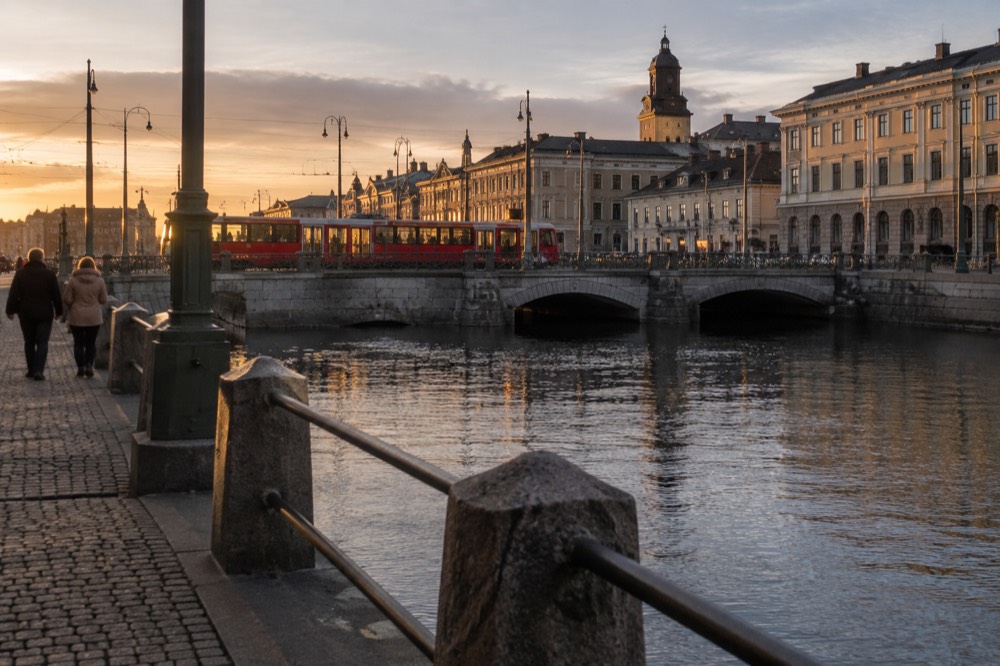
Spend days one and two in central Gothenburg, day three on the car-free southern archipelago islands on an ordinary tram-and-ferry ticket, day four on a Bohuslän or Marstrand day trip, and day five on Slottsskogen, Liseberg or a slow final morning. A 24-hour Västtrafik Zone A ticket at 125 kr covers trams and archipelago ferries alike.
Five days is the first trip length where Gothenburg stops being a city break and starts being a region. Göteborgs Stad counted 613,274 residents at the end of 2025, but the city's own boundaries run out into the Kattegat: the southern archipelago islands of Styrsö, Brännö, Vrångö and Donsö are areas of Gothenburg, reached by tram and ferry on an ordinary ticket. Göteborg & Co reported over 6 million commercial guest nights in 2025, a record, and international guest nights grew about 15% in the first ten months of the year. People are coming. The question is what to do once they arrive, and five days is enough to do it properly.
What Can You Realistically See in Five Days in Gothenburg and West Sweden?
In five days you can cover central Gothenburg's canal quarter, Haga and the museums, one or two car-free archipelago islands, one full day trip to Marstrand or the Bohuslän coast, and still keep a final morning for Slottsskogen or Liseberg, without moving hotels once. The tram network, 12 lines and 188 km of single track as of the 2022 network report, makes every one of those days a single-ticket journey.
That is the honest ceiling. What five days does not allow is Stockholm, Oslo or Copenhagen as a bolt-on. Gothenburg to Stockholm by train is its own half-day each way, and the Bohuslän coast deserves more than a rushed afternoon. Treat this itinerary as a west-Sweden trip with a city base, not a Sweden sampler.
The plan below assumes you sleep in Gothenburg all five nights. The city is compact, and every day trip in this plan starts from Göteborg Centralstation or a tram terminus, so there is no payoff to changing hotels. If you want the shorter versions, two days in Gothenburg and three days in Gothenburg cover the city-only versions of days one, two and five.
One planning note before anything else: check your dates against the attraction calendar. Liseberg's 2026 summer season runs 18 April to 20 September, Halloween 2 October to 1 November, and the Christmas market 14 November to 23 December, and the park is shut between those windows, per the park's own ticket page. The Volvo Museum at Arendal closed permanently in December 2023; only World of Volvo exists now. Göteborgs konstmuseum closes in 2028 and reopens in 2032, with intermittent blasting on site before then. A five-day plan built on a closed venue is a ruined plan.
How Should You Split Five Days Between Gothenburg and the Coast?
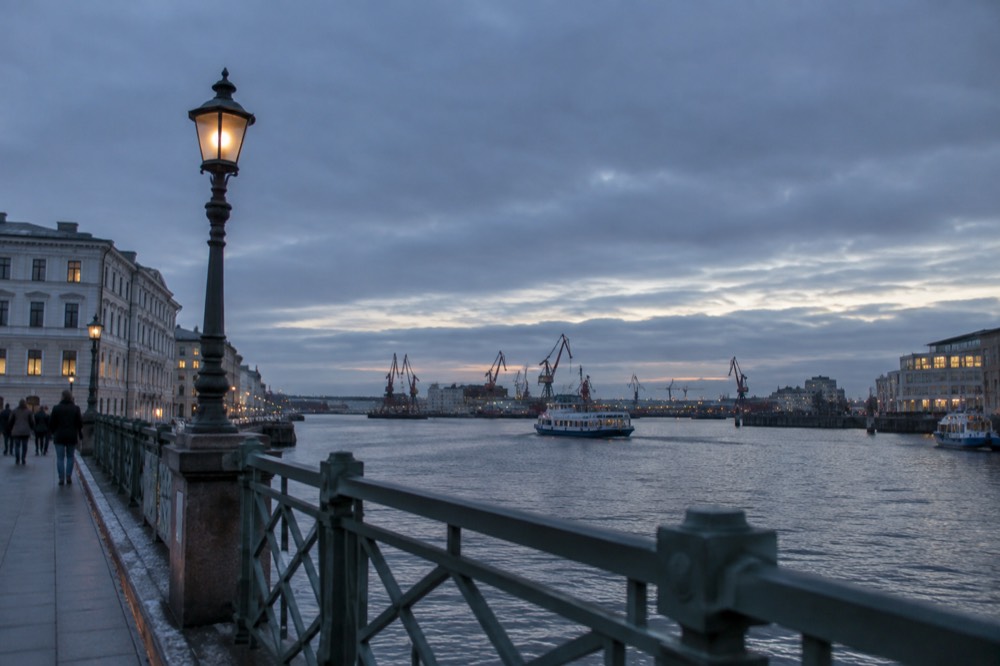
The split that works is two city days, one archipelago day, one day-trip day and one flex day. Days one and two stay inside the moat and Haga, day three goes to the southern archipelago on the same Västtrafik ticket, day four takes a train or boat out to Marstrand or Bohuslän, and day five absorbs whatever the weather or the season ruined earlier.
The logic is transport, not taste. Everything in days one, two and five is inside tram Zone A, which covers Göteborg, Mölndal, Partille and Öckerö. Västtrafik's fare table shows a single Zone A adult ticket at 38 kr and a 24-hour Zone A ticket at 125 kr, and that 24-hour ticket is valid on the archipelago ferries too, because Västtrafik's Zone A ticket page states you can ride on the same ticket all the way from the centre out to sea. Day three therefore costs no more than day one.
The archipelago day deserves its own slot rather than being squeezed into an afternoon. The islands are car-free by municipal decision: Göteborgs Stad's own study states the southern archipelago islands are protected from car traffic, with only taxi and emergency exceptions. That means ferries, footpaths and slow timetables. Give it a day and it is the best-value day of the trip. Give it three hours and you will spend them waiting for a boat.
If five days feels long for one city, the alternative is to fold the coast into a shorter stay. A weekend version of this same plan cuts days four and five, and a single-day port call compresses day one into a few hours.
For the day-trip day, the choice is between Marstrand, the fortress island in Kungälv municipality, and the Bohuslän granite coast around Smögen and Fjällbacka. Both are covered in detail in the day trips from Gothenburg guide. In a five-day frame, Marstrand is the safer pick: it is closer, the fortress is walkable, and the seafood market sail trip from the city runs about five hours.
What Should Day One in Central Gothenburg Look Like?
Day one is the canal and harbour day: a morning sightseeing cruise on the old moat, the fish-church food hall Feskekôrka at lunch, the Art Museum or the City Museum in the afternoon, and the Avenyn and Götaplatsen end of the city by early evening, all on foot and one tram hop.
Start on the water because the water explains the city. Dutch engineers laid out the old town inside a moat in the seventeenth century, and the canal cruise route runs through it. The Paddan boats run sightseeing on the moat and the River Säveån, and there is also a land-and-water amphibious bus tour, rated 4.7 from 4,326 reviews on its listing, which drives into the harbour mid-tour. Either one gives you the geography in under two hours.
Lunch belongs at Feskekôrka, the fish-church-shaped market hall on Rosenlundsgatan. It reopened in 2024 after renovation, in the year the building turned 150, and it is a food hall now, not just fish counters: the hall's own site lists two fish counters, Ebbes Fångst and Flåtens Fiskhandel, and five restaurants including Haldis Kök and Victor von G. The old "closed for renovation" copy you still find online is years stale.
Spend the afternoon at one museum, not three. Göteborgs konstmuseum at Götaplatsen holds about 70,000 works and charges 75 kr for a day ticket, free for visitors under 20 and for students, with the Hasselblad Center included. The museum is open Tuesday to Sunday and closed Mondays, and it has flagged intermittent blasting near the building. The City Museum by Kronhuset is the alternative if the art museum's calendar does not suit.
End on foot up Kungsportsavenyn to Götaplatsen, where the art museum, the concert hall and the city theatre face each other across the square. It is a 20-minute walk and it is the single view that tells you how the city is put together. For the full food version of this day, the West Coast food walking tour, rated 4.8 from 17 reviews on its listing, walks the same central streets through the food halls and neighbourhood counters over three hours.

What Should Day Two Cover: Haga, Majorna and the Hilltop Views?
Day two is the west-of-the-moat day: the wooden old quarter of Haga in the morning, Skansen Kronan's hilltop fort at midday, the second-hand quarter of Majorna in the afternoon, and the Masthugskyrkan viewpoint over the harbour before dinner, with a fika stop in Haga as the non-negotiable middle of the day.
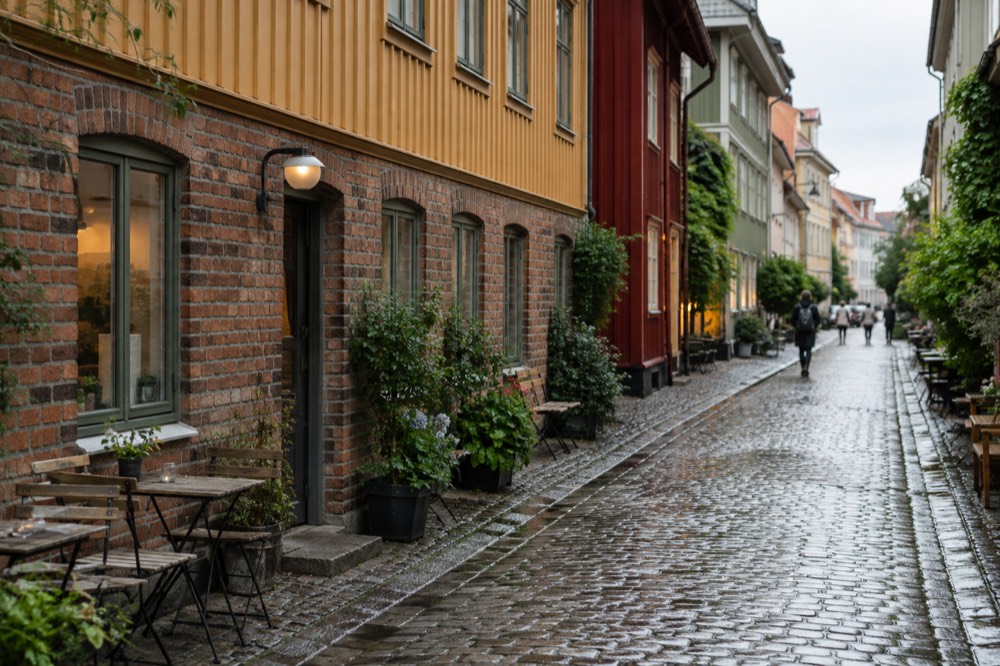
Haga is Gothenburg's oldest surviving suburb, and its low wooden houses, the landshövdingehus style with a stone ground floor and timber above, survived the redevelopments that flattened most of the city centre. The Haga old quarter guide covers the streets in detail. The fika stop belongs here: Swedish fika, the coffee-and-cinnamon-bun pause, is a working institution rather than a tourist performance, and Haga's cafés are where the city does it. The fika guide explains the custom and names the rooms.
Climb to Skansen Kronan, the crown fort on the hill above Haga, for the free view. The old hill forts were built to watch for Danish attack; today the rampart is the best free panorama over the rooftops. The Skansen Kronan guide covers the fort's history and what is open.
Drop down the other side into Majorna, the dockworkers' district that is now the city's second-hand and vinyl quarter. A free GuruWalk tour covers Majorna's history, people and culture, tip-based, rated 4.77 from 234 reviews on GuruWalk, and it is one of the few free walks that goes west of the moat. GuruWalk is the operator and the tour is booked on its platform.
Finish at Masthugskyrkan, the church on the hill above the harbour whose terrace looks straight down the Göta älv to the archipelago. It is the view locals send people to, and it costs nothing.
Is Day Three the Day for the Southern Archipelago?
Day three is the archipelago day, and yes, it is the day the whole five-day plan is built around: a tram to Saltholmen, the ferry terminal at the western end of the tram network, then the Västtrafik ferry to Styrsö, Brännö, Donsö or Vrångö, all covered by the same Zone A ticket that carried you across the city, with no car anywhere on any of the islands.
Saltholmen is the western terminus of the tram network, which is the fact that makes this day work: you ride a tram to the boat. Västtrafik's zone map shows the archipelago ferry lines inside Zone A alongside the trams, and the islands served from Saltholmen are Asperö, Brännö, Styrsö, Donsö, Vrångö and Köpstadsö. A 24-hour Zone A ticket at 125 kr covers the whole chain.
Pick one or two islands, not four. Styrsö is the largest, with a small village and a walkable ridge. Brännö is flatter, quieter and famous for its summer dances. Vrångö is the far end, the smallest and the most bare. The southern archipelago guide compares them island by island.
| Island | Character | Best for |
|---|---|---|
| Styrsö | Largest island, village and ridge walks | A first archipelago visit |
| Brännö | Flat, quiet, summer dance tradition | Slow walking and swimming |
| Donsö | Working fishing island, small harbour | Harbour life and easy paths |
| Vrångö | Far end, smallest, most exposed | Solitude and the outer rocks |
| Asperö | Small residential island | A short stop en route |
| Köpstadsö | Tiny, no roads at all | A quick look from the ferry loop |
Swimming is on the table from July onward. SMHI's quality-controlled archive from the Vinga lighthouse station, built on 61,749 hourly observations, shows the sea peaking at 18.6 C in August, not July, and September water at 16.7 C is warmer than June water at 16.2 C. A September archipelago swim is measurably warmer than a June one. February is the coldest month at 2.7 C, with a record low of -1.2 C, because brackish Kattegat water freezes below zero.
If you would rather see the islands from the deck than hike them, the guided archipelago cruise, rated 4.4 from 1,488 reviews on its listing, runs two and a half hours through the southern archipelago with commentary, and there are lunch and fika versions of the same route.

Should Day Four Be a Day Trip, and Where To?
Day four should be a day trip, and the two best targets are Marstrand, the car-light fortress island reached by bus or a guided sailing trip from Gothenburg, and the Bohuslän coast around Smögen and Fjällbacka, reached by train to Uddevalla or a long drive; Marstrand is the realistic pick inside a five-day city-based trip, and the seafood market sail trip from Gothenburg harbour covers it in about five hours.
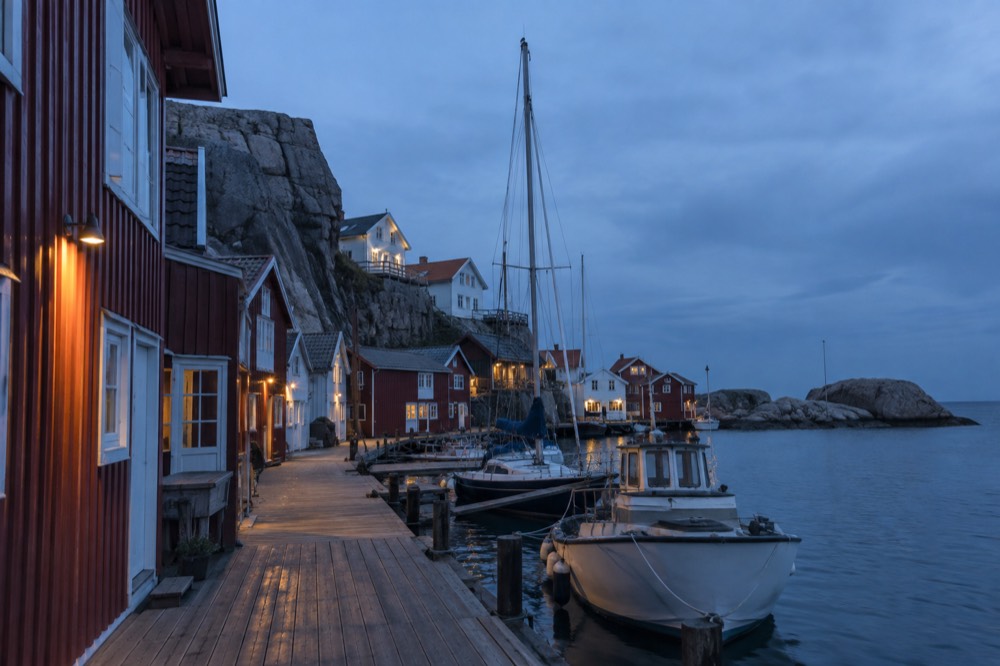
Marstrand is technically a day trip, unlike the southern archipelago, which is part of the city. The island holds Carlsten's Fortress, a prison-fortress above the harbour, and the town is Sweden's sailing capital. The Marstrand guide covers the crossing, the fortress and the walk. The Marstrand seafood market sailing trip from Gothenburg, about five hours with no reviews yet on its listing, is the boat version.
The Bohuslän coast is the bigger commitment. Smögen's harbour boardwalk and Fjällbacka's granite islands are two of the west coast's signature scenes. In a five-day frame it works only if you hire a car or accept a long train-and-bus chain. Save it for a second trip, or swap it in for the archipelago day if the ferry weather is foul.
Other day-trip options that fit the same slot: Nordens Ark, the wildlife park on the Bohuslän side, entry from $29 per person on its listing and rated 4.5 from 10 reviews; Tjolöholm, the Arts-and-Crafts castle south of the city; and Läckö Castle on Lake Vänern, which also exists as a private day trip from Gothenburg, priced per person with no reviews yet on its listing.
What Should Day Five Be: Slottsskogen, Liseberg or a Slow Final Morning?
Day five is the flex day, and the right version depends on the season and your flight: in summer it is Slottsskogen's free zoo and park in the morning with Liseberg in the afternoon and evening, in winter it is the museums and the sauna-and-cold-bath circuit, and on any departure day it shrinks to a slow final morning of fika and the harbour before the 20-minute airport coach.
Slottsskogen is the city's great free park, with a free zoo of Nordic animals, and it pairs naturally with the nearby Botanical Garden. The Slottsskogen guide covers what is in the park and what costs nothing.
Liseberg is the afternoon and evening call, but only inside the season windows. The 2026 summer season runs 18 April to 20 September, Halloween 2 October to 1 November, and the Christmas market 14 November to 23 December. Entry is from 95 kr and buys zero rides; the combined entry-plus-ride pass starts at 365 kr online, and Liseberg is not sold on any booking platform, so you buy at liseberg.se. The Liseberg tickets guide has the full price ladder.
If the weather closes in, the rainy-day circuit is Universeum, the science centre open every day of the year from 10:00 to 18:00 with dynamically priced, timeslot admission, plus the sauna-boat archipelago cruise or the Stora Amundön hot tub and sea dip tour. The Gothenburg on a rainy day itinerary is the full wet-weather plan, and it is the honest fallback for at least one of these five days, because SMHI's normals show 127 wet days a year at the Göteborg A station, about one day in three.
For the departure itself, the airport coach is Vy flygbussarna, running Landvetter Airport to Korsvägen and Göteborg Centralstation in 20 minutes, and there is no rail link to Landvetter at all. The airport transfer guide covers the coach, the bus and the taxi comparison.
What Will Five Days in Gothenburg Really Cost?
A five-day Gothenburg and West Sweden trip costs roughly 125 kr a day for transport inside the city and archipelago, 75 kr per museum visit, from 95 kr for Liseberg entry plus 365 kr with rides, and from $12 to $144 per person for the paid tours in this plan, with the biggest single variable being accommodation and the biggest avoidable cost being taxi fares the tram network makes unnecessary.
The transport maths is the headline. Västtrafik's fare table shows a single Zone A adult ticket at 38 kr and a 24-hour Zone A ticket at 125 kr, the same price in the app and the shop, and that day ticket covers trams, buses and the archipelago ferries. Three or four such tickets across five days, plus day-trip fares, is the whole local transport budget. Note that the current state subsidy halves 30-day period tickets, Zone A adult from 890 kr to 445 kr, but it does not apply to the 24-hour and 72-hour tickets a visitor buys, so do not plan around a discount you cannot get.

| Cost item | Price | Basis and source |
|---|---|---|
| Västtrafik single, Zone A | 38 kr | Adult, Västtrafik fare table |
| Västtrafik 24-hour, Zone A | 125 kr | Covers trams and archipelago ferries |
| Göteborgs konstmuseum day ticket | 75 kr | Free under 20 and for students |
| Liseberg entry | from 95 kr | Entry only, no rides included |
| Liseberg entry + ride pass | from 365 kr | Online price, on-site dearer |
| Universeum admission | Dynamic | Timeslot pricing, no fixed adult price |
| Feskekôrka | Free to enter | Pay per dish or counter purchase |
The tour layer is optional but it is what turns the plan from a walk into a trip. The paid tours referenced across these five days range from the $12 audio-walk option to the $144 West Coast food walking tour, with the amphibious bus at $36 and the guided archipelago cruise at $44 per person, all per-person prices from the operators' listings. Three products in the city's roster are priced per group rather than per person, including the electric self-drive boat at $92 per group of up to 12, so check the basis before comparing.
| Day | Base plan | Paid upgrade | Transport |
|---|---|---|---|
| 1: Centre and canals | Canal cruise, Feskekôrka, art museum | Amphibious bus tour | 1-2 tram hops |
| 2: Haga and Majorna | Haga fika, Skansen Kronan, Masthugskyrkan | West Coast food walking tour | Tram to Haga |
| 3: Southern archipelago | Saltholmen ferry, one island on foot | Guided archipelago cruise | 24-hour Zone A ticket |
| 4: Day trip | Marstrand fortress and harbour | Marstrand seafood market sail | Bus or boat from the city |
| 5: Flex day | Slottsskogen, free zoo | Liseberg entry and rides | Tram |
For the accommodation side, the where to stay guide maps the districts against this itinerary. One rule worth repeating on any cost page: beer above 3.5% ABV, all wine and all spirits are sold only by Systembolaget, the state monopoly, under Alkohollag (2010:1622) 1 kap. 8, so a supermarket beer run tops out at folköl strength.
Common Questions About Five Days in Gothenburg and West Sweden
Is five days in Gothenburg too long?
No. Two days covers the centre, but the car-free archipelago, a Marstrand or Bohuslän day trip and Liseberg each want a full day, and five days is the first length that fits all of them without rushing.
Can you do the Gothenburg archipelago as part of a five-day trip?
Yes, and the islands are part of the city, not a day trip. A 24-hour Västtrafik Zone A ticket at 125 kr covers the tram to Saltholmen and the ferries to Styrsö, Brännö, Donsö, Vrångö, Asperö and Köpstadsö.
What is the best month for a five-day Gothenburg trip?
August and September. The sea peaks at 18.6 C in August, September water at 16.7 C is warmer than June water at 16.2 C, and Liseberg's summer season runs to 20 September. April is the driest month at 51.3 mm; October is the wettest at 102.9 mm.
Do you need a car for five days in Gothenburg and West Sweden?
No, unless the Bohuslän coast is your day-four pick. The trams, the archipelago ferries and the trains cover everything else in this plan, and the southern islands ban private cars outright.
Is Liseberg worth a slot in a five-day itinerary?
Inside its season windows, yes. Entry is from 95 kr but includes no rides; the combined entry-and-ride pass starts at 365 kr online. Check the dates first: the park closes between seasons, including the whole stretch from late December to mid-April.
What day trip is best from Gothenburg in five days?
Marstrand. It is the closest full day trip, the fortress island is walkable without a car, and the seafood market sailing trip from Gothenburg harbour covers it in about five hours. The Bohuslän coast is the bigger, better second-trip target.
The five-day frame rewards a little planning and punishes none of it. Pick the archipelago day around a ferry timetable, keep Liseberg inside its season, and let the trams carry the rest. More on the city's seasons, districts and transport is across Gothenburg Travel Guide, including the best time to visit guide if your dates are still flexible.