How Cold Does Gothenburg Get in Winter? Sweden's West Coast, Month by Month
Gothenburg winters hover just above freezing, with sea temperatures colder than the air and barely six hours of December daylight. Here is what SMHI's data actually says.
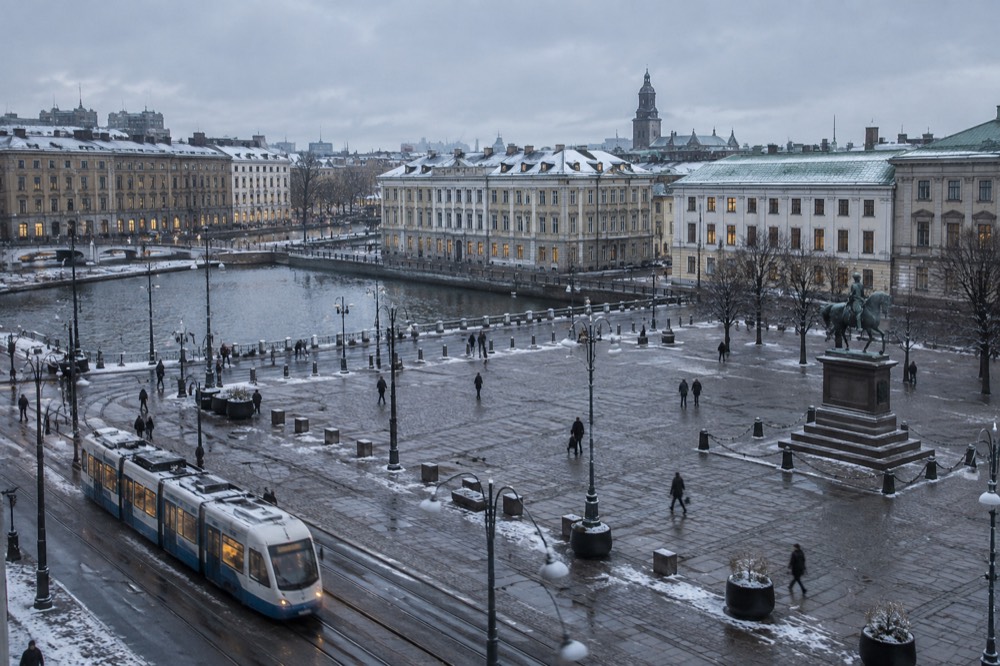
Gothenburg sits at 57.7 degrees north on Sweden's west coast, at the mouth of the Göta älv where the river meets the Kattegat, and that maritime position shapes its winters more than its latitude does. SMHI's 1991-2020 normals for station Göteborg A (71420) put the mean air temperature for January at 0.8 C and February at 0.7 C, which is cold, but it is not the deep continental freeze that inland Sweden endures. The sea never drops far below that, and the daylight is the part that surprises visitors more than the thermometer.
The question "how cold does Gothenburg get in winter?" has three separate answers, and they get confused constantly. There is the air temperature, which hovers around freezing. There is the sea temperature, which SMHI's oceanographic archive at the Vinga lighthouse station shows peaking in August at 18.6 C and bottoming out in February at 2.7 C. And there is the light: 6 hours 32 minutes of daylight on 21 December, against 18 hours 06 minutes on 21 June, a swing of 11 hours 34 minutes. This page works through all three, using only SMHI's published normals and the US Naval Observatory's daylight tables.
How Cold Is Gothenburg in Winter, in Air Temperature?
Gothenburg's winter air temperatures average 0.8 C in January, 0.7 C in February and 2.1 C in December, per SMHI's 1991-2020 normals for station Göteborg A, so the city spends winter hovering just above freezing rather than locked in deep cold, with mild Atlantic-influenced air keeping temperatures far higher than inland Sweden at the same latitude.
Those three figures come from SMHI's own normals spreadsheets, the official 1991-2020 reference period used across Swedish meteorology and published on SMHI's normals data page. The pattern they show is a maritime one. December averages 2.1 C, January 0.8 C, February 0.7 C, and by March the mean has already climbed back to 3.0 C. Compare that with the July peak of 18.3 C and the annual mean of 8.9 C, and the shape of the year becomes clear: Gothenburg has a narrow temperature range, cool summers and winters that sit on the freezing line rather than far below it.
The reason is the water. The Kattegat and the North Sea act as a heat reservoir, and prevailing westerly winds carry that maritime air onshore. Inland cities at similar latitudes in Sweden run colder in winter because they lack that buffer. Gothenburg's position at the river mouth, open to the sea to the west, is exactly what keeps the thermometer from dropping the way it does in, say, the interior of Västergötland.
What that means in practice: snow is possible but not reliable. With means around freezing, individual days swing above and below zero, so precipitation falls as rain about as often as snow in the city itself. Frosty mornings are routine, ice on pavements is a real hazard, and the classic Gothenburg winter day is grey, wet and a few degrees either side of zero rather than white and deep-frozen. Visitors arriving from continental Europe in January are often surprised at how manageable the cold is; visitors arriving from the far north of Sweden are surprised at how mild it is.
For context on what the city is like in the colder months generally, see Gothenburg in winter, and for the question visitors ask most, is Gothenburg worth visiting for tourists covers the honest case.
How Cold Is the Sea Around Gothenburg in Winter?
The sea around Gothenburg averages 2.7 C in February, its coldest month, with 3.9 C in January, 5.5 C in December and 4.1 C in March, according to SMHI's quality-controlled hourly observations at the Vinga lighthouse station, and the record low in the archive is -1.2 C, genuinely below zero because the brackish Kattegat water does not freeze at 0 C.
That -1.2 C figure deserves a pause, because it sounds impossible. It is not. The water off Gothenburg is brackish, a mix of Baltic and North Sea water, and its salinity lowers the freezing point slightly below zero. SMHI's corrected archive at station 35144 Vinga, built from 61,749 quality-controlled hourly observations, records that February record low along with a March record low of 1.3 C and an April record low of 3.5 C.
The seasonal shape of the sea matters for anyone planning to swim, kayak or take a boat out. The water runs about six weeks behind the air. Air temperature peaks in July at 18.3 C; the sea peaks a month later, in August, at 18.6 C. By December the mean has fallen to 5.5 C, January to 3.9 C, and February to 2.7 C. March at 4.1 C is barely warmer than January was.
For cold-water swimmers this is the heart of the season rather than a reason to stay indoors. The local tradition of winter bathing, a dip followed immediately by a sauna, is built around exactly these numbers, and the archipelago islands are where most of it happens. The cold water swimming and sauna scene in Gothenburg covers it in detail, and swimming and beaches in Gothenburg has the summer counterpart.
The most Gothenburg way to experience the cold sea without joining the winter bathers is from inside a heated boat. The archipelago sauna boat cruise runs four hours on the water with a sauna on board, priced from $344 per person with a 5 rating from a single review so far, and it is the tour this site points winter visitors at first.
How Dark Is Gothenburg in Winter?
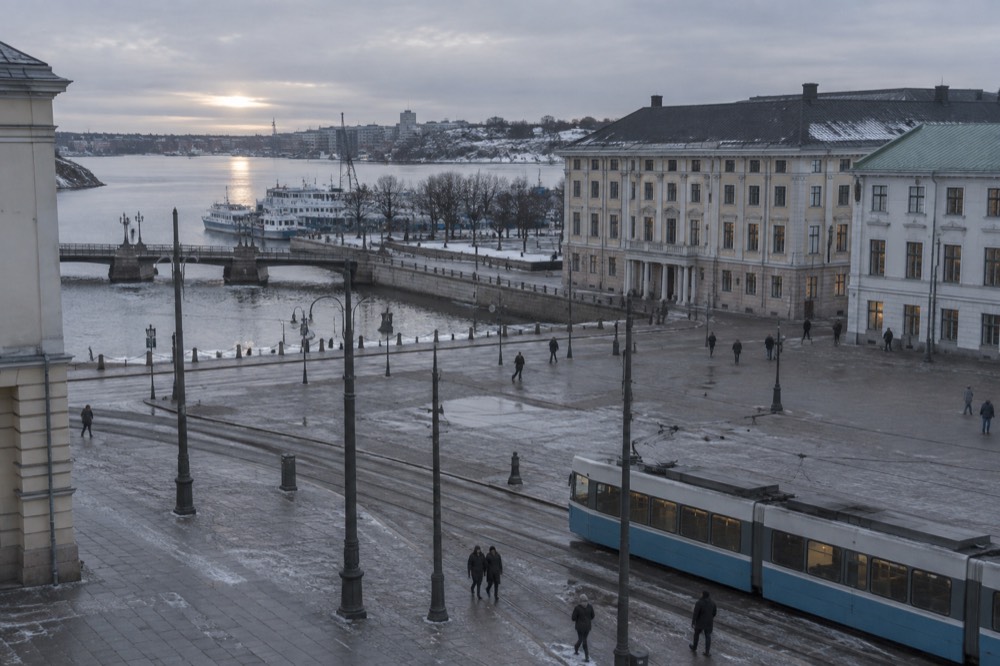
Gothenburg gets 6 hours 32 minutes of daylight on 21 December, sunrise 08:54 and sunset 15:26 local time, against 18 hours 06 minutes on 21 June, a swing of 11 hours 34 minutes between the solstices, and even the grey December light is bracketed by civil twilight from 08:03 to 16:17, so the full light window lasts barely eight hours.
Those figures come from the US Naval Observatory's sunrise and sunset tables for Gothenburg's coordinates. The December number is the one that hits visitors hardest, and it is worth being precise about what it means. The sun rises at 08:54 and sets at 15:26. Add civil twilight on either end, the period when the sky is still usable, and you get light from roughly 08:03 to 16:17. Outside that window it is properly dark.
The contrast with June explains why winter feels so extreme. On 21 June the sun is up from 04:11 to 22:17, and civil twilight runs from 02:58 to 23:30, leaving only about three and a half hours of true night. Gothenburg never reaches the midnight sun, that belongs far to the north, but the seasonal swing is enormous, and the adjustment in December is psychological as much as physical.
The practical consequences are plain. Sightseeing days compress into a six-hour window. Photographers get a long, low golden hour because the sun never climbs high. And the city's indoor life, its museums, cafes, fika culture and bathhouses, carries a larger share of the day than it does in summer. If darkness is your main worry, daylight and darkness in Gothenburg, month by month has the full table.
Does It Rain or Snow in Gothenburg in Winter?
Gothenburg sees 83.0 mm of precipitation in January, 61.0 mm in February and 93.0 mm in December, against an annual 912 mm spread over 127 wet days, and with winter means sitting right at freezing, much of that precipitation falls as rain in the city rather than snow, making a wet grey winter day more typical than a white one.
The monthly figures come from SMHI's 1991-2020 normals, station Göteborg A. December, at 93.0 mm, is one of the wetter months of the year, though the wettest is October at 102.9 mm. January's 83.0 mm and February's 61.0 mm sit mid-table. The wet days count matters as much as the totals: 13.3 days with at least 1 mm in December, 11.5 in January, 9.7 in February. Roughly one winter day in three delivers measurable rain or snow.
One claim this site will not make: that Gothenburg is Sweden's rainiest city. It is the most repeated cliché about the place, and SMHI's own data does not support it. SMHI's wording on the 1991-2020 normals describes annual precipitation varying from about 400 to 600 mm in eastern Götaland and Svealand to over 1000 mm in the mountain regions and western Götaland. Gothenburg's 912 mm sits inside the wet western band, but the national maxima are in the western highlands and the mountains, not the city.
Because the mean temperature hovers at freezing, precipitation type is a coin flip. Sleet is common. Snow settles some winters and vanishes in others. Ice on the ground after a freeze-thaw cycle is the most consistent winter hazard, more so than snow depth. Sturdy waterproof footwear with grip is the single most useful piece of packing, and what to pack for Gothenburg, season by season goes further.
What Should You Actually Do in a Gothenburg Winter?
The best winter days in Gothenburg are built around the weather rather than against it: a sauna boat or bathhouse when the sea is at 2.7 C, museums and fika in the six-hour daylight window, and a heated boat or bus tour when the rain sets in, because the city's indoor and on-water options are strong enough that cold weather rarely cancels a day entirely.
The logic is straightforward. With means around freezing and a one-in-three chance of wet weather on any given day, plans that depend on clear skies are fragile. Plans that use the cold as the point, a sauna followed by a sea dip, a warm boat through the archipelago, a long fika in a stone-walled Vasastan cafe, are weatherproof by design.
The on-water options are stronger than most visitors expect. Beyond the sauna boat cruise, the guided archipelago cruise runs 2.5 hours from $44 per person, rated 4.4 from 1,488 reviews, and the land-and-water amphibious bus, rated 4.7 from 4,326 reviews and from $36 per person, works in rain because half its route is a harbour tour. For a city overview with a roof overhead, see Gothenburg on a rainy day, which is effectively a winter guide by another name.
On the indoor side, Gothenburg's museum district around Götaplatsen carries a short winter day well. Göteborgs konstmuseum, with around 70,000 works and roughly a quarter of a million visitors a year, charges 75 kr for a day ticket and is free for anyone under 20, though note its own published plan: the museum closes in 2028 for a rebuild and reopens in 2032. Universeum is open every day of the year, 10:00 to 18:00, with dynamically priced tickets and booked entry times. And the Christmas period brings Jul på Liseberg, running 14 November to 23 December, which is the city's single biggest winter draw.
A table puts the whole winter in one view. All figures are SMHI 1991-2020 normals for station Göteborg A, plus the Vinga sea temperature archive and the US Naval Observatory daylight tables.
| Month | Mean air temp | Mean sea temp | Precipitation | Wet days (>=1 mm) | Daylight at month's peak |
|---|---|---|---|---|---|
| November | 5.1 C | 9.3 C | 84.7 mm | 12.0 | shrinking fast toward December |
| December | 2.1 C | 5.5 C | 93.0 mm | 13.3 | 6 h 32 m at the solstice |
| January | 0.8 C | 3.9 C | 83.0 mm | 11.5 | climbing back through the month |
| February | 0.7 C | 2.7 C | 61.0 mm | 9.7 | fastest month of light gain |
| March | 3.0 C | 4.1 C | 54.0 mm | 8.8 | spring daylight returning |
Read down the sea column and the winter swimmer's calendar writes itself: the water bottoms out in February and barely recovers by March. Read down the precipitation column and November and December emerge as the wet months, with February actually the driest of the five. The daylight column is the one that decides how a day feels, and it is the column that changes fastest: Gothenburg gains daylight more quickly in late winter than almost any other time of year, which locals will tell you is the real signal that the season is turning.
How Should You Dress for Gothenburg Winter Temperatures?
Dress for hovering-around-freezing and wet, not for Arctic cold: waterproof shoes with real grip for the ice, a windproof and rainproof outer layer, and warm layers you can shed indoors, because the 0.8 C January mean is mild enough that overdressing leaves you sweating the moment you step into a heated tram, museum or cafe.
The trap is packing for the Sweden of the imagination, deep snow and -20 C, which is an inland and northern reality, not a Gothenburg one. The city's winter problem is damp cold at the freezing line, which feels colder than the number suggests because the humidity and the wind off the water carry heat away fast. The sea at 2.7 to 5.5 C chills the onshore air all season.
Layering solves the indoor-outdoor swing. Gothenburg's trams, shops, museums and cafes are heated to a comfortable level, so the outer shell comes off constantly. Gloves and a hat matter more than their mild-climate reputation suggests, because the windchill on the harbourfront, along the Göta älv or out on the islands, is where the raw days happen.
Footwear is the item that ruins trips. Freeze-thaw cycles leave pavements and cobbles glazed, and the Haga quarter's cobblestones in particular turn treacherous. Ice grips that slip over shoes are cheap and common in local shops by December, and locals use them without embarrassment.
Common Questions About How Cold Gothenburg Gets in Winter
How cold does Gothenburg get in winter?
Gothenburg's winter averages are 2.1 C in December, 0.8 C in January and 0.7 C in February, per SMHI's 1991-2020 normals for station Göteborg A. The city hovers just above freezing rather than dropping into deep cold, because the Kattegat and the Atlantic-influenced westerly winds buffer the temperature.
Does it snow in Gothenburg?
Snow falls but is not reliable. With winter means sitting right at the freezing line, precipitation falls as rain about as often as snow in the city itself, and what settles often melts within days. Ice on pavements after freeze-thaw cycles is a more consistent winter feature than snow cover.
Is Gothenburg colder than Stockholm in winter?
No, the two are close, but Gothenburg's maritime position on the west coast keeps its winters slightly milder than inland and eastern Sweden at the same latitude. SMHI's normals put Gothenburg's January mean at 0.8 C, a figure shaped by the sea rather than the latitude.
How many hours of daylight does Gothenburg get in December?
Gothenburg gets 6 hours 32 minutes of daylight on 21 December, with sunrise at 08:54 and sunset at 15:26, per the US Naval Observatory's tables. Adding civil twilight extends the usable light window to roughly 08:03 to 16:17.
Is the sea around Gothenburg frozen in winter?
No. The sea around Gothenburg averages 2.7 C at its coldest, in February, per SMHI's Vinga station archive, and the record low in the quality-controlled data is -1.2 C. The brackish Kattegat water does not freeze at 0 C, and open water persists through the winter.
Is Gothenburg worth visiting in winter?
Yes, if you plan around the light and the wet rather than against them. The six-hour December daylight window, the sauna and winter-bathing culture, Jul på Liseberg from 14 to 23 December, and a strong museum and fika scene make the city work in the cold months, and the archipelago boats run on ordinary Västtrafik tickets year-round.
The short version: Gothenburg's winter is a mild, wet, dim season that sits on the freezing line, with a sea that runs colder than the air and a daylight window that compresses everything into six hours. Pack for damp and ice, plan the indoor and on-water options first, and the cold becomes the point of the trip rather than the problem with it. For more on what the city offers across the year, start with what is Gothenburg known for, and for the full seasonal picture, the best time to visit Gothenburg weighs winter against the rest of the year. This page is part of Gothenburg Travel Guide's answers section.