What to Eat at Feskekôrka in Gothenburg: A Guide to the Fish Church Food Hall
Feskekôrka reopened in 2024 as a food hall with five restaurants and two fish counters. Here is what to eat in Gothenburg's fish church, from shrimp sandwiches to langoustine.
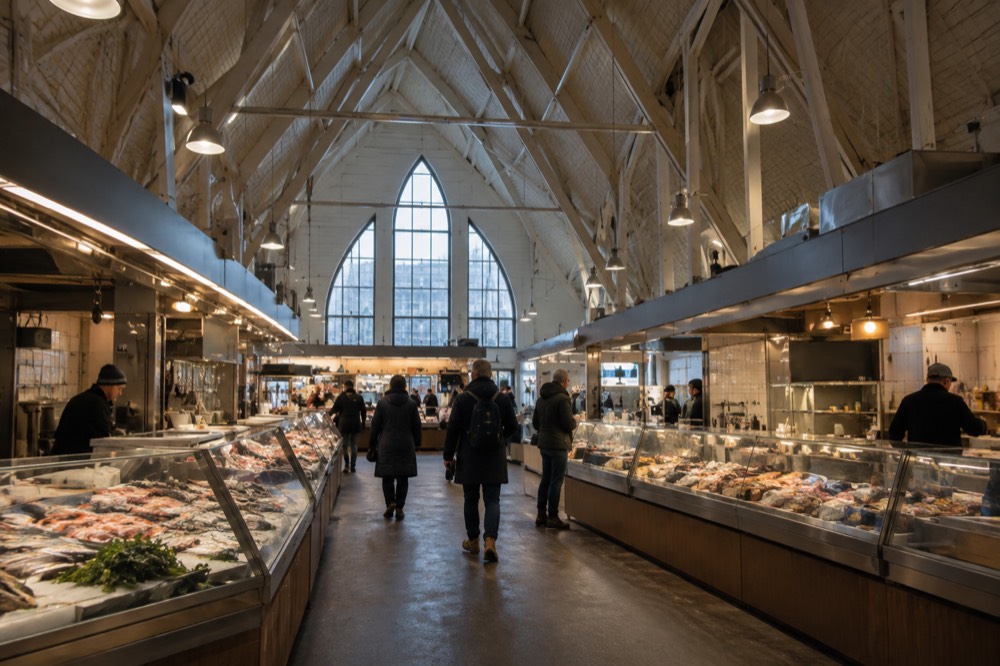
Feskekôrka, the building shaped like a church on Rosenlundsgatan in central Gothenburg, is the city's most famous place to eat seafood, and in 2024 it changed shape. Higab, the municipal property owner, records that the hall reopened that year, the same year the 1874 building turned 150. It is no longer a fish market with a couple of counters. Its own site now lists five restaurants alongside two fish counters, which makes it a food hall where you can both eat west-coast seafood on the spot and carry raw fish home. This guide walks through what is actually inside, what to order, and how the hall fits into a day in the city. For the wider food picture, our piece on what food Gothenburg is famous for covers the shrimp sandwich, the oyster coast and everything beyond the fish church.
What Is Feskekôrka in Gothenburg?
Feskekôrka is a 19th-century market hall on Rosenlundsgatan, built in 1874 in the shape of a church, that has sold fish in Gothenburg for over 150 years. It closed for renovation and reopened in 2024 as a food hall, and it now contains five restaurants and two fish counters rather than only fishmongers. The name is Gothenburg dialect for "fish church", and the seafood sold inside is west-coast Kattegat produce: shrimp, langoustine, salmon and mussels.
The building is one of the odder pieces of architecture in a city full of them. A fish market that looks like a Norwegian stave church was the idea behind the original design, and the nickname stuck so hard that it became the official name. Higab, which owns the property, notes the 150-year anniversary landing in the same year as the reopening, so the hall Gothenburg got back in 2024 is both very old and essentially new.
The renovation matters for a visitor because the old guides are wrong now. Descriptions written before 2020 paint a wet, cold hall with fishmongers shouting over ice beds. Descriptions written between 2020 and 2023 say it is closed for renovation. Both are stale. The hall that exists today is a food hall in the modern sense: counters where you buy raw fish to cook at home, and restaurants where you sit down and eat it cooked for you. If you are planning a trip and asking whether Gothenburg is worth visiting for tourists, the reopened fish church is one of the things that has genuinely improved in the last few years.
There is a third version of the hall that older residents remember, and it explains some of the affection the building carries. For most of its life, Feskekôrka was where the city's cooks and home shoppers came for the morning catch, and the restaurants are a genuinely new layer on top of that. The fish counters kept their place through the renovation, so the shopping tradition and the eating tradition now share one roof. That combination is what makes the hall more than a photo stop: you can watch a fishmonger break down the day's delivery, then sit ten metres away and eat the same species cooked.
What Should You Actually Eat Inside Feskekôrka?
The core order in the fish church is west-coast Kattegat seafood: shrimp, langoustine, salmon and mussels, served either as a sit-down plate in one of the five restaurants or bought raw from the two fish counters. The classic Gothenburg plate is the shrimp sandwich, and the hall is also the natural place in the city to eat langoustine and smoked or cured salmon. Which of the five restaurants you pick decides whether it is a quick counter lunch or a long table dinner.
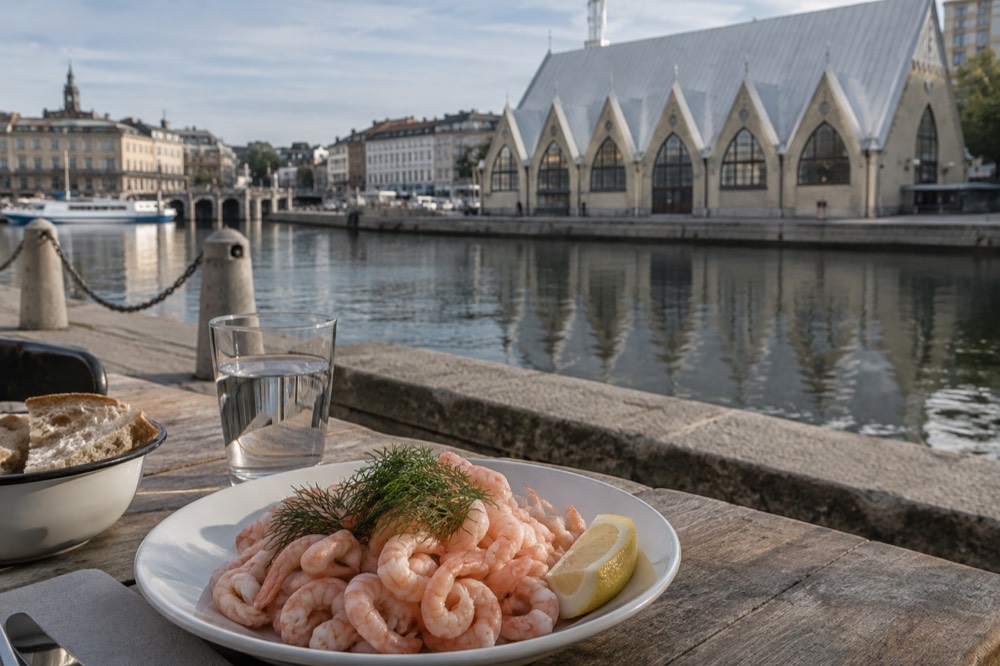
Start with the shrimp. The west coast shrimp sandwich, räksmörgås, is the single dish Gothenburg is most associated with, and the fish church is where the shrimp is freshest because the counters sit a short distance from where the boats land. The shrimp here is cold-water Kattegat shrimp, small and sweet, usually served peeled on buttered bread with lemon, dill and mayonnaise. If you only eat one thing in the hall, the listing of restaurants inside suggests a shrimp plate is on nearly every menu.
Langoustine is the second thing to look for. The Bohuslän coast north of the city is the langoustine capital of Sweden, and the fish church counters carry it live and cooked. A langoustine plate, with bread and aioli, is the upgrade order: it costs more than shrimp and tastes like the reason people drive up the coast in summer.
Salmon and mussels round out the core. Salmon arrives from the same waters as everything else in the hall, and it shows up smoked, cured, grilled and in soups. Mussels are a west-coast staple, usually served steamed in a pot with bread for dipping. The five restaurants each lean on these four ingredients differently, which is why the hall rewards a second visit.
A fish soup is the order that ties the hall together, and it is worth asking for even when it is not on a chalkboard. A proper west-coast fish soup is built on a shellfish stock with cream, saffron or dill, and chunks of whatever came in that morning. It is also the most forgiving order for a cold or wet day, and Gothenburg has those: SMHI's 1991-2020 normals for the city record 912 mm of precipitation across 127 wet days a year, with October the wettest month at 102.9 mm. A bowl of soup inside a warm timber hall is the standard local answer to that statistic.
The eating here is not expensive by Gothenburg standards, but it is not a bargain either. Expect counter prices for raw fish and restaurant prices for cooked plates; check the board at each counter, because prices move with the catch. If budget is the deciding factor for your trip, our breakdown of whether Gothenburg is cheap or expensive puts food hall spending in context against the rest of the city.
A morning at the fish church also slots neatly into a harbour-themed day. The hall sits a short walk from the canal and the Rosenlund waterfront, so a common pattern reported by visitors is seafood at Feskekôrka followed by a boat out onto the water the same seafood came from.
Which Restaurants and Counters Are Inside Feskekôrka?
Feskekôrka contains five restaurants, Haldis Kök, Pråmenaden, Victor von G, Lilla Åstol and Ekmans, plus two fish counters, Ebbes Fångst and Flåtens Fiskhandel, all listed on the hall's own site. Lilla Åstol is seasonal and reopens in spring, so the count of places to sit and eat is sometimes four rather than five. The restaurants range from counter-style plates to full table service, and the two fishmongers sell raw seafood to take away.
Here is the layout as the hall's own site presents it:
| Name | Type | What to expect |
|---|---|---|
| Haldis Kök | Restaurant | Kitchen cooking the day's Kattegat catch |
| Pråmenaden | Restaurant | Seafood plates in the hall setting |
| Victor von G | Restaurant | Table-service seafood dining |
| Lilla Åstol | Restaurant, seasonal | Reopens in spring per its own copy |
| Ekmans | Restaurant | Seafood and smaller plates |
| Ebbes Fångst | Fish counter | Raw fish and shellfish to take away |
| Flåtens Fiskhandel | Fish counter | Raw fish and shellfish to take away |
Two practical notes. First, Lilla Åstol closes for winter; its own site says it reopens in spring, so do not build a December trip around it. Second, the distinction between the restaurants and the counters is the distinction between eating and shopping. The counters sell the raw ingredient, the restaurants cook it. Both are the reason the hall reopened as a food hall rather than as the old fish market.
The hall's own site is the source for the current tenant list, and it is worth a check before a special-occasion visit because a food hall's roster can change between seasons. feskekorka.se lists every counter and restaurant currently operating.
How to choose between the five comes down to the shape of your day. A counter-style plate suits a lunch between sightseeing stops, because you order, eat and move on inside half an hour. Table service suits the evening, or the meal you build the evening around. Families with small children generally do better at the informal end of the range, since a food hall gives you a stroller-friendly floor and a plate of shrimp that a child can pick at without ceremony. Whichever you pick, the shared ingredient list means nobody in your group is stuck ordering second-best.
Can You Buy Raw Fish to Cook at Home from Feskekôrka?
Yes, and that is half the point of the hall. The two fish counters inside, Ebbes Fångst and Flåtens Fiskhandel, sell raw seafood over the ice to take away: whole fish, fillets, shrimp, langoustine and mussels from the Kattegat. This is the surviving half of the original fish market, and buying from the counters is the closest thing to how Gothenburg has shopped here for over 150 years.
The counters are where the building's history lives. Fish has been sold on this spot since the hall opened in 1874, and the renovation kept the fishmongers while adding the restaurants around them. If you are staying in an apartment with a kitchen, a raw purchase from Ebbes Fångst or Flåtens Fiskhandel is arguably the best-value seafood transaction in the city: you pay market prices rather than restaurant prices, and the product came off the same boats.
Ask the counter what came in that morning. The honest answer to "what is good today" is the entire business model of a fishmonger, and the staff at both counters will tell you what to do with whatever you buy. Grilling langoustine takes minutes; mussels need a pot, wine and bread; a whole fish can be cooked by anyone with an oven and salt.
One thing the counters cannot sell you is a bottle of wine to go with the fish, and the reason is national rather than local. Sweden's alcohol retail rules reserve anything above 3.5% ABV to the state monopoly, so plan a separate Systembolaget stop if the evening plan is cooking at home. The details of that rule sit further down this page, because it shapes a food hall visit more than most visitors expect.
How Does Feskekôrka Compare with Stora Saluhallen?
Feskekôrka is the specialist hall, seafood only, five restaurants and two fish counters in a small 1874 building, while Stora Saluhallen on Kungstorget is Gothenburg's general market hall, covering cheese, meat, bread, produce and deli counters as well as some fish. They are not competitors: the fish church is where you eat Kattegat seafood, and Stora Saluhallen is where you shop for everything else. A food-focused day can do both on foot.
The comparison matters because some visitors hear "market hall" and picture one big building. Gothenburg has two, and they do different jobs. Feskekôrka is narrow and deep: one product category, done extremely well, in a building worth seeing for its own sake. Stora Saluhallen is broad: a classic saluhall in the mould of Stockholm's and Copenhagen's, with counters for cheese, charcuterie, bread, coffee and flowers.
Distance is not an issue. Kungstorget is a short walk from Rosenlundsgatan, well inside the old moat, so a loop of both halls with a stop at each takes an easy half-day. The pattern that works is raw shopping at Stora Saluhallen in the morning, a seafood lunch at Feskekôrka, and then whatever the afternoon allows.
If your trip is short, choose the fish church. A visitor with one food stop in Gothenburg gets more out of Feskekôrka than out of the general hall, because the fish church is the thing that does not exist in most other Scandinavian cities in this form. Stora Saluhallen rewards a longer stay, a [self-catering](https://booking.tpk.ro/bOrKnnc1) stay, or a rainy afternoon with no dinner reservation.
Can You Drink Beer or Wine with Your Seafood at Feskekôrka?
Beer and wine are served with food in the restaurants, but anything above 3.5% ABV cannot be bought to take away anywhere except Systembolaget, the state monopoly, under Sweden's alcohol law. Supermarkets sell only folköl at up to 3.5%, so the stronger version of a Swedish beer brand does not exist on an ordinary shop shelf. Inside the hall, order your drink at the restaurant and drink it there.
This is the Swedish alcohol rule that catches almost every first-time visitor, and it applies to a food hall visit in a specific way. The statute, Alkohollag (2010:1622), defines the boundary: beer above 2.25% but not above 3.5% is folköl and sold in supermarkets, while anything above 3.5% is starköl, reserved to the monopoly. The law is published in the Swedish statute book and is not a grey area.
So the practical version: eat in one of the five restaurants and order beer or wine from the menu, which is licensed like any Swedish restaurant. If you are buying raw fish from the counters to cook at home and want a beer to go with it, the Systembolaget run has to happen separately, and stores are closed on Sundays. Plan the shopping order accordingly.
A side effect of the rule is worth knowing when you browse a Swedish supermarket shelf. The beer you see there is often a 3.5% reformulation of a brand you may know at a stronger strength, because the shelf version is the strongest the law allows outside the monopoly. It is not a different beer by accident; it is the same brand brewed to fit the statute. Inside Feskekôrka's restaurants, the menus carry the full-strength versions, which is one quiet advantage of eating your seafood where it is cooked.
How Do You Fit Feskekôrka Into a Day in Gothenburg?
Feskekôrka sits on Rosenlundsgatan inside the old moat, a few minutes' walk from the canal, the Rosenlund waterfront and the Avenyn end of the city, so the natural pattern is the fish church at lunch and the harbour or the archipelago afterwards. The amphibious bus sightseeing tour, the guided archipelago cruise and the canal sightseeing cruise all depart from the central harbour within reach of the hall, and all three pair the seafood with the water it came from.
The geography does half the planning for you. The hall is central enough that you do not detour to it; you pass it. A morning walk through the old town, lunch at one of the five restaurants, and then a boat from the nearby quays is a day that hangs together, because the shrimp on your plate and the water outside the window are the same Kattegat system.
The amphibious bus is the most Gothenburg of the options: it drives past the harbour sights and then drives into the harbour. The archipelago cruise runs out to the car-free islands that sit inside the city's own transport zone, and the canal cruise threads the 17th-century moat the Dutch engineers dug. Any of the three works as the afternoon half of a fish church day. If you are building a longer plan, how many days in Gothenburg is enough is the page that sizes the trip, and what is a must-see in Gothenburg ranks the fish church against the rest.
Timing changes with the season, and the season changes the seafood. Autumn is the hall's quiet argument for itself: the tourist crowds thin, the shrimp and langoustine are still coming in, and September sea temperatures off the archipelago average warmer than June's, per SMHI's Vinga station data. Winter is the season for the heavier orders, fish soup and hot smoked salmon, and the hall is one of the indoor stops that makes a cold-weather Gothenburg trip work. Whatever the month, the hall is indoors, central and close to everything else, which is why it survives on itineraries year-round.
One more thing worth knowing before you go: the name. Visitors sometimes hesitate over the spelling, and the answer is that Feskekôrka is Gothenburg dialect, not standard Swedish, and the ô is an ordinary letter. If the city's naming conventions generally confuse you, are Gothenburg and Göteborg the same settles the bigger question behind it. And if you are curating the whole eating side of a trip, what does fika mean in Sweden explains the coffee-and-bun ritual that pairs with, rather than replaces, a seafood lunch. This is the kind of detail the Gothenburg Travel Guide exists to get right.
Common Questions About Eating at Feskekôrka in Gothenburg
What is Feskekôrka in Gothenburg?
A market hall on Rosenlundsgatan built in 1874 to look like a church, which sold fish for over 150 years and reopened in 2024 as a food hall. It now contains five restaurants and two fish counters, and its own site is the current source for the tenant list.
What should I eat at Feskekôrka?
West-coast Kattegat seafood: a shrimp sandwich or shrimp plate first, then langoustine, salmon or mussels depending on the restaurant. The counters sell the same species raw if you would rather cook at home.
Is Feskekôrka open in winter?
The hall operates year-round, but Lilla Åstol, one of the five restaurants, is seasonal and its own copy says it reopens in spring. The other restaurants and both fish counters are not listed as seasonal.
Can you buy fish to take away from Feskekôrka?
Yes. Ebbes Fångst and Flåtens Fiskhandel, the two fish counters inside the hall, sell raw fish and shellfish over the ice, which is the surviving half of the original fish market.
Is Feskekôrka the same as Stora Saluhallen?
No. Feskekôrka is the seafood specialist on Rosenlundsgatan; Stora Saluhallen on Kungstorget is the general market hall with cheese, meat, bread and deli counters. They are a short walk apart and do different jobs.
Can you buy beer at Feskekôrka to take away?
Restaurants inside serve beer and wine with food, but takeaway beer above 3.5% ABV is only sold at Systembolaget under Swedish alcohol law. Supermarkets carry only folköl at up to 3.5%.