The Gothenburg Archipelago in Winter: Sea, Ice Light and Empty Islands
The southern archipelago does not close for winter. The ferries keep running on an ordinary Västtrafik ticket, the islands stay car-free, and the sea off Vinga bottoms out at 2.7 C in February. Here is what a winter island day in Gothenburg actually looks like.
Short answer
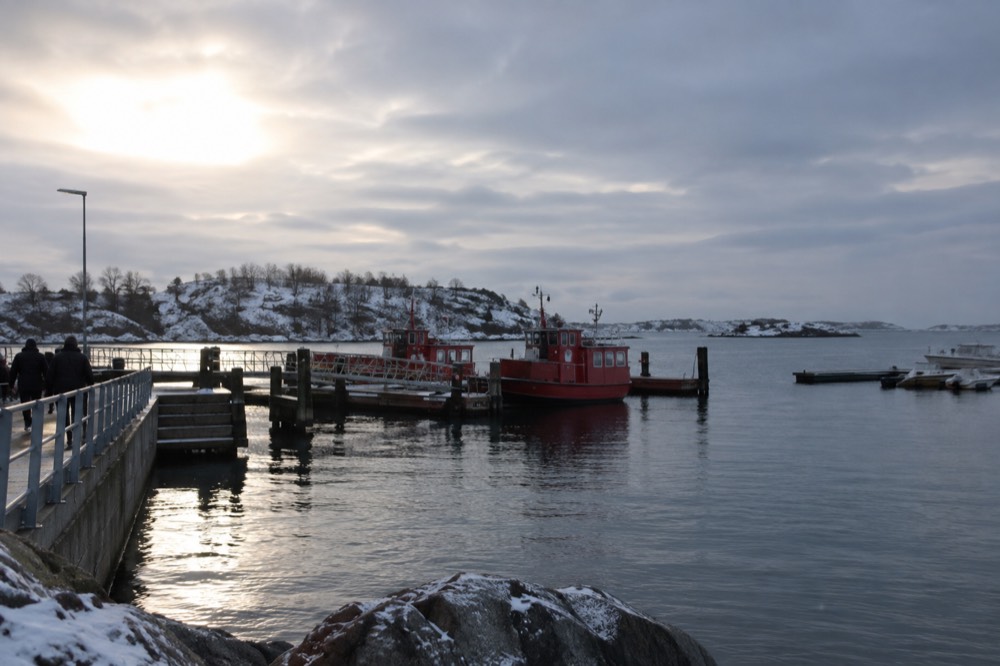
The Gothenburg archipelago is open all winter: Västtrafik ferries run from Saltholmen to the car-free southern islands year-round on a normal Zone A ticket, the sea is at its coldest in February at 2.7 C, and daylight shrinks to 6 h 32 m at the solstice. Bring layers, book nothing except a boat tour, and expect empty jetties, closed seasonal kiosks and a lot of grey granite.
Gothenburg's southern archipelago is not a summer attraction that shuts down in October. The islands of Styrsö, Brännö, Vrångö, Donsö, Asperö and Köpstadsö are areas of the city, administrally part of Göteborg, and the Västtrafik ferries from Saltholmen keep serving them through the darkest months. Göteborgs Stad's own planning documents state it plainly: the islands are protected from car traffic, so the winter visitor arrives the same way the summer one does, by tram to the water and then by boat.
What changes in winter is everything else. The kiosks close, the bathing rocks empty out, the daylight compresses to 6 hours 32 minutes at the December solstice, and the sea, which peaked at 18.6 C in August at the Vinga lighthouse station, slides to its annual low of 2.7 C in February. That is not a reason to stay ashore. It is the reason the islands look the way they do: granite, weathered boathouses and a horizon with nothing on it. This guide, from the editorial desk at Gothenburg Travel Guide, covers which islands work in winter, how the boats run, what the water and weather actually do, and what to do with six hours of light.
Is the Gothenburg Archipelago Worth Visiting in Winter?
Yes, if you want the islands without the crowds and accept shorter ferry intervals, closed kiosks and a sea at 2.7 to 7 C. Västtrafik runs winter timetables to the southern islands on a normal Zone A ticket, the car-free roads stay walkable in almost any weather, and the low December sun turns the granite gold for a couple of hours either side of noon. It is a half-day trip, not a beach day.
The honest case for a winter visit is emptiness. In July the ferry to Styrsö carries day-trippers, bathers and bicycles; in January it carries residents, a few photographers and whoever came for the walk. The trade is comfort. The seasonal cafés and kiosks that make summer island life easy are shut until spring, so a winter trip means bringing your own thermos and not counting on lunch.
The other trade is light. On 21 December the sun rises at 08:54 and sets at 15:26, giving 6 hours 32 minutes of daylight, per the US Naval Observatory tables for Gothenburg's latitude. That is still a full half-day out if you catch a mid-morning ferry. By late February the days stretch fast, and by the March equinox an island walk has daylight to spare. The best time to visit Gothenburg overall is a broader question, but for the archipelago specifically, winter works best in that February-to-April window when the light returns before the visitors do.
Which Gothenburg Archipelago Islands Can You Visit in Winter?
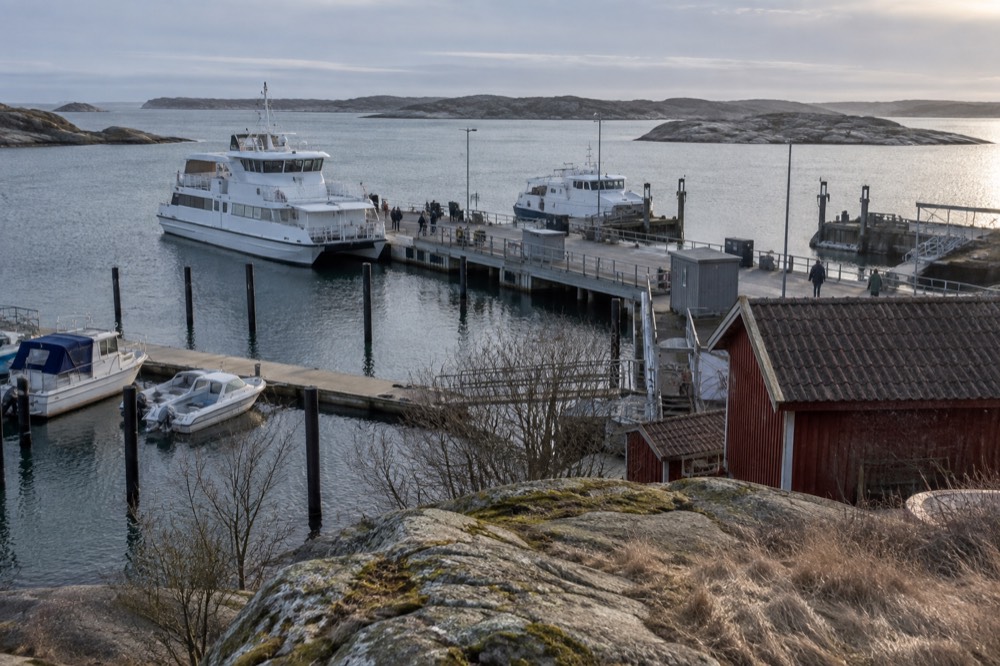
All six southern islands served from Saltholmen, Styrsö, Brännö, Vrångö, Donsö, Asperö and Köpstadsö, remain reachable in winter on Västtrafik's reduced timetable, because they are ordinary parts of the city with permanent residents. The ferries run fewer sailings than in summer and some rural island stops drop off, so check the day's timetable before you travel. The northern islands, Öckerö and Hönö, run their own year-round connections.
The southern islands are the classic winter trip because the journey is one ticket: tram to Saltholmen, ferry to the island, all inside Zone A. Västtrafik's own network map, the tram, bus and boat map published on vasttrafik.se, shows the archipelago ferry lines as part of the same network, and the islands sit inside Zone A. Our getting around Gothenburg guide covers the fare mechanics; the short version is that a 24-hour Zone A ticket at 125 kr covers tram and ferry together.
Which island suits a winter day best depends on what you want from it:
| Island | Winter character | What to expect November to March |
|---|---|---|
| Styrsö | Largest southern island, village feel | Year-round residents, main walking tracks, easiest half-day trip |
| Brännö | Flat, meadow and shoreline walks | Long easy circuits, very quiet off-season |
| Vrångö | Southernmost, wildest | Long ferry leg, open heath, the emptiest winter walk |
| Donsö | Fishing village heritage | Working harbour atmosphere, quiet lanes |
| Asperö | Small and residential | Short visit, connects well with other islands |
| Köpstadsö | Tiny, steep paths | Minimal winter facilities, a walker's island |
Two practical warnings. First, winter timetables are thinner, and a missed return ferry can mean hours on a cold jetty, so photograph or screenshot the day's departures at Saltholmen before you board. Second, the islands are protected from private car traffic under the city's own provisions, which is why they stay quiet: only taxi, färdtjänst and emergency vehicles use the roads. You walk everywhere, which in winter means ice underfoot is a real possibility after a freeze.
If you would rather have a guide and a heated cabin than a self-planned ferry hop, the boat-tour options below run year-round from the city centre:
How Cold Is the Sea Around Gothenburg in Winter?
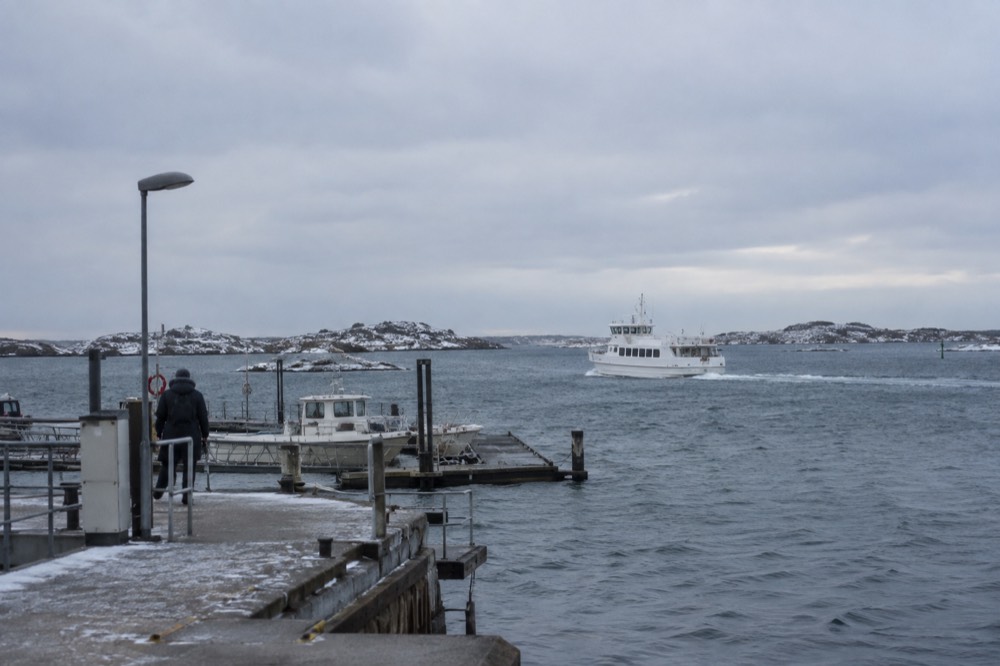
The sea off the archipelago bottoms out at 2.7 C in February, the coldest month, and sits between roughly 4 and 9 C from November through March, per SMHI's quality-controlled hourly observations at the Vinga lighthouse station. The record low in that archive is -1.2 C in February, possible because brackish Kattegat water freezes below 0. Winter swimming here is a deliberate act, not an accident.
That data comes from SMHI's oceanographic archive at station 35144 Vinga, the lighthouse out at the archipelago's edge, built from tens of thousands of quality-controlled hourly readings. The seasonal shape matters more than any single number:
| Month | Mean sea temp at Vinga | Record low | Record high |
|---|---|---|---|
| November | 9.3 C | 3.7 C | 13.0 C |
| December | 5.5 C | 1.5 C | 9.0 C |
| January | 3.9 C | -0.1 C | 7.1 C |
| February | 2.7 C | -1.2 C | 6.7 C |
| March | 4.1 C | 1.3 C | 6.1 C |
Two facts from the same archive surprise most visitors. The sea peaks in August (18.6 C), not July, because water runs weeks behind the air. And September water, at 16.7 C, is warmer than June water, at 16.2 C. Neither helps you in February, but they explain why locals treat the winter sea with respect: it has been losing heat since August and by the New Year it is near its floor.
For anyone tempted by a winter dip, the cold water swimming and sauna in Gothenburg guide covers the how-to properly. The short version: cold-water swimming here is an organised practice with sauna culture around it, not something to improvise alone on an empty winter island.
How Do You Get to the Gothenburg Archipelago in Winter?
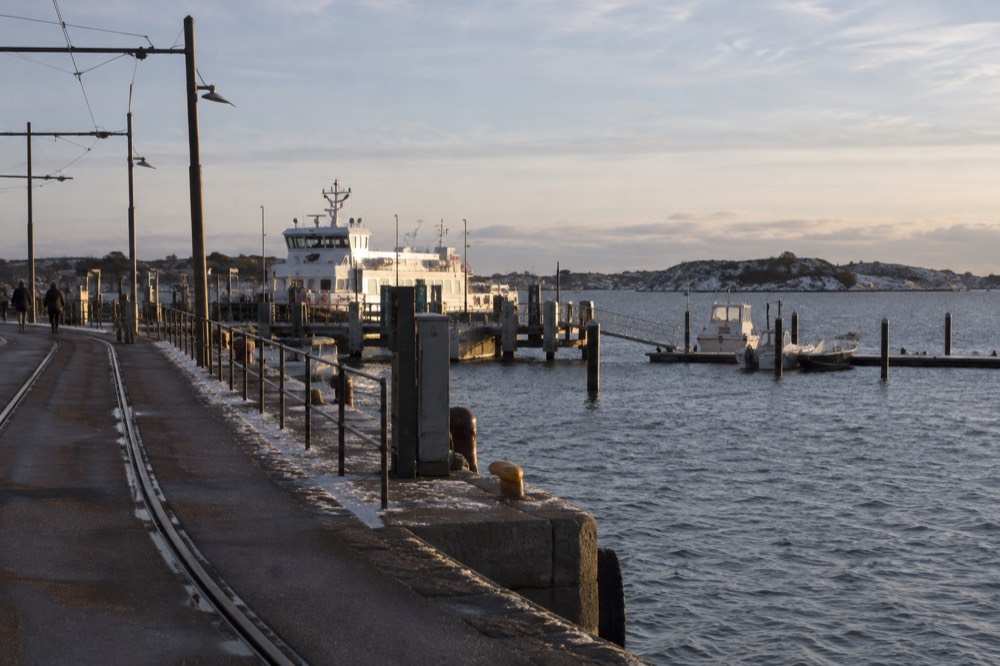
Tram to Saltholmen, ferry to the island, one Västtrafik Zone A ticket for both. Saltholmen is the western terminus of the tram network, and the southern archipelago ferries depart from its piers on the same ticket you used to get there, with a 24-hour Zone A ticket at 125 kr covering trams and ferries together. In winter the ferries run a reduced timetable, so check the day's sailings rather than the summer schedule in your memory.
The mechanics are the same in every season, which is the point: the archipelago is inside the city's own fare system. Västtrafik's network map shows the ferry lines integrated with trams and buses, and the islands sit in Zone A, the zone that also covers Mölndal and Öckerö. There is no separate island fare, no tourist boat supplement, nothing to buy on board.
Winter adjustments to plan around:
- Fewer departures per day on every island route, with the smallest islands seeing the biggest cuts
- Some routes consolidate or pause stops in the off-season; the printed day timetable at Saltholmen is the authority
- The last return sailing matters more than the first one out; a 15:26 sunset means a late ferry home is a dark ferry home
- Ice years can disrupt sailings, though the ferries are built for the Kattegat's brackish water, which freezes below 0
The northern archipelago, Öckerö, Hönö and Björkö, is a separate system with its own year-round boats from Lilla Varholmen on Hisingen, reachable by bus. It is covered in the northern archipelago guide, and it makes a decent winter alternative when you want island roads with a bit more shelter.
For a guided version of the same water, the classic cruise below is the one that runs through the off-season with commentary and a warm cabin:
What Is There to Do on a Winter Island Day?
Walk, photograph, fika if you find an open café, and let the island do the work. Winter strips the archipelago down to its permanent furniture: granite, jetties, boathouses, churches and working fishing harbours, and with the summer kiosks shut, the day becomes a long loop on foot timed against the ferry timetable. Two to four hours of walking on Styrsö or Brännö fills the daylight window completely.
The walks are the main event. Brännö is flat and generous, meadow paths and shoreline loops that suit a slow winter pace. Vrångö is the wildest of the served islands, open heath and long views south, and in January you can have it entirely to yourself. Styrsö has the most village texture, white-painted houses around Tången and a network of tracks between its hamlets. Donsö's harbour still works through winter, and watching a fishing boat come in against a low sun is the archipelago's most reliable free spectacle.
Food is the weak link. The seasonal kiosks close, and island cafés that open in summer often shut or reduce hours from autumn to spring. Assume you carry your own fika: a thermos and something baked is the standard winter island kit, and the Swedish habit of fika, the coffee-and-bun break explained in our fika in Gothenburg guide, travels well in a rucksack. If you want a guaranteed hot meal, plan it back on the mainland; where to eat in Gothenburg covers the city end of that equation, including Feskekôrka, the reopened fish-church food hall on Rosenlundsgatan.
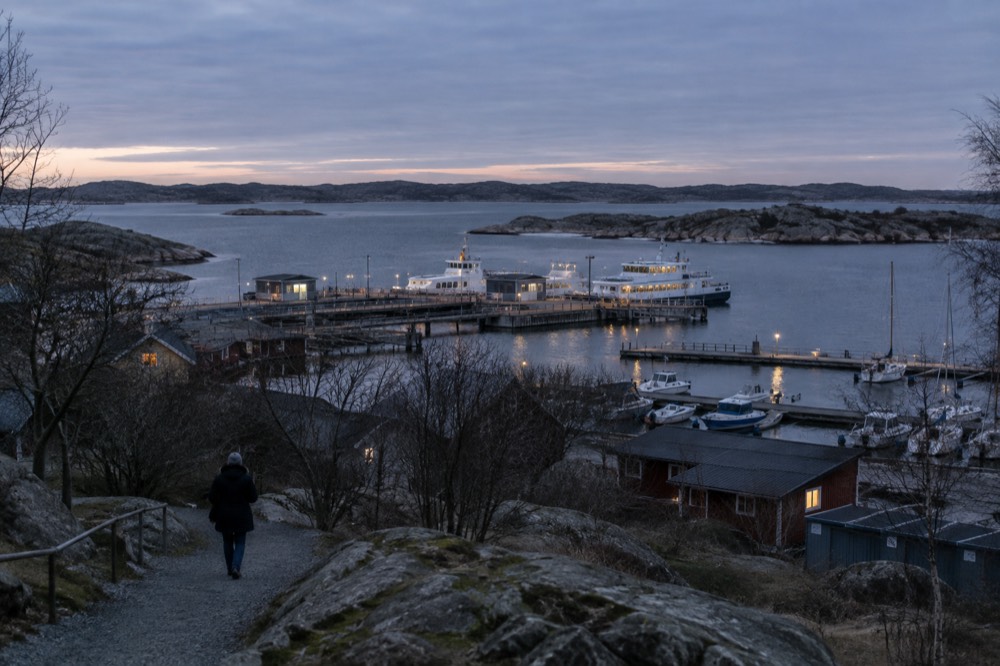
Photography is the other winter activity, and the light is why. A sun that never climbs more than a few degrees above the horizon rakes across water and granite for hours. The best photo spots in Gothenburg guide is mostly a city list, but the same rules apply out on the islands: the hour before the ferry home is the golden one.
Can You Swim or Take a Sauna in the Archipelago in Winter?
Yes, but do it as an organised activity, not a solo decision. The sea is between 2.7 and 9 C through the winter months, and the sauna tradition that makes winter swimming safe and social is well established on this coast. A sauna boat cruise from the city centre, four hours with hot rooms and cold sea dips, runs year-round, and the archipelago's cold-water swimming culture has its own infrastructure around it.
The physics first. At 2.7 C, the February mean at Vinga, cold shock is a genuine risk for the unprepared, and the record low of -1.2 C means the water can be literally freezing without being frozen over, because brackish Kattegat water freezes below zero. Locals who swim through winter do it briefly, with company, and with heat close by.
The sauna tradition is the answer this coast built to that problem. Heated rooms by or on the water, a plunge, a return to heat: it is a social ritual as much as a health one, and a sauna boat brings the whole structure onto the archipelago water itself:
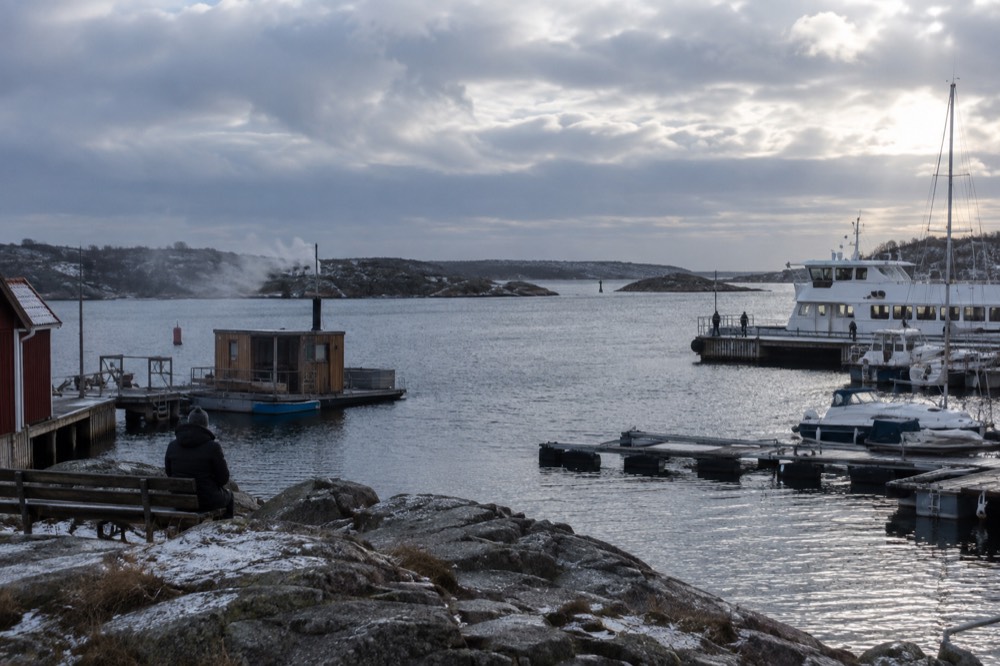
The swimming and beaches in Gothenburg guide covers the summer end of the same water; the winter end belongs to the sauna crowd.
What Is the Weather Like on the Islands in Winter?
Grey, wet and windy, but not the permanent deluge the city's reputation suggests. Gothenburg sees 912 mm of rain a year across 127 days, about one day in three, with the wettest month October at 102.9 mm and winter months running 61 to 93 mm, per SMHI's 1991-2020 normals for the Göteborg A station. Out on the islands the wind is the real variable: the same shower that drizzles in the city arrives sideways at Vinga.
The numbers behind the reputation, from SMHI's own normals spreadsheets:
| Month | Mean air temp | Precipitation | Days with ≥1 mm rain | Daylight at solstice/month |
|---|---|---|---|---|
| November | 5.1 C | 84.7 mm | 12.0 | shrinking fast |
| December | 2.1 C | 93.0 mm | 13.3 | 6 h 32 m on 21 Dec |
| January | 0.8 C | 83.0 mm | 11.5 | growing |
| February | 0.7 C | 61.0 mm | 9.7 | growing fast |
| March | 3.0 C | 54.0 mm | 8.8 | near 12 h by month end |
One myth to kill here, because it is the most repeated wrong claim about this city: SMHI does not call Gothenburg Sweden's rainiest city, and its own data does not support the label. The national maxima sit in the western highlands and the mountains; Gothenburg's 912 mm is wet, but it is western-Götaland normal. And the rain is an autumn problem more than a winter one: October at 102.9 mm is the peak, while April at 51.3 mm is the driest month of the year.
On the islands, plan for wind chill to do the real work. A 2 C day in the city feels materially colder on an exposed Vrångö heath, and dry granite under a cold wind is where good gloves earn their place. The what to pack for Gothenburg guide has the full seasonal kit list; the winter island version is that list plus one layer.
Should You Take a Winter Sailing or Boat Tour Instead of the Ferry?
For most visitors, yes, at least once: a guided boat gives you a cabin, commentary and a route through the archipelago without your own timetable logistics, which matters when the alternative is standing on an open jetty in February. The ferry is the budget and authenticity answer, the tour is the comfort answer, and the two are not in competition. A guided cruise runs about 2.5 hours; a sail with a local skipper runs half a day.
The ferry costs you nothing beyond a ticket you may already hold and delivers the islands themselves. The tour delivers the water: the passage between islands, the harbour entrances, the view of the archipelago as a coast rather than a destination. In winter, when the islands offer less on shore, the water is arguably the better half of the trip.
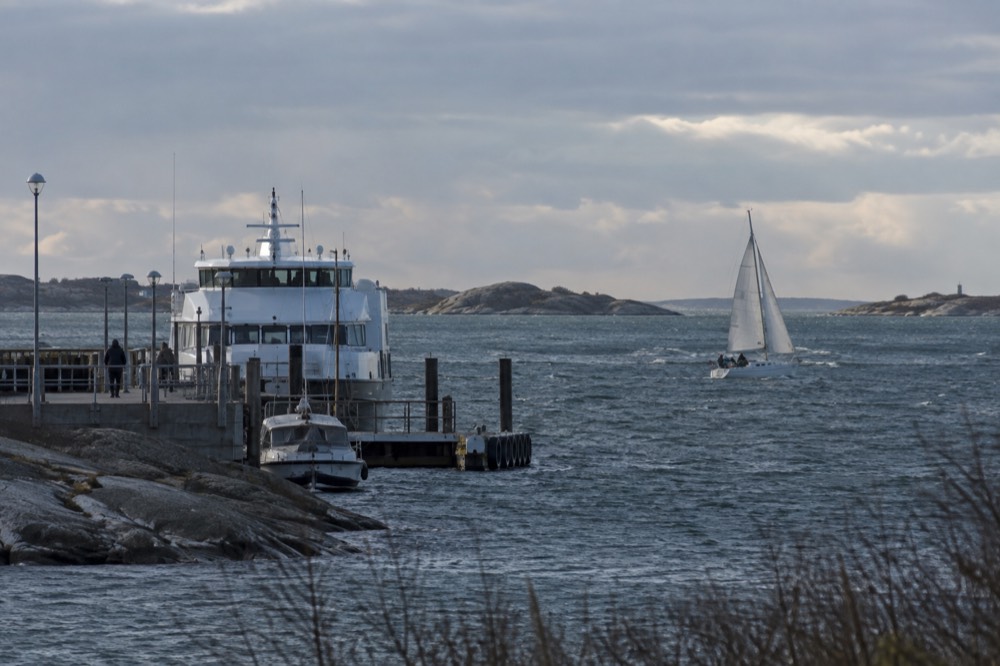
The sailing option is the deepest version of it, a half-day on the water with a local skipper who knows the channels:
The comparison, honestly stated:
| Option | Time | Best for | Watch out for |
|---|---|---|---|
| Västtrafik ferry | Half day, your own timing | Budget, island walking, residents' archipelago | Thin winter timetable, no shelter on jetties |
| Guided archipelago cruise | About 2.5 hours | Overview, families, warm cabin | You see the islands from the water, not on foot |
| Sail with a local skipper | About 4 hours | The water itself, small groups | Weather-dependent, dress for it |
| Sauna boat cruise | About 4 hours | Winter swimming with heat | Book ahead; small capacity |
What Should You Pack for a Winter Archipelago Day?
Layers you can shed, real waterproofs, grip, and your own food and drink. The winter islands offer no shelter beyond the ferry itself, no open kiosks and no shops you should count on, so the kit list is closer to a winter hike than a city stroll: boots with grip for ice on granite, windproof outer layers, gloves, a thermos, and a paper or screenshot of the day's ferry timetable.
The one item visitors regret forgetting is the timetable. Winter sailings are few, the last boat home is early, and the sunset at 15:26 in December means you do not want to be improvising on a cold pier. Everything else is standard winter-bike-city kit: the same boots you would bring for Gothenburg in winter generally, plus wind protection the city streets spare you.
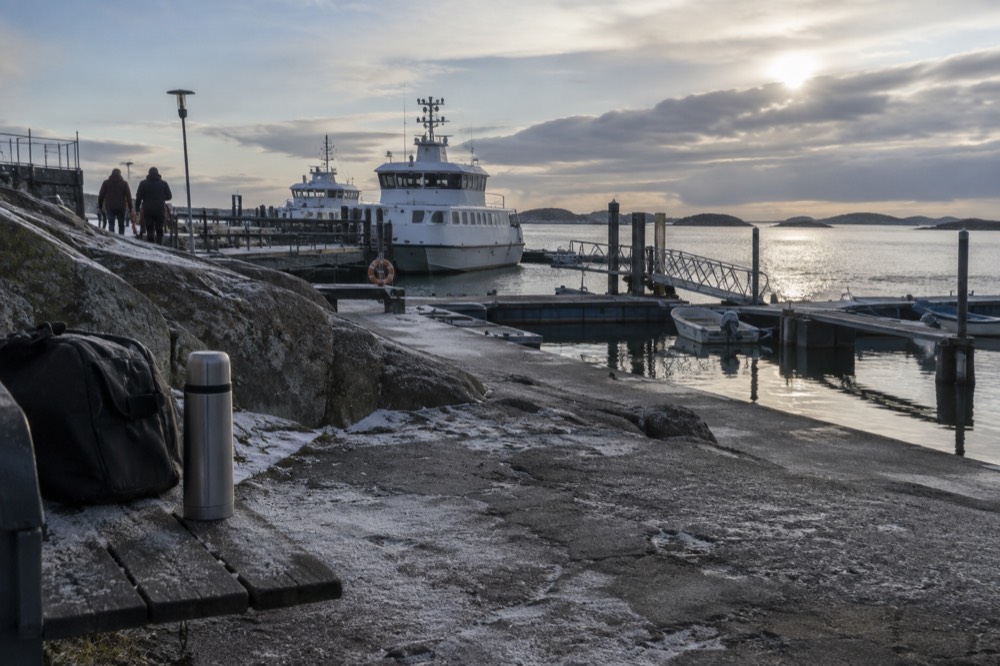
If the whole plan sounds like more weather than you want, the city's rainy-day alternatives are in Gothenburg on a rainy day, and the museum list is in Gothenburg museums. But the archipelago in winter is not a consolation prize. It is the islands as the residents know them.
For a final look at the year-round boat options, from a heated cruise to a half-day sail and the sauna boat:
Common Questions About the Gothenburg Archipelago in Winter
Do the Gothenburg archipelago ferries run in winter?
Yes. The southern archipelago ferries from Saltholmen run year-round to the islands on a reduced winter timetable, because the islands have permanent residents. They are part of the Västtrafik network and covered by an ordinary Zone A ticket. Check the day's departures before you travel, as winter sailings are fewer and the last return boat is early.
How cold is the sea in the Gothenburg archipelago in winter?
Per SMHI's quality-controlled observations at the Vinga lighthouse station, the sea averages 2.7 C in February, the coldest month, and sits between roughly 4 and 9 C from November to March. The archive's record low is -1.2 C, possible because brackish Kattegat water freezes below zero.
Is the Gothenburg archipelago worth visiting in winter?
For emptiness, light and walking, yes. The islands are car-free year-round, the winter sun sits low and gold for hours, and the summer crowds are gone entirely. The trade is closed seasonal kiosks, thin ferry timetables and around 6 hours 32 minutes of daylight at the December solstice, so plan a half-day trip around the sailings.
Can you swim in the Gothenburg archipelago in winter?
People do, but as an organised practice with sauna heat close by, not as a solo impulse. At 2.7 C cold shock is a real risk for the unprepared. Sauna boat cruises and the coast's cold-water swimming culture provide the safe, social structure for it.
Do you need a car to visit the Gothenburg archipelago?
No, and you cannot bring one. The southern islands are protected from private car traffic under the city's own provisions; only taxi, färdtjänst and emergency vehicles use their roads. You reach them by tram to Saltholmen and then ferry, all on one Västtrafik Zone A ticket.
Is Gothenburg Sweden's rainiest city?
No, and SMHI's own data does not support the label. Gothenburg records 912 mm of rain a year across 127 wet days, with October the wettest month at 102.9 mm and April the driest at 51.3 mm. The national precipitation maxima are in the western highlands and the mountains, not the city.